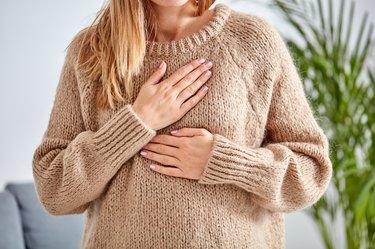
A short-lived flutter in your chest typically isn't cause for concern, especially if you don't have any other symptoms. Still, a fluttering heart can seem worrisome. So what's going on?
"Most often, heart palpitations or symptoms of feeling one's heartbeat are benign and associated with increased adrenaline or stress," says Shephal Doshi, MD, a cardiac electrophysiologist with the Pacific Heart Institute in Santa Monica, California.
Video of the Day
Video of the Day
It's normal for heart palpitations to feel like a flip-flopping, pounding or even fluttering sensation in the chest, which sometimes can trigger an urge to cough.
"When the heart feels like it is beating funny, maneuvers that increase the pressure in the chest — like coughing or bearing down — can reset the heartbeat and make the heart feel normal again," Dr. Doshi says.
Here are the most common culprits behind a butterfly-like fluttering feeling in your chest, or heart palpitations, and when to call the doctor.
1. Anxiety
It's not uncommon for stress or worry to cause a racing or irregular heartbeat. Anxious feelings can engage your body's fight-or-flight response, which temporarily increases blood flow and speeds up your heartbeat, according to the Cleveland Clinic.
The flutter in your chest should ease up as your mood stabilizes, and trying an activity to lower your stress — like deep breathing, journaling or exercising — can help.
Also: Try not to get anxious about your heart. A racing or pounding sensation can be a normal response to anxiety, and getting worked up about it will only make the problem worse, Dr. Doshi says.
You can also differentiate a stress-induced racing heart from an underlying heart rhythm problem by the presence (or lack) of other symptoms.
"It can sometimes be hard to tell if what you are feeling is awareness of a normal heartbeat or a heart rhythm problem," says cardiologist Harmony Reynolds, MD, director of the Sarah Ross Soter Center for Women's Cardiovascular Research at NYU Langone Health and volunteer expert for the American Heart Association's Go Red for Women movement.
"We worry about chest fluttering most when people feel dizzy or lightheaded at the same time, have pain in the chest or pass out," she says.
Fix It
Anxiety can be tough to navigate alone. If you're feeling anxious, talk to your doctor about your symptoms. They can refer you to a therapist or other mental health professional to get support.
You can also try stress-relief techniques at home, like deep breathing, meditation, yoga and exercise.



2. Stimulants
Added an extra shot of espresso to your morning latte? Caffeine is a stimulant that signals the release of fight-or-flight hormones like adrenaline, which in turn may send your heart pounding or fluttering, Dr. Doshi says.
The excess caffeine could even cause you to feel your heart beating in your chest when lying down.
If the caffeine-induced flutter in your chest makes you cough, that's likely your body's way of resetting your heartbeat, Dr. Doshi says.
And coffee isn't the only culprit. Caffeinated foods and beverages like chocolate, soda and energy drinks can also make your heart beat faster. Drugs like nicotine, amphetamines and cocaine can also have that effect, per the Mayo Clinic.
Fix It
The best way to stop heart palpitations in this case is to avoid overloading on caffeine. Stick to the expert-recommended upper limit of 400 milligrams per day (that's about four cups of coffee), according to the Mayo Clinic.
Some people may be more sensitive to caffeine than others, though, so keep an eye on how you respond and adjust your intake accordingly.
3. Medication or Supplements
Some common meds list heart palpitations as a possible side effect, according to the Cleveland Clinic. These include:
- Allergy, asthma and cold medicines
- Antibiotics
- Diet pills
- Heart disease medications
- High blood pressure medications
- Insulin
- Thyroid medications
Some vitamins and herbal supplements can also affect your heart, per the Cleveland Clinic, such as:
- Bitter orange
- Ephedra
- Ginseng
- Hawthorn
- Valerian
Fix It
Let your doctor know if a drug or supplement is affecting your heartbeat — they may be able to adjust your dose, switch your medication or recommend if you should stop taking a certain supplement altogether.
4. Dehydration
In some cases, even mild dehydration can cause a rapid heartbeat. Running low on fluids and electrolytes can force the heart to work harder, creating a pounding or racing sensation, according to the National Library of Medicine (NLM).
Other signs of serious dehydration include:
- Confusion
- Fainting
- Rapid breathing
If you or someone else is feeling these symptoms, seek medical attention immediately, per the NLM.
Fix It
Aim to get anywhere between 11.5 and 15.5 cups of water per day, through drinking or water-rich foods, per the National Academies of Sciences, Engineering and Medicine.If you want a more specific number, use this equation to determine how much water you should drink every day to avoid dehydration (and, potentially, heart palpitations):
Body weight (in pounds) ÷ 2 = minimum ounces of water you should drink per day
5. Fever
A fever can signal the release of the hormone adrenaline, which can raise your heart rate and potentially cause a flutter in your chest, Dr. Doshi says. (Heart palpitations caused by a fever do not mean the infection that caused the fever has invaded your heart, though, he adds.)
Fluttering in your chest that's not heart-related can also be congestion (i.e., mucus buildup) from a cold, flu or infection like bronchitis. This can often also feel like a rattling sensation in your chest that causes you to cough, per Johns Hopkins Medicine.
Fix It
Taking an over-the-counter fever reliever like acetaminophen or ibuprofen can help bring down your temperature, which in turn should help with the palpitations or a flutter in your chest, Dr. Doshi says.
6. Hormone Changes
Hormone shifts tied to your period, menopause or pregnancy can all make your heart feel like it's fluttering or pounding, according to the Mayo Clinic.
Heart palpitations during pregnancy are especially common due to higher blood volume, per the Cleveland Clinic. Most of the time, these flutters are totally harmless — however, it's never a bad idea to bring up heart palpitations during pregnancy to your doctor.
Similarly, you can alert your doctor if heart palpitations make you cough (whether that's related to pregnancy or otherwise).
"Some people feel that they need to cough when they have a fluttering sensation in the chest," Dr. Reynolds says. "If you feel that, try to notice if the cough makes the flutter feeling go away, and tell your doctor."
Warning
Pregnant or not, if you have heart palpitations and other symptoms like chest discomfort or pain, difficulty breathing, dizziness or confusion, seek medical care immediately, per the Cleveland Clinic.
Fix It
Talk to your doctor if you're getting heart palpitations while pregnant, during menopause or while you're on your period. They can help you determine whether it's normal.
7. Alcohol Use
Though moderate drinking is tied to some health benefits, excessive alcohol consumption can increase your risk for heart rhythm disorders like atrial fibrillation (AFib), per an October 2017 study in the Journal of the American Heart Association.
The National Institute on Alcohol Abuse and Alcoholism (NIAAA) defines heavy drinking as:
- People assigned male at birth (AMAB): More than 4 drinks per day or more than 14 drinks per week
- People assigned female at birth (AFAB): More than 3 drinks per day or more than 7 drinks per week
According to the Centers for Disease Control and Prevention (CDC), other possible AFib symptoms include:
- Shortness of breath
- Low energy
- Dizziness
- Chest pain
Visit your doctor if you show symptoms of this condition, as they can prescribe medicine to control your heart rhythm and reduce the risk for complications, per the CDC.
Fix It
Stick to the NIAAA-recommended upper limit of two drinks per day for people AMAB and one drink per day for people AFAB.
8. Anemia
Rapid heartbeat is a common symptom of anemia, according to the Mayo Clinic. Other signs of the condition include:
- Extreme fatigue
- Weakness
- Pale skin
- Lightheadedness
- Shortness of breath
- Headaches
- Cold hands and feet
"Being anemic means having low red blood cells to carry oxygen," Dr. Doshi says. "When that happens, the body signals the heart to pump more blood by releasing more adrenaline, which makes your heart beat faster."
These heart palpitations may in turn trigger a cough urge as your body attempts to reset your heartbeat, he says.
Fix It
Treating the anemia depends on the cause, which is why it's important to talk to your doctor if you're having the above symptoms. If the culprit is iron deficiency, treatment may involve taking iron supplements, which should make the palpitations go away, per the Mayo Clinic.
9. Thyroid Disorder
Hyperthyroidism, or overactive thyroid, can cause abnormal heart rhythms like heart palpitations or atrial fibrillation, per Harvard Health Publishing.
Other symptoms may include:
- Unexplained weight loss
- Increased appetite
- Nervousness or irritability
- Tremors
Fix It
Talk to your doctor if you're feeling any of the symptoms of a thyroid disorder.
Treatment for a thyroid disorder varies but can include anti-thyroid medications, beta blockers, radioactive iodine or surgery, according to the Mayo Clinic.
10. Irregular Heartbeat
When a fast or pounding heartbeat or heart flutter can't be attributed to other causes, arrhythmia — a problem with the rate or rhythm of the heart's beat — may be to blame, Dr. Doshi says.
There are several types of irregular heartbeats (or heart arrhythmias), including conditions that make your heart beat too fast (tachycardia) or too slow (bradycardia), according to the Mayo Clinic.
One in particular that causes an irregularly fast or erratic heartbeat is a condition called supraventricular tachycardia (SVT), or problems with the upper chambers of the heart, per the Mayo Clinic.
Making the diagnosis typically involves seeing a cardiologist for an electrocardiogram (ECG or EKG), which records the heart's electric signals. They may even be able to detect heart murmurs — i.e., sounds made by irregular blood flow through the heart, per the Mayo Clinic.
Fix It
Treatment depends on the type of arrhythmia and other factors.
"Sometimes a person doesn't need to be treated, sometimes they need to add or remove medications or reduce their alcohol or caffeine intake," Dr. Doshi says.
In some cases, you may require surgery to stop the heart from short-circuiting, he says.
Tip
If you have heart palpitations but a normal ECG test result, you may be dealing with an issue like anxiety, hormonal changes or stimulant use. Talk to your doctor about lifestyle changes you can make to reduce chest fluttering.
When to See a Doctor About Heart Palpitations
Occasional heart palpitations or chest flutters that go away quickly typically don't warrant a call to the doctor. When to worry about heart palpitations, though, is if they're frequent or you have a history of heart disease, according to the Mayo Clinic.
If that's the case, your doctor may order blood tests, ECGs or EKGs, a stress test or a Holter monitor (which you wear to track your heart's activity), per the Cleveland Clinic.
Finally, you should go to the ER for chest flutters if they come with chest pain, fainting, dizziness or trouble breathing. These could be signs of a heart attack or another serious heart problem.
FAQ
Common Questions
How long do heart palpitations last?
Heart palpitations usually don't last long — only for a few seconds to minutes. If they last longer, per the Cleveland Clinic, then you should let your doctor know.
Can you get heart palpitations after eating?
Yes. Sometimes spicy or rich foods can cause palpitations, like caffeinated drinks or alcohol do, per the Cleveland Clinic.
What about heart palpitations at night or while lying down?
You might be more likely to notice heart palpitations at night because you are not busy or distracted. But they are no different from palpitations you would feel during the day.
Plus, sleeping on your side may increase pressure in the body, which can cause palpitations, per the Cleveland Clinic.




- Cleveland Clinic: "Heart Racing? How Anxiety Causes Heart Palpitations"
- Cleveland Clinic: "Heart Palpitations After Eating"
- U.S. National Library of Medicine: "Fluid and Electrolyte Balance"
- U.S. National Library of Medicine: "Dehydration"
- Centers for Disease Control and Prevention: "Atrial Fibrillation"
- Mayo Clinic: "Anemia"
- Harvard Health Publishing: "Thyroid Hormone: How It Affects Your Heart"
- Mayo Clinic: "Hyperthyroidism (Overactive Thyroid)"
- Mayo Clinic: "Caffeine: How much is too much?"
- Cleveland Clinic: "Heart Palpitations in Pregnancy"
- National Institute on Alcohol Abuse and Alcoholism: "Drinking Levels Defined"
- Mayo Clinic: "Heart Arrythmia"
- Mayo Clinic: "Heart palpitations"
- Mayo Clinic: "Heart Murmurs"
- Cleveland Clinic: "https://my.clevelandclinic.org/health/diseases/17084-heart-palpitations"
- Mayo Clinic: "Supraventricular tachycardia"
- Johns Hopkins Medicine: "Bronchitis"
- Journal of the American Heart Association: "Does Moderate Drinking Increase the Risk of Atrial Fibrillation? The Norwegian HUNT (Nord-Trøndelag Health) Study"
Is this an emergency? If you are experiencing serious medical symptoms, please see the National Library of Medicine’s list of signs you need emergency medical attention or call 911.