




































































How to Care for a Broken Jaw

How to Care for a Broken Jaw
Photo Credit pink bandage image by Keith Frith from Fotolia.com

Broken jaws commonly occur as the result of a physical assault or as the consequence of a sports, industrial or automobile accident. A broken jaw requires immediate medical attention by a trained professional; however, knowing how to care for a jaw injury before and after treatment will help to minimize discomfort and aid the healing process.

First Aid

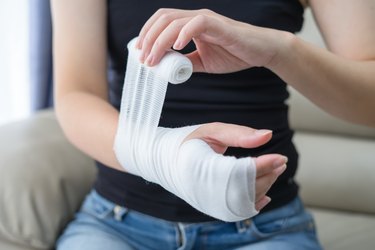
In cases of a broken jaw, your primary concern is to ensure an open airway by sitting upright and leaning forward, so that blood may flow from the mouth, if necessary. The next step is to keep the jaw immobilized while you await medical assistance; this helps minimize discomfort and prevents further damage. The simplest way to hold the jaw in place is to use the hands; a light amount of support on the sides of the jaw is sufficient. If you have access to a first aid kit, use a rolled bandage to secure the jaw in place. Avoid making the bandage too tight or complicated, however, as you may need to remove it quickly if you begin to feel nauseated or to have trouble breathing.

Treatment

The treatment for a broken jaw varies depending on the severity of the fracture. If the damage is minor, you may be asked only to minimize the strain you place on your jaw until it has time to heal. In situations where the break is severe, the doctor will stabilize the jaw using bandages or by wiring your jaw shut with elastic bands. It may take as long as six to eight weeks for your jaw to fully heal.

While your jaw is healing, your diet will be limited to soft or liquid foods; your doctor will probably provide you with information to help you plan your meals during the recovery process, as well as recommendations for high-calorie liquid supplements to take throughout the course of a day.

Swelling

You will probably experience swelling for up to three days after the doctor has set your jaw, after which the inflammation should begin to subside. One way to ease the swelling is to use several pillows to keep your head elevated while you rest. If the swelling worsens after you have received medical treatment, this may indicate that the injury has become infected. Return to the doctor for additional assistance.

Cleaning

Keep your teeth and gums clean while your jaw is wired shut to help ensure that healing progresses smoothly. Use a small toothbrush to clean the front of your teeth as you normally would and rinse out your mouth with tap water after every meal; if you had mouth surgery, use a solution of 1 tablespoon of salt and 12 oz. of warm tap water for the first two weeks instead.

References

Article reviewed by Jeannette Belliveau Last updated on: Sep 2, 2010

Must see: Photo Galleries