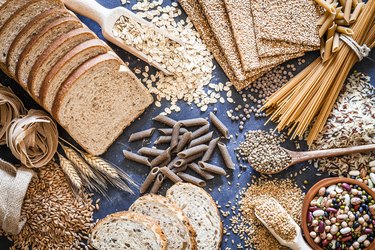
Carbohydrates are an energy source in food that come from starch, sugar and cellulose. Carbohydrates provide vitamins, minerals, antioxidants and fiber in the diet.
The current recommendations suggest 45 to 65 percent of our daily calories come from carbs. The 2020 - 2025 Dietary Guidelines for Americans recommends choosing foods containing complex carbohydrates over refined sources most often for maximum benefits.
Video of the Day
Video of the Day
You can find healthful carbohydrate sources in foods like wheat, corn, rice, oats, barley, quinoa, sorghum, spelt, rye and in fruits, vegetables and legumes. Read on to learn more about the importance of including the right type of carbohydrates in your diet.
Related Reading
Complex Carbs vs. Simple Carbs
There are two types of carbohydrates — simple and complex. They differ in terms of the food's chemical structure and how quickly the sugar is digested and absorbed, per the American Heart Association (AHA).
Simple carbs are digested quickly and send immediate bursts of glucose (energy) into the blood stream. That's why you may feel a rush of energy when you eat a dessert, only to be followed by a crash of fatigue when that sudden burst of energy is depleted. Simple sugars are found in refined sugars, like the white sugar you'd find in a sugar bowl. Added sugars (including refined sugars) provide calories, but lack vitamins, minerals and fiber and can lead to weight gain.
Simple Carbohydrates: Refined vs. Natural
Simple carbohydrates are digested by the body quickly, after which they send a rush of glucose into the blood stream. This is why you might feel a burst of energy after eating a sweet. Some common examples of simple carbs include:
- Candy
- Non-diet carbonated beverages, like soda
- Table sugar
- Added sugars
Simple carbs are often softer in texture (think: white bread, white rice and baked goods). Soda, candy and sweeteners like table sugar and honey are also simple carbs.
Refined simple carbs are created when natural ingredients, such as sugar cane, are processed or refined into a product, such as table sugar.
Refined carbohydrates are added to foods as sweeteners, and include corn syrup, brown sugar and high-fructose corn syrup. Foods that contain high levels of refined sugars include some breakfast cereals, yogurts, cookies and candy.
Refined flours, which have been stripped of some of their natural, high fiber content including the bran, germ or endosperm, are also considered refined simple carbs.
Refined carbohydrates tend to provide high calorie counts but lack nutrient value. In other words, for the number calories consumed, your body receives little benefit. To manage your weight and maximize your nutrition, limit the number of refined carbohydrates in your diet.
Are Fruits Simple Carbs?
The answer to this question is a bit nuanced.
Natural sources of simple carbohydrates provide quick energy and boost your health by supplying vitamins and minerals that are not found in refined carbohydrates.
Fruits, vegetables and dairy are technically made of simple carbohydrates, but because of the fiber, protein and other nutrients that naturally occur in these foods, they act more like complex carbohydrates in the body, per the AHA.
For these reasons, they're recommended as part of a healthy diet.
If you have a choice between a refined and natural carbohydrate as a snack, such as choosing between a candy bar or apple, you'll boost your nutrition by choosing the apple (the natural simple carb).
The apple contains fewer calories than the candy bar and also provides vitamins A and C, folate, calcium, phosphorus, and potassium. In addition to its nutrient value, fruit serves double duty by providing complex carbohydrates in the form of soluble and insoluble fiber.
Complex Carbohydrates
Complex carbs, on the other hand, take longer to digest and release glucose into the bloodstream at a steadier pace.
Complex carbohydrates have a sugar structure, called starch, that requires your body to work harder to access it. This means that complex carbohydrates release their energy slowly.
Foods high in starch content include potatoes, corn, pasta, breads and cereals. While these foods contain vitamins and minerals, starches from whole grains and some fruits and vegetables are more complete because they also contain dietary fiber.
Some common examples of complex carbs include:
- Legumes including beans, peas and lentils
- Starchy vegetables including potatoes
- Whole-grain and fibrous foods, including brown rice, oatmeal and quinoa
You may have heard there are two major types of complex carbohydrates: fiber and starch.
Complex Carbs and Fiber
Complex carbs are beneficial, in part, because they can be an excellent source of dietary fiber. Fiber is the part of plant-based food that your body can't digest or absorb, per the Mayo Clinic, and it comes in two categories: soluble and insoluble.
Soluble fiber attracts water and helps slow digestion. Insoluble fiber resists water and acts as bulk in your digestive tract, leaving you feeling fuller over longer periods of time. You'll find soluble fiber in:
- Beans
- Oats
- Apples
- Carrots
- Barley
- Citrus fruits
- Psyllium
- Peas
This type of fiber has been found to reduce cholesterol and aid in blood sugar control.
Insoluble fiber supports digestion by increasing stool bulk. Since it's "insoluble," the body can't break down part of the food, and so these parts travel through our bodies, adding roughage to help move things along. You'll find insoluble fiber in:
- Nuts
- Beans
- Vegetables
- Wheat bran
- Whole wheat flour
In order to see the most benefit, you should be getting both types of fiber by consuming a wide variety of high-fiber foods, per the Mayo Clinic. Both forms of dietary fiber play an important role in nutrition by stabilizing your blood sugar and cholesterol levels.
Complex Carbs and Starch
Starch is a type of complex carbohydrate found only in plant foods, per the Cleveland Clinic. Starchy foods provide vitamins and minerals, and they require more effort (and time) to break down in the body. As a result, blood sugar levels are stabilized and you feel full for longer.
High-starch foods include:
- Whole wheat bread
- Cereal
- Corn
- Lima beans
- Oats
- Peas
- Rice
- Potatoes
When you eat starchy foods, your body works to break them down into glucose, the sugar your body uses at its source of energy. The glucose not only helps you physically, but is also the primary source of fuel for your organs, including your brain, kidneys and muscles.
How Are Carbohydrates Digested?
Carbohydrate digestion begins in your mouth, where special enzymes in the saliva start to break complex carbohydrates down, per the National Institutes of Health (NIH). The food then passes through the stomach and into the small intestines, where more enzymes break carbohydrates down into the simplest form of sugars that the body can use for energy.
Though all types of carbohydrates eventually break down into blood glucose, complex carbohydrates take longer to complete this process and offer vital nutrients the body needs along the way. Complex carbs also provide indigestible fibers that aren't broken down; instead they move through the body to promote gut health and stool elimination.
When simple carbohydrates are consumed, they offer little nutrition and are broken down rapidly causing a sharp spike in blood sugar and the hormones needed to complete carbohydrate digestion.
The Health Benefits of Complex Carbs
Complex carbs may benefit weight loss. People who eat whole grain foods, including wheat, corn, rice, oats, barley, quinoa, sorghum, spelt and rye show a lower risk of obesity, including a reduced body mass index (BMI) and waist-to-hip measurement according to the Whole Grains Council.
Complex carbs may also help reduce the risk for certain health conditions. People who enjoy at least three servings of whole grains each day have been shown to reduce their risk of heart disease by 25 to 36 percent, stroke by 37 percent, type 2 diabetes by 21 to 27 percent, digestive system cancers by 21 to 43 percent, and hormone-related cancers by 10 to 40 percent, per the Whole Grains Council.
Complex carbs benefit gut health and may lower cholesterol. The dietary fiber content of complex carbs may help decrease LDL (bad) cholesterol while normalizing blood glucose levels and insulin response over time, according to the Linus Pauling Institute. Fiber also promotes bowel health by creating a more productive stool to prevent constipation and reduce diverticular disease.
Eating Carbs and Losing Weight
Carbohydrates are often the first food group to get cut when people attempt to lose weight, but doing this may actually hurt your weight loss efforts.
The trouble with "cutting carbs" to lose weight is that we're lumping all sources of carbohydrates into one group, while we've learned that complex carbs and simple carbs are two very different beasts.
Focusing on certain complex carbs can help keep you full and energetic.
One such complex carb is the potato. While sometimes vilified in diet culture, potatoes have actually been shown to promote healthy weight (we're talking all types of potatoes here, not just sweet potatoes).
Potatoes are a nutrient-dense food. A medium potato (with skin) has just 118 calories and one gram of sugar while providing 3 grams of protein, 27 grams of carbohydrates, 2.5 grams of fiber, 20 percent of the daily value (DV) of vitamin C, 24 percent DV of vitamin B6 and 11 percent DV of folate, according to the USDA.
When it comes to weight loss, potatoes are unique from many other foods in that they contain resistant starch, per a February 2020 review in the Journal of the Academy of Nutrition and Dietetics. This specific type of fiber may decrease the number of calories we process and increase satiety, along with other health benefits.
Another reason complex carbs are so important for weight loss has to do with their fiber content.
Fibrous foods in general support weight management because they are nutrient-rich and low in calories — especially fruits and vegetables. (think: fruits and vegetables).
Simply aiming to eat 30 grams of fiber each day can help you lose weight as effectively as a more complicated diet, found a February 2015 study in the Annals of Internal Medicine.
The 'No Carbs After 3 P.M.' Rule
Many people are confused about whether you can eat carbs and lose weight.
There are many different approaches to dieting with carbohydrates: Some people choose to cut out carbs all together, while others include complex carbohydrates in their breakfasts and lunches, but omit them at dinner time.
Whether you want to abstain from nighttime carbs — a common guideline is to cut carbs after 3 P.M. — is truly a personal decision.
In fact, eating good-for-you carbs at night may actually benefit your health.
For example, consuming more calories or carbs at night can help early morning exercisers increase their endurance and/or level of physical activity. The Academy of Nutrition and Dietetics explains that because carbohydrates are the primary fuel source burned for energy during physical activities, carbohydrate loading or eating carb-rich foods can maximize glycogen storage.
Eating a melatonin-rich food such as rice along with other complex carbohydrates can help you have a better night's sleep, according to the Cleveland Clinic. Melatonin is the hormone that regulates the sleep cycle, helping you fall and stay asleep, as its levels increase at night and come down in the morning.
There are plenty of other benefits of eating carbs at night — so long as you're eating the right carbs and fueling properly throughout the beginning of the day, too.
How to Read Carbohydrates on a Food Label
When reading a label to learn about a food's carbohydrates, you'll want to focus on three factors: grams of total carbohydrate per serving (be sure to identify what a serving size is), grams of fiber per serving and the ingredient list.
The total carbohydrate number shares the number of grams of carbohydrates are in one serving, but keep in mind that there can be more than one serving size in the package. Grams of fiber indicate the number of grams of total carbohydrate that won't be digested into blood glucose.
When it comes to the ingredients list, you'll want to focus on whole grains.
Aim for the terms: brown rice, whole-grain sorghum, buckwheat, bulgur, millet, whole-grain barley, oatmeal, quinoa, whole wheat and rolled oats. When the label on a specific food claims that it has been "made with whole grains," it is important to know what to look for to be sure you are getting a complex carbohydrate source. A better label to look for states "100 percent whole grain."
A List of Complex Carbs
- Acorn squash
- All-Bran cereal
- Amaranth barley
- Black beans
- Black-eyed peas
- Buckwheat
- Bulgur
- Butternut squash
- Durum
- Einkorn
- Emmer
- Farro
- Garbanzo beans (chickpeas)
- Green peas
- Kamut
- Kidney beans
- Lentils
- Lima beans
- Millet
- Navy beans
- Oatmeal
- Oats
- Parsnips
- Pinto beans
- Potato
- Quinoa
- Rice (brown, colored and wild)
- Rye
- Split peas
- Sorghum
- Spelt
- Sweet potato
- Wheat
- Wheat berries
- Whole-grain (breads, cereals and flours)
Remember: While fruits and vegetables are technically simple carbohydrates, they contain fiber, protein, vitamins and minerals, so they are more complex in nature. These foods play a critical role in our health and should be eaten daily.
Whole-Grain Coconut Almond Granola Recipe
Here's a recipe for whole-grain coconut almond granola. It's something that'll keep you full, thanks to its fiber and complex carbohydrate content.
Recipe courtesy of registered dietitian Ginger Hultin, RD
Ingredients
- 4 cups old fashioned rolled oats
- 1 cup slivered almonds
- 1 cup shelled, unsalted pistachios
- 1 cup unsweetened shredded coconut flakes
- 1 teaspoon ground cinnamon
- 1 teaspoon sea salt
- 1/2 teaspoon ground cardamom
- 3/4 cup pure maple syrup
- 1/2 cup grape-seed or sunflower oil
- 1 1/2 teaspoons pure almond extract
- 3/4 cup raisins
Instructions
- Position a rack in the center of the oven and heat the oven to 350 degrees Fahrenheit. Line a large rimmed baking sheet with parchment paper.
- Combine oats, almonds, pistachios, coconut, cinnamon, salt and cardamom in a large boil. Combine maple syrup, oil and extract in a separate bowl then fold into dry mixture.
- Spread onto the prepared sheet and bake for 15 minutes, stir and then cook 15 minutes more. Granola should be slightly browned, but monitor it closely so it doesn't burn. Fold raisins into hot granola and set aside to cool for 10 to 30 minutes. Then transfer to a large bowl.
- Store leftovers in an airtight container for up to one month. You can also freeze the recipe to make it last longer.
- Harvard School of Public Health: Carbohydrates Good Carbs Guide the Way
- Dietary Guidelines for Americans, 2020 - 2025
- USDA: Dietary Reference Intakes
- National Institutes of Health: Carbohydrates
- American Diabetes Association: Nutrient Content Claim and Percentage
- Fruits & Veggies More Matters: Key Nutrients in Fruits and Vegetables
- NIH MedlinePlus: https://medlineplus.gov/ency/imagepages/19529.htm
- Whole Grains Council: Carbohydrates
- Study.com: Carbohydrate Digestion and Absorption: Process & End Products
- Oregon State University:Micronutrient Information Center
- Diebetes Education Online: Learning To Read Labels
- American Heart Association: "Carbohydrates"
- National Institutes of Health: "Your Digestive System & How it Works"
- USDA: "Boiled Potato"
- Journal of the Academy of Nutrition and Dietetics: "Resistant Starch Content in Foods Commonly Consumed in the United States: A Narrative Review"
- Annals of Internal Medicine: "Single-Component Versus Multicomponent Dietary Goals for the Metabolic Syndrome"
- Mayo Clinic: "Dietary Fiber: Essential for a healthy diet"
- Cleveland Clinic: "Carbohydrates"
- Cleveland Clinic: "5 Foods That Help You Sleep"