





























































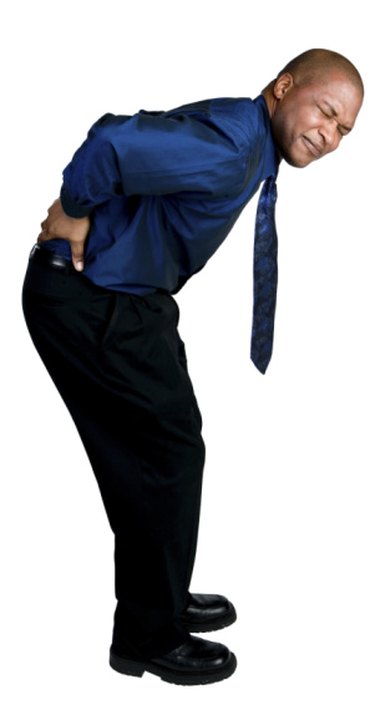


The facet joints are among many potential generators of spine pain. One study published in the open-access journal, "BMC Musculoskeletal Disorders" found the facet joints to be a common source of pain for chronic spine pain patients. In this study, the facets were implicated 55 percent of the time for neck pain, 42 percent for the mid-back and 27 percent for the low back. Facet joint pain has certain characteristics that help to distinguish it from other sources of spine pain.
Pain Location
Anatomically, the facet joints are located on the backside of the vertebral column. They are paired joints situated on either side of the mid-line. Typically one facet joint will be the primary pain generator leading to pain that favors one side and is well-localized according to a study published in 2009 in the journal, "Chiropractic and Osteopathy."
Pain Quality
The pain is usually described as a deep, dull ache. Intensity can vary considerably between individuals and between episodes. The painful area is likely to be tender to direct pressure. It may result in reduced ranges of motion, particularly in the direction of extension. Muscles over the area may be tight, but facet joint pain rarely triggers muscle spasms, unnatural postures or abnormal gaits, according to "Chiropractic and Osteopathy."
Pain Radiation
Facet joint pain usually does not radiate far from the source. When the low back is involved, pain may occasionally radiate into the thigh on the same side as the back pain. A painful facet in the neck may radiate to the shoulder. Unlike the radiating pain from a pinched nerve, facet joint pain will not be associated with any numbness or weakness in the involved limb.
Positional Influences
Positions that compress the facet joints are the most painful. These would be positions that extend the spine. In the case of the neck, this means tipping the head back and toward the side of the involved facet joint. For the low back, even prolonged standing tends to overload the facet joints. Conversely, flexing the spine unloads the facets and tends to relieve facet joint pain. Researchers from Southend University Hospital in Essex, UK, found that the feature most consistent with facet joint pain in the lower back was relief of the pain with sitting. Sitting flexes the lower spine and takes pressure off of the facet joints.
References
- "BMC Musculoskeletal Disorders"; Prevalence of Facet Joint Pain in Chronic Spinal Pain of Cervical, Thoracic and Lumbar Regions; L. Manchikanti, M. Boswell, V. Singh, et al; 2004
- "Chiropractic and Osteopathy"; The Clinical Aspects of the Acute Facet Syndrome: Results from a Structured Discussion among European Chiropractors; L. Hestbaek, A. Kongsted, T. Jensen, et al; 2009
- Southend University Hospital: Differences in Clinical Features Between Facet Joint Pain and Other Causes of Low Back Pain


