Living in a cold climate teaches you to appreciate the feeling of warm sunlight on your skin. The first time the sun hits your face, arms and legs after a long winter feels incredible. A boost in vitamin D3 is partially to thank for your happiness. If you don't want to wait for a sunny day to get your vitamin D fix, try eating foods that contain it.
Vitamin D
Video of the Day
You've probably heard of vitamin D before, but may not know what vitamin D3 is. For the most part, they're the same thing. An article from Mercola explains that there are two types of D vitamins: D2, which is derived from plants, and D3, which is derived from animals.
Video of the Day
Cholecalciferol, also called vitamin D3, is the vitamin that humans naturally produce. That makes it the most sought-after form of vitamin D, and it's potentially twice as effective as Vitamin D2.
Natural Sources of Vitamin D3
The human body naturally produces vitamin D3 when it's exposed to the sun. Ultraviolet rays cause the body to release stored vitamin D and send it through the bloodstream. The Cleveland Clinic says that the amount of vitamin D3 that your skin produces depends on the time of day and season. Both factors change how much UV light hits your skin.
The more UV light you get, the more vitamin D3 your body produces. However, you have to be careful because too much sun exposure can lead to skin cancer. There's no set amount of time that you need to be exposed to the sun, according to an article from National Health Services, because different skin pigment and strength of sunlight causes different reactions.
There are plenty of reasons why your body needs vitamin D3. It affects everything from your bone health to your heart health to your immune system.
Vitamin D and Bone Health
According to the National Osteoporosis Foundation, one of the most important functions of vitamin D3 is helping you absorb calcium. Your body can use that calcium to build stronger bones.
Vitamin D for Your Muscles
Your muscles need vitamin D3, especially as you age. A 2015 study in Nutrition and Metabolism showed that taking a vitamin D supplement improves the quality of muscle in an older population. The researchers also found that vitamin D might make you better at building muscle, but the study wasn't long enough to allow any conclusions.
While it isn't clear exactly how vitamin D helps muscle, there's no doubt that taking supplements works if you're deficient. A 2018 study published in Bone Reports showed that a vitamin D supplement helps to reduce falls in older people. The same study also showed that the benefits aren't as obvious if you're not deficient in the vitamin.
Heart Health and Vitamin D
In addition to contributing to muscle and bone health, vitamin D can help reduce your risk of heart disease and cancer, as well as boost your immune system. An article from the Harvard School of Public Health cites a study that shows low vitamin D levels are associated with a higher risk for a heart attack.
There's also evidence that taking a vitamin D supplement can help lower your risk of high blood pressure. That might be why it lowers your risk for heart disease. High blood pressure can cause plaque buildup in your arteries and put excess strain on your heart.
Cancer Risk and Vitamin D
While other cancers may be linked to low levels of vitamin D, there's strong evidence linking it to an increased risk of colorectal cancer. There's also limited evidence that shows vitamin D supplements can help with cancer survival rates.
Vitamin D and Immunity
During the cold, dark winter months, illnesses like the cold and flu seem to skyrocket. The reason might be that most people are vitamin D-deprived due to the lack of sunlight. While there's still more research to be done in this area, there's some evidence that vitamin D supplements can make you less likely to catch the flu.
Vitamin D Deficiency
The benefits of vitamin D are vast, especially if you're deficient. Signs of deficiency aren't very obvious, however. One side effect is loss of bone mass, which can lead to osteoporosis. However, this happens over a long period of time. There may be other side effects, but there's more research to be done before they're proven, according to an article from MedLine Plus.
Read more: 9 Ways to Help Avoid Vitamin D Deficiency
Your doctor can perform a blood test to see if you're deficient. If you are, he'll likely recommend a combination of sun, supplements and food high in vitamin D. The average adult should aim for 600 international units per day of vitamin D.
Getting outside to see the sun once per day boosts your vitamin D levels, but it may be dangerous. Too much time in the sun can burn your skin and cause skin cancer in the long term. That means food and supplements may be your best bet.
Vitamin D-Rich Seafood
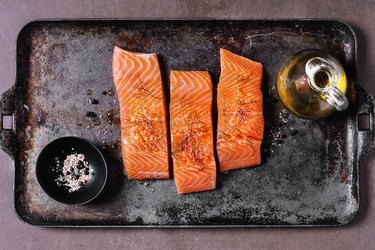
To get 600 international units of vitamin D3 daily, you'll need to stock up on food with high levels of the vitamin, and fatty fish is the best source of vitamin D3 from food. Canned sockeye salmon has the highest levels of any food, according to the 2015-2020 Dietary Guidelines. A 3-ounce serving contains around 730 international units, which means that you can pass your daily minimum with one serving.
Even if you're on a diet, 3 ounces of salmon isn't going to put a big dent in your calorie intake for the day. There are only 142 calories per serving, which means that you get a big boost of vitamin D for minimal calories.
Next on the list is rainbow trout. Other fish with similar vitamin D content include: swordfish, sturgeon, cisco, whitefish, mackerel, tuna, halibut, herring and rockfish. If salmon doesn't appeal to you, or if it starts to get boring, you can switch to any of these fish. Depending on where you live, some might be fresher than others.
Fish oil and cod liver oil is also high on the list. One teaspoon contains about 450 international units of vitamin D3. It's not the most appetizing way to get your daily requirement, but it's easy and low on calories. There's such a concentrated amount of vitamin D3 that it's close to a supplement.
Read more: Foods With High Vitamin D
Vegetarian Source of Vitamin D
Half a cup of portobello mushrooms treated with UV light contains** **320 grams of vitamin D2. However, they contain the vitamin only when exposed to sunlight. Most mushrooms you buy at the store are grown indoors in the dark, according to Berkeley Wellness, so you'll have to check to make sure the mushrooms you're buying have been exposed to UV light.
Dairy and Vitamin D
One cup of whole milk contains 130 international units of vitamin D3. While it's not enough to meet your needs for the day, you can drink a few servings as long as you're not lactose intolerant. Some milk comes fortified with even more vitamin D to boost the amount per serving. Calories from whole milk can add up quickly, so be careful. One cup contains almost 150 calories.
Reduced-fat milk contains only slightly less vitamin D3 at around 120 international units. You can buy either nonfat, 1 percent or 2 percent. If you're watching your calories, this will be a better option for increasing your vitamin D3 intake.
Yogurt and soy milk are also options if you don't want to drink regular milk. They provide roughly the same amount of vitamin D3 per serving. For yogurt, you need to eat an 8-ounce serving, and for soy milk, you need one cup.
Vitamin D for Breakfast
The simple hard-boiled egg, which is easy to make and packed with nutrients, contains about 40 international units of vitamin D. Considering that most people eat two or three eggs in one sitting, you can get 80 to 120 international units in one meal. If you're low on vitamin D, adding eggs to your breakfast will help bolster your diet.
Some fortified cereals contain a lot of vitamin D3. If you're vegetarian or don't like seafood and dairy products, fortified cereals can help. Kellogg's Special K is high in vitamin D3, according to an article from Women's Running. Cheerios and Quaker Oats are also fairly high in fortified vitamin D.
Orange juice can also come fortified with vitamin D. Vegetarians and vegans can use fortified orange juice to supplement their diets, since there are very few food sources of vitamin D that aren't derived from animals. One 8-ounce glass of Simply Orange contains 25 percent of your daily value of vitamin D, according to the nutrition facts on the Simply Orange website.
Consult Your Doctor First
Adding vitamin D to your diet is a good idea if you're deficient, but you need to be careful that you're not overdoing it. Vitamin D is fat soluble, which means that you store it in your fat cells. It can build up over time, unlike water-soluble vitamins that you excrete regularly through your urine. If vitamin D builds up in your system, your body holds onto excess calcium, according to an article from National Health Services.
The tolerable upper limit for adults is 4,000 international units per day, according to the National Institutes of Health Office of Dietary Supplements. That means you shouldn't consume more than that amount per day, because it can be toxic. It's very unlikely that you'll consume that much through food, but adding food and supplements together can be too much.
Before adding a supplement or altering your diet, talk to your doctor if you think you have low vitamin D levels. It's hard to tell without a blood test if you're deficient, so you shouldn't try to diagnose yourself. Your doctor can help design a regimen of supplements and vitamin D-rich foods to fix your deficiency.
- Science Direct: Cholecalciferol
- National Osteoporosis Foundation: Calcium/Vitamin D
- The Journal of Clinical Endocrinology and Metabolism: A Randomized Study on the Effect of Vitamin D₃ Supplementation on Skeletal Muscle Morphology and Vitamin D Receptor Concentration in Older Women
- Bone Reports: Vitamin D and Muscle
- Harvard T.H. Chan School of Public Health: Vitamin D and Health
- Medline Plus: Vitamin D Deficiency
- Berkeley Wellness: Mushrooms and Vitamin D
- Women's Running: 6 Vitamin D-Rich Foods for Winter
- Simply Orange Juice: Simply Orange® Pulp Free With Calcium & Vitamin D
- National Institutes of Health Office of Dietary Supplements: Vitamin D
- National Health Services: Vitamin D
- Cleveland Clinic: Vitamin D & Vitamin D Deficiency
- Nutrition and Metabolism: Does Vitamin-D Intake During Resistance Training Improve the Skeletal Muscle Hypertrophic and Strength Response in Young and Elderly Men? – A Randomized Controlled Trial
- Medscape: Vitamin D: A Rapid Review
- Mercola: Vitamin D3 Versus D2
- National Health Services: How to Get Vitamin D From Sunlight
- Medline Plus: New Recommended Daily Amounts of Calcium and Vitamin D