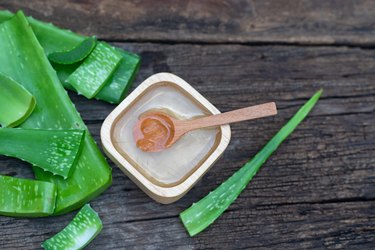
Aloe vera has been used for centuries as a topical skin treatment. Common in Indian and Southeast Asian cuisines, eating aloe vera, either cooked or raw, is another one of the uses of aloe vera.
The pale green "skin" of the stalks hides the clear "meat" inside the leaves, as well as the natural gel the plant produces, both of which are edible.
Video of the Day
Video of the Day
You can use aloe on salads or in drinks, where it provides a refreshing taste. Aloe is considered safe for oral consumption, but because it has a natural laxative effect, it can cause unwanted side effects, according to Mayo Clinic.
Preparing Raw Aloe Vera Plant
While the outer green skin of the aloe vera plant can be eaten, it is often bitter and tough, so it is removed and only the clear inner portion of the stalk is consumed. The easiest way of getting at the gel is to peel away the skin with a sharp knife and then crush the meat inside and eat it as is.
However, more elaborate preparations of the aloe vera plant often have large pieces of the stalk cut into rectangular portions that can then be added to salads or drinks for texture. You can rinse off the gel the plant naturally excretes before eating the meat, but the gel is also edible, although the sticky texture may be unpalatable for some people.
Ways You Can Eat Aloe Vera
There are some potential risks involved when eating aloe vera gel: The National Center for Complementary and Integrative Health says that consuming aloe vera latex has been linked to abdominal cramps and diarrhea.
That said, some research shows there are health benefits of aloe vera. Aloe vera gel may help treat constipation and may help lower blood sugar in people with type 2 diabetes, according to a June 2018 article in June 2018 by the Journal of Herbal Medicine. Raw aloe pulp and gel may also relieve the symptoms of irritable bowel syndrome and ulcers.
Consult Your Doctor
More research is needed to determine the potential risks of eating aloe vera, according to the National Center for Complementary and Integrative Health.
Because this substance can lower blood sugar levels, be sure to talk to your doctor if you have diabetes. In addition, eating aloe vera latex, found just under the plant's skin, can lead to diarrhea and abdominal discomfort.
Cooking Your Aloe
You can also eat cooked aloe. In this case, larger pieces are used, and the delicate texture of the plant takes best to gentle cooking methods, such as poaching. Aloe releases a lot of water when it is cooked and becomes softer as it shrinks down.
You can gently steam or poach the aloe before using it in juices, salads or even soups and stir-fries for a gentler taste. Fully cooked aloe no longer has a slimy texture, which may make it more appealing.
Benefits of Drinking Aloe
One of the easiest ways to get the benefits of aloe is by drinking it as a juice. You don't juice whole aloe stems; instead, you mix the pieces of aloe meat and gel with water and drink the fluid. Because aloe is naturally a little bitter, you can also soak the cut pieces in water overnight and then drink only the water.
Aloe vera juice is available as a stand-alone beverage or mixed with water and other flavors. There are also aloe vera beverages available that contain whole chunks of aloe vera gel, adding texture to the drink.
A 1-ounce serving of Pharm-Aloe Aloe Vera Leaf Juice 4X Concentrate provides 5 calories, 1 gram of carbohydrates, 20 milligrams of sodium, 188 milligrams of calcium and less than 1 milligram of iron. The ingredients include organic aloe vera leaf juice concentrate, citric acid and potassium sorbate. This product can be taken alone, mixed with water or used in a smoothie.