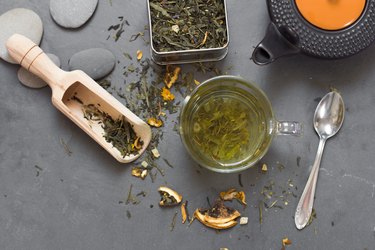
When it comes to enjoying the best green tea, you have lots of options. Loose-leaf tea, tea bags, bottled iced tea — the list goes on and on. While the market can be overwhelming, there are a few smart tips you can keep in mind to ensure this beverage is as tasty and as healthy as it can be.
Tip
The best green tea is one that has been stored and brewed correctly, regardless of which brand you buy. You can choose to flavor or sweeten the beverage, depending on your preference.
Video of the Day
Benefits of Green Tea
You might have heard about the health benefits of green tea. Interestingly enough, the leaves steeped to make this much-praised healthy beverage come from the same plant as black tea, according to the National Center for Complementary and Integrative Health (NCCIH). It's just that green and black tea leaves are prepared in different ways.
Video of the Day
Unlike black tea leaves, green tea leaves are lightly steamed. The Harvard T.H. Chan School of Public Health explains that this prevents the green tea leaves from fermenting the way black tea leaves do.
Tea's reputation for good health can be traced back thousands of years to when it was being used medicinally in China and Japan, the NCCIH explains. Today, people turn to tea for mental alertness, relieving headaches and promoting weight loss. While NCCIH maintains that there's not enough evidence to prove green tea supports weight loss — nor is there evidence to support claims about its ability to prevent heart disease — there are still other benefits to drinking it.
Those benefits, per Harvard, come from the tea's polyphenols — the same plant chemicals that give the tea its flavor and aroma are the ones that provide its healthy qualities. Polyphenols, which are also known as flavonoids, are antioxidants that help the body combat wear and tear from regular use and aging.
Despite popular misconception, green tea doesn't have more antioxidants than black tea. Harvard states that drinking two or three cups of tea every day can help lower your risk of heart disease, stroke and Type 2 diabetes.
Read more: 5 Steps to Brewing Your Healthiest Cup of Tea
Good Green Tea Brands
When you hit the grocery store, you'll find many good green tea brands on the market. So, what's the difference between all of them? The easiest way to start is by looking at the ingredients.
Some bagged green teas will include only green tea leaves — no other flavorings. Among the brands that offer this option is Bigelow, which lists green tea as the only ingredient in its classic version. The packaging states that the hand-picked leaves yield a tea that is "not harsh, not too grassy but smooth and very delicate."
Bigelow also ensures its quality by packaging the tea bags in a foil pouch, which stops the tea from absorbing the smells of other sources. This means the tea will be fresh and flavorful when the foil pouch is opened.
For some people, the best green tea might be one that has added ingredients either for taste or health benefits. Tazo is one such brand, which makes a green tea with lemon verbena, spearmint and lemongrass.
The popular brand Lipton has dozens of choices when it comes to green tea. You can choose from flavors such as orange passionfruit, ginseng, acai blueberry, goji berry, mint or peach, among many others. Some of the teas are specially formulated to offer a healthy boost, although the packaging states that these claims have not been approved by the Food and Drug Administration.
For example, the Lipton Daily Support green tea is made with turmeric and ginger. The NCCIH explains that turmeric is a dietary supplement that some people use to stave off inflammation, arthritis and cancer; however, these claims are not supported by scientific evidence. Turmeric is considered safe, but high doses or long-term use might cause gastrointestinal problems.
Ginger, on the other hand, might have some scientific support when it comes to health benefits. The NCCIH states that studies have supported its use for combating nausea and vomiting. When used as a spice, it's generally safe, but some people could suffer mild side effects like stomach upset, diarrhea and gas.
Finally, if you prefer cold beverages, your best green tea option might be Snapple, which makes a bottled iced green tea. Note that sugar is listed ahead of green tea in the ingredients. Any health benefits of green tea might very well be offset by the 30 grams of sugar per serving. However, if you're enjoying Snapple's green tea in moderation, you might appreciate the sweetness.
Brewing Green Tea
Drinking the best green tea sometimes goes beyond just buying good green tea brands. Sometimes, it's all in how you prepare it. The Harvard T.H. Chan School of Public Health actually recommends visiting a tea shop where you can fill your own tea bags with blends of leaves and know exactly what's in the tea.
When you get home, you should store the tea leaves away from light, heat, moisture, air and odor. Otherwise, you risk degrading the quality of the tea or having it take on unpleasant smells and tastes.
Green tea should be brewed at a slightly lower temperature than black tea. The Tufts University Health & Nutrition Newsletter recommends heating the water to about 175 to 180 degrees Fahrenheit and steeping the tea for at least four minutes.
Once the tea is steeped, it's time for flavoring it. Harvard discourages the use of sugar, cream or milk, as these could reduce the healthy polyphenol content. Instead, according to the advice of Tufts, you should go for lemon juice or citrus juice.
This is because the flavonoids in tea can be hindered by the nonacidic environment of the digestive system, and adding a little acid to the tea can increase your absorption. Harvard recommends flavoring with a little cinnamon or vanilla for the best green tea.
Another option is to create a specialty green tea drink. This LIVESTRONG.com Blueberry, Cucumber and Green Tea Smoothie combines green tea with blueberries, cucumber, lime juice and honey for a nutrient-packed, satisfying beverage. You can go a little simpler while still feeling fancy by trying out our Pomegranate Iced Tea, which sweetens the green tea with pomegranate juice and mint leaves.
Read more: 6 Surprising Ways to Cook With Tea
- National Center for Complementary and Integrative Health: “Green Tea”
- Tazo: “Zen Green Tea”
- Lipton: “Green Tea”
- Bigelow: “Green Tea”
- Snapple: “Green Tea”
- National Center for Complementary and Integrative Health: “Turmeric”
- National Center for Complementary and Integrative Health: “Ginger”
- Harvard T.H. Chan School of Public Health: “Tea”
- Tufts University Health & Nutrition Newsletter: “What’s So Special About Green Tea?”