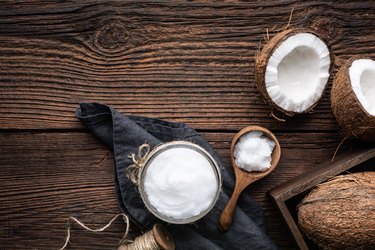
The body of research on MCT oil and weight loss is small, but preliminary results indicate the supplement may offer a modest benefit. Rather than relying MCT oil alone for weight management, include MCT oil use in a plan that includes a healthy diet and regular exercise.
Tip
Early studies suggest MCT oil may provide a weight-loss benefit.
Video of the Day
What Are Medium-Chain Triglycerides?
Medium-chain triglycerides (MCT) are fats made of six to 10 carbon atoms, whereas long-chain triglycerides (LCT) comprise 12 to 18 carbon atoms, explains an April 2013 article in Nutrition Review. Most of the fats in the American diet are LCT fats, which don't provide the beneficial effects that MCT fats provide.
Video of the Day
MCT fats have unique characteristics that underlie their health advantages. They provide 10 percent fewer calories than LCT fats. MCT fats are also absorbed faster and metabolized to energy sooner, so they're immediately turned into fuel for muscles and organs. They may help people with higher energy, needs such as patients recovering from surgery or athletes wanting to improve their performance.
Although coconut oil and full-fat milk contain MCT fats, pure MCTs aren't found in nature, according to a December 2015 article published in Food & Nutrition. Manufacturers extract MCT oil from natural sources and treat it to produce a colorless, flavorless liquid for use as a dietary supplement.
MCT Oil and Weight Loss
According to the Nutrition Review article, MCTs have several properties that may help with weight loss. MCT fats contain fewer calories than other fats, and a much smaller percentage of MCT is stored by the body as fat, after consumption. MCT fats also boost your metabolic rate, which helps to drive more calories burned, increased satiation and faster fat burning.
An April 2015 study published in the European Journal of Clinical Nutrition examined the effects of corn oil and MCT oil consumption on appetite and food intake. It consisted of two randomized crossover trials. One trial involved 10 individuals, and the other involved seven. Despite the small number of participants, the study is worth mentioning, because of its promising findings. The authors observed that MCT oil consumption reduced overall food intake.
A February 2015 study published in the Journal of the Academy of Nutrition and Dietetics reviewed clinical trials that compared the actions of MCT fats and LCT fats on weight. It discovered that replacing LCTs in the diet with MCTs diet could lead to modest decreases in body weight and changes in body composition. More research is required to verify the effectiveness and to determine an appropriate dosage model, the authors concluded.
MCT Dosage and Side Effects
As with any supplement, check with your doctor before starting to use an MCT oil and don't exceed the recommended dosage. If the supplement is taken to augment a regular diet, rather than as a substitution for other fat, the result could be weight gain, notes the Food & Nutrition article. Since research on the topic is limited, taking MCT oil shouldn't replace healthy lifestyle and dietary interventions for weight management.
A February 2017 article published in Practical Gastroenterology warns that excessive use of MCT oil has been associated with intestinal maladies such as diarrhea, cramping, gas, bloating and abdominal discomfort. The Food & Nutrition article also cautions that people with liver disease should avoid the oil.
The Nutrition Review article recommends beginning with small doses of approximately 1/4 teaspoon several times per day and gradually raising the dose as tolerated. You can take it straight from the bottle or use it as a salad dressing. It's also possible to cook with the oil, but avoid heating it above 150 to 160 degrees Fahrenheit, because higher temperatures will break it down and affect its taste.
Other Possible Uses of MCTs
Limited research suggests MCTs may have the potential to remediate disorders beyond obesity, according to the Food & Nutrition article. This includes conditions affecting the intestinal tract, such as celiac disease, irritable bowel disease, short bowel syndrome and post-gastrectomy. MCTs may also help with cystic fibrosis, epilepsy, diarrhea and Alzheimer's disease. More studies are needed before scientists can draw conclusions on the supplement's value for these conditions.
A December 2019 study published in Ageing Research Reviews investigated the effects of MCTs on Alzheimer's disease and mild cognitive impairment. Individuals with Alzheimer's have low glucose metabolism in the brain, but they can use ketones to produce energy.
Since MCTs have the potential to boost ketones, the authors postulated they could reduce symptoms of the disease. Results showed that MCT use brought about mild ketosis and improved cognition. Ketones are chemicals the body makes when it burns fat to produce energy, in a process called ketosis.
Coconut Oil vs. MCT Oil
Coconut oil and MCT oil have different compositions. While coconut oil contains MCTs, it also contains LCTs, according to the Mayo Clinic. In contrast, MCT oil consists solely of the medium-chain fats. Coconut oil's primary component is lauric acid, a fat that acts like MCTs in some ways and like LCTs in others. Studies exploring the benefits of MCTs aren't applicable to coconut oil, says Harvard Health Publishing.
Research on coconut oil is very preliminary, so it's too early to judge its effectiveness for weight loss and health. Epidemiological studies on populations that use the food regularly in the diet, such as India and Polynesia, report a low incidence of cardiovascular disease. Scientists contend that the results don't prove the benefit stems from coconut oil: They could be due to other lifestyle or dietary factors like their high consumption of fruits, vegetables and fish.
Eating coconut oil in moderation won't lead to great harm, but it's also unlikely to cause weight loss. If you like the flavor, add it sparingly to a nutritious diet.
Healthy Weight-Loss Strategies
Fad diets promise quick and easy weight loss, but the only successful, long-term solution is to make permanent lifestyle changes, advises the Mayo Clinic. A healthy diet, which involves eating plentiful amounts of fruits and vegetables, is naturally low in calories.
Nutritious eating also includes reducing sugar intake as much as possible and adding modest quantities of healthy fats like olive oil, nuts and avocados to your meals. Another tenet of a good diet is to substitute whole grains for refined grains.
An important part of any weight-loss plan is getting regular workouts, because workouts burn off calories that can't be eliminated by dietary measures alone. Aim for at least 30 minutes of exercise on most days of the week. It isn't necessary to go to the gym. Many people find a brisk walk isn't hard to include in their lifestyle. In addition to workout sessions, look for ways to burn more calories, such as taking the stairs instead of the elevator.
- Nutrition Review: "Medium-Chain Triglycerides: Beneficial Effects on Energy, Atherosclerosis and Aging"
- Food & Nutrition: "Is MCT Oil a Miracle Supplement or Just Another Fad?"
- European Journal of Clinical Nutrition: "Impact of Medium and Long Chain Triglycerides Consumption on Appetite and Food Intake in Overweight Men"
- Journal of the Academy of Nutrition and Dietetics: "Effects of Medium-Chain Triglycerides on Weight Loss and Body Composition: A Meta-Analysis of Randomized Controlled Trials"
- Practical Gastroenterology: "The Use of Medium-Chain Triglyceridesin Gastrointestinal Disorders"
- Ageing Research Reviews: "Medium Chain Triglycerides Induce Mild Ketosis and May Improve Cognition in Alzheimer's Disease. A Systematic Review and Meta-Analysis of Human Studies"
- Mayo Clinic: "Coconut Oil for Weight Loss: Does It Work?"
- Harvard Health Publishing: "Cracking the Coconut Oil Craze"
- Mayo Clinic: "Weight Loss: 6 Strategies for Success"