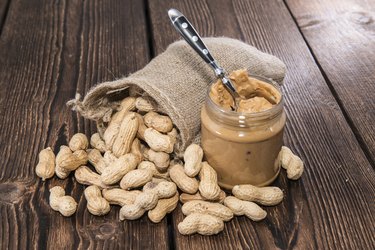
Your body needs sufficient amounts of dietary iron to produce oxygen-carrying red blood cells. Peanut butter provides a moderate amount of iron. It can be a significant source of iron for people who follow a vegetarian diet or who eat modest amounts of meat. However, if plant foods are your only source of iron, you will need to consume almost twice as much food compared to people who eat meat.
Peanut Butter and Iron
Video of the Day
The iron content of 2 tbsp. of chunky peanut butter is 0.6 milligrams. A serving of peanut butter provides 7.5 percent of the total daily recommended amount for an adult male. The type of iron found in peanut butter and other plant foods is nonheme iron. Your body is not able to absorb this form of iron as well as the heme iron found in meat and other animal foods.
Video of the Day
Requirements
The recommended daily amounts of iron vary with age and gender. Adult men ages 19 to 50 need 8 milligrams of iron daily, while women need 18 milligrams. All older adults need at least 8 milligrams daily. Pregnancy increases the body's demand for iron to 27 milligrams per day. While breast-feeding, women should get 9 milligrams daily. Young children need at least 7 milligrams per day, whereas older children need between 8 and 10 milligrams. Adolescent boys age 14 to 18 need 11 milligrams of iron and girls in the same age group need 15 milligrams each day.
Other Nonheme Iron Sources
Beans and lentils are excellent plant sources of nonheme iron. One cup of soybeans provides 8.8 milligrams of iron and 1 cup of lentils provides 6.6 milligrams. Lima and navy beans contain 4.5 milligrams of iron in each 1 cup. One cup of boiled spinach contains 3.2 milligrams of iron per serving. Fortified breakfast cereals contain up to 18 milligrams of iron and may provide up to 100 percent of your recommended daily value. Your body can absorb nonheme iron better when you consume it along with a source of vitamin C.
Heme Iron Sources
Chicken liver is high in iron with 12.8 milligrams per 3.5 oz. serving. A serving of oysters and clams contain 4.5 milligrams and 3 milligrams of iron, respectively. A typical serving of beef contains between 2.2 and 3.2 milligrams of iron, depending on the cut of meat. Chicken, turkey, pork and seafood are other foods that are relatively rich in iron.