
































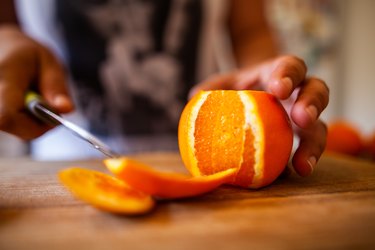

Garcinia cambogia, also known as malabar tamarind, is a type of citrus fruit that grows in evergreen trees in India and in some areas of Southeast Asia. It usually resembles a small red or yellow pumpkin, although occasionally it has a unique purple color. Traditionally a part of food preparation, it is used as a spice and a condiment and to make foods more satisfying and filling. It also has been used for medicinal purposes and is now the subject of much research into its potential use as a weight loss supplement.
Vitamins and Nutrients
Like other citrus fruits, garcinia cambogia contains plenty of vitamin C. An essential component for the growth and repair of tissues throughout our entire bodies, vitamin C is an excellent source of antioxidants as well. Antioxidants can block some of the free radical damage that ages us and often leads to heart disease, cancer and inflammatory conditions such as arthritis.
Garcinia cambogia also contains xanthones, a class of compounds that may have significant powers as cancer and heart disease fighters. Mangosteen, which contains even higher levels of xanthones, is currently the subject of extensive research, although no human studies have been reported to date. Garcinia cambogia is from the same family as the mangosteen.
Garcinol
Long used to treat gastric ulcers, garcinia cambogia contains garcinol, which lowers acidity in the stomach and protects gastric mucosa. According to The Herbal Resource website, the rind of garcinia cambogia also is astringent, which explains its long-time use for diarrhea and dysentery.
HCA
For dieters and researchers, the most exciting ingredient in garcinia cambogia is HCA, shorthand for hydroxycitric acid. As the Diet Spotlight website states, garcinia cambogia seems to have a number of beneficial effects, including the inhibition of the body to convert carbohydrates into fat. HCA may prevent food cravings, balance blood sugar levels and cause the brain to accelerate its signal to us that we are full. HCA may increase your endurance level as well.
Research
Can HCA really help you lose weight? The evidence so far is promising but inconclusive. The Healthy Vilage website states, "Although tests on animals have been very positive, human results have been inconsistent. In some double blind tests using a placebo, weight loss was up to three times that of the control, but in others there was no apparent difference between those taking garcinia, and those given a placebo."
Considerations
An all-natural supplement for weight loss with few or no side effects would be a godsend for the millions of people who are overweight or obese. Used for thousands of years for nutritional and medicinal purposes, garcinia cambogia is nontoxic, and no side effects have been reported. But it is not recommended for those with diabetes or Alzheimer's disease, nor for pregnant or lactating women. It is always a wise policy to check with your health care provider before adding a new supplement to your diet.


Member Comments