














































How to Make a Turmeric Paste for Psoriasis
Overview
Turmeric was first used in Ayurvedic medicine 6,000 years ago, according to the book "Turmeric: The Genus Curcuma." Turmeric is now gaining attention in the Western scientific community for the treatment of various conditions, including psoriasis. Curcumin is the active ingredient in turmeric responsible for inhibiting skin growth factors that lead to psoriasis scales, according to Volume 595 of the journal Advances in Experimental Medicine and Biology.
Step 1
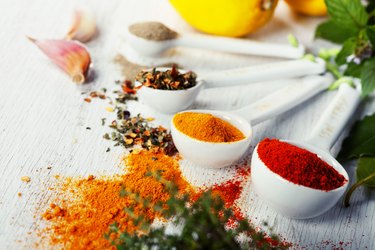
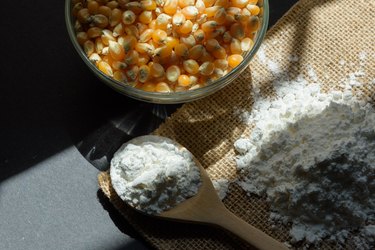
Purchase turmeric in powder form in the spice section of the grocery store or in supplement form at a nutrition store or pharmacy. Turmeric supplements come in capsule form. Pull the capsules apart to access the powder.
Step 2
Pour 1/4 tsp. or more of turmeric powder in a non-porous bowl (glass, ceramic or metal). That amount is enough to treat a small, quarter-size area. Use more turmeric if treating larger areas of the skin.
Step 3
Mix enough water into the turmeric powder to make a thick, smooth paste--about the consistency of mud. Pour one drop of water into the turmeric powder at a time, while stirring the mixture with a spoon to remove any lumps. If you accidentally use too much water, add more turmeric powder to obtain the desired consistency.
Step 4
Spread a thin layer of turmeric paste onto the psoriasis-affected areas of skin, before bedtime. Use enough paste so that you cannot see the underlying skin, but not so much that the paste is falling off.
Step 5
Wrap a piece of gauze around the skin treated with turmeric paste to keep the paste in place. Leave the turmeric paste on your skin, covered with the gauze, overnight.
Step 6
Remove the gauze and wash the turmeric paste off of your skin using warm water.
Things You'll Need
- Turmeric powder Small non-porous bowl Spoon Gauze
References
- The Genus Curcuma (Medicinal and Aromatic Plants - Industrial Profiles); CRC; March 2007
- Advances in Experimental Medicine and Biology, Volume 595; The Molecular Targets and Therapeutic Uses of Curcumin in Health and Disease; Bharat B. Aggarwal, Young-Joon Surh and Shishir Shishodia; 2007


Member Comments
by Draomin on February 5, 2010 at 6:12 PM
Use raw Turmeric root not powder. The powder is almost devoid
of the actions reported in Indian anecdotal and folkloric medicine.
Ayurvedic medical texts insist on using the root not powder.
(I am not counting post-Vedic references as they are not reliable)
Easy to make a paste out of the fresh root by dicing and placing
in a blender and has none of the inherent problems associated
with a reconstituted powder (adulteration and oxidation).
Start by checking Asian markets in your area for the raw Turmeric
root. If not available simply search the web, there are numerous
outlets that carry the root.
If using topically you may want to supplement the local application
with a culinary one. Grate Turmeric root directly into food especially
into the oil/butter as Turmeric constituents including the Curcumin
are much more soluble and bioavailable bonded to oils. I grate it on
the top of salads cook my eggs in it and generally use it whenever
I please including eating small chunks of the raw root (tastes like
a carrot on steroids). Always try to add to oils during the cooking
process.
For those who are not restricted from animal products I would like to
share a recipe for topical use:
1/2 ounce Emu Oil (trans-dermal transport)
2-3 ounces raw Turmeric root blended
1/4 ounce Sesame Oil
you may add:
4 drops of 100% Tea Tree Oil and/or 2 drops Glycerin
Macerate all ingredients into a small
(4 ounce) ointment or salve jar. Add
small amounts of Turmeric paste until
required consistency is achieved.
Dietary:
2 ounces Turmeric root
2 tablespoons fresh Dill
6 ounces plain yogurt
diced fresh tomates and cucumbers
Grate Turmeric root and blend with
Dill. Let marinate overnight and
pour over the fresh vegetables.
Add some grated Turmeric and
sprinkle a bit of dill over all.
Cucumbers are a cooling food
that work synergistically with
the Turmeric's anti-inflammatory
properties.
by Draomin on February 5, 2010 at 6:12 PM
Use raw Turmeric root not powder. The powder is almost devoid
of the actions reported in Indian anecdotal and folkloric medicine.
Ayurvedic medical texts insist on using the root not powder.
(I am not counting post-Vedic references as they are not reliable)
Easy to make a paste out of the fresh root by dicing and placing
in a blender and has none of the inherent problems associated
with a reconstituted powder (adulteration and oxidation).
Start by checking Asian markets in your area for the raw Turmeric
root. If not available simply search the web, there are numerous
outlets that carry the root.
If using topically you may want to supplement the local application
with a culinary one. Grate Turmeric root directly into food especially
into the oil/butter as Turmeric constituents including the Curcumin
are much more soluble and bioavailable bonded to oils. I grate it on
the top of salads cook my eggs in it and generally use it whenever
I please including eating small chunks of the raw root (tastes like
a carrot on steroids). Always try to add to oils during the cooking
process.
For those who are not restricted from animal products I would like to
share a recipe for topical use:
1/2 ounce Emu Oil (trans-dermal transport)
2-3 ounces raw Turmeric root blended
1/4 ounce Sesame Oil
you may add:
4 drops of 100% Tea Tree Oil and/or 2 drops Glycerin
Macerate all ingredients into a small
(4 ounce) ointment or salve jar. Add
small amounts of Turmeric paste until
required consistency is achieved.
Dietary:
2 ounces Turmeric root
2 tablespoons fresh Dill
6 ounces plain yogurt
diced fresh tomates and cucumbers
Grate Turmeric root and blend with
Dill. Let marinate overnight and
pour over the fresh vegetables.
Add some grated Turmeric and
sprinkle a bit of dill over all.
Cucumbers are a cooling food
that work synergistically with
the Turmeric's anti-inflammatory
properties.
by JudieDublin on March 16, 2010 at 2:27 PM
The power works perfectly well for psorasis. I had psorasis under my finger nail and put powder bought from the supermarket under my nail for a few months and now the psorasis is gone! I put some under my nail and used Vaseline or nail oil over it to keep it in! Had tried loads of things before and nothing worked so turmeric is a fantastic, cheap and easy solution! Hope other psorasis sufferers find the same!