












































Weight gain among maturing women is quite normal. Unfortunately, losing the weight becomes increasingly difficult as you approach menopause. Hormonal imbalances cause stubborn body fat to accumulate in your midsection, according to the Mayo Clinic. Heredity, diet and inactivity contribute to postmenopausal weight gain. The G.I. Menopause Diet suggests foods, recipes and activities to reach and maintain a healthy weight. The plan also offers methods to help you manage other symptoms associated with menopause.
The Original G.I. Diet
The G.I. Diet, developed by Rick Gallop, revolves around the glycemic index. The G.I. Diet website describes the glycemic index as the measurement of time it takes the body to convert food into glucose. The body rapidly breaks down carbohydrates in foods with a high glycemic index, intensifying hunger and cravings. The G.I. Diet recommends low glycemic index foods that convert to glucose much more slowly. These foods stave off hunger much longer than high glycemic index foods.
The Menopause Clinic
Gallop's latest G.I. Diet book concentrates on the particular needs of menopausal and post-menopausal women. "The G.I. Diet Menopause Clinic" follows a group of women participating in a diet program designed to help them face the specific challenges of menopausal weight loss, according to the Random House Canada website.
Time Frame
"The G.I. Menopause Diet Clinic" consists of a 13-week diet and lifestyle plan. Each week examines ways to improve different aspects of your life. These changes involve menu planning, proper food preparation, portion control and increased physical activity. The plan includes a section on how to integrate these changes into your daily life beyond the 13-week program.
Menopause Diet Basics
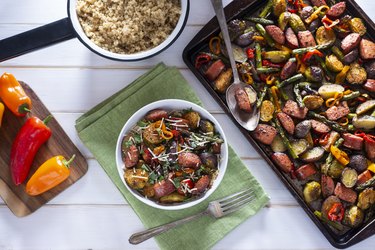
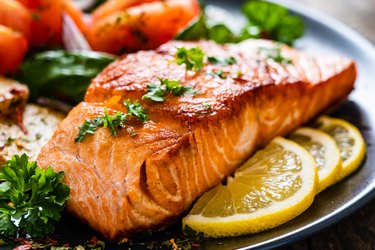
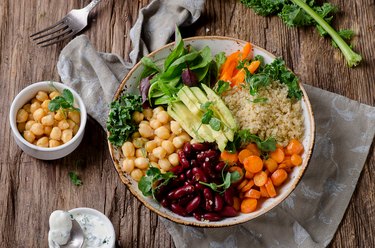
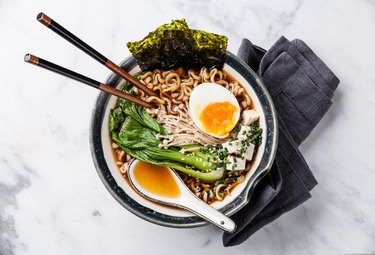
Like the original G.I. Diet, the menopause version focuses on three food groups: foods to avoid, foods to eat in moderation and recommended foods to facilitate weight loss. The diet plan encourages menopausal women to consume low glycemic index foods, such as whole grains, certain fresh fruits and vegetables, legumes, low fat dairy products, fish and occasional lean meats to prevent hormonal spikes and reduce middle age spread.
"The G.I. Menopause Diet Clinic" recommends middle age women stay away from foods that fall into the processed category. These high glycemic index foods cause jumps in blood sugar levels that trigger mood swings, hot flashes and insomnia. Foods containing white flour and refined sugar top the list of high glycemic index foods. Other types of processed foods to avoid include cold cereals, frozen dinners, carbonated soft drinks, dried packaged foods, snack foods and canned vegetables.
Considerations
Consult your healthcare provider before beginning a diet or exercise regimen. Your doctor will evaluate the program, review your medical history and identify potential health risks.


Member Comments