




















































Canned foods are quick and convenient ways to prepare a meal for your family. Many canned foods are healthy additions to your diet, but others contain large amounts of sodium. According to John Robbins, author of "Healthy at 100," some canned foods add nutrients, such as fiber and protein, to your diet, but other choices, such as pasta or soup, increase your sodium intake past healthy levels. Reading the ingredient and nutrition information will help you make the healthiest choices when choosing canned foods.
Peaches
Peaches supply small amounts of several important nutrients, including vitamin A and vitamin C. Canned peaches can offer health benefits if you know what to look for on the label, notes Jerrold E. Kemp, author of "Live Healthy at Any Age." Choose a can that includes peaches packed in 100 percent fruit juice rather than in heavy syrup, which adds several grams of refined sugar to your fruit. Fruit juice provides additional nutrients and naturally occurring sugars, which are a healthier choice. A 1/2-cup serving of canned peaches contains about 50 calories and 0 g of fat. Other fruits packed in 100 percent fruit juice, such as pineapple, pears and mandarin oranges, are just as healthy. You can add them to your diet daily.
Green Beans
Canned green beans are low in sugar and contain small amounts of vitamin A, vitamin C and calcium. A 1/2-cup serving of green beans contains 2 g of fiber and only about 20 calories. Author Kemp recommends examining the nutrition and ingredient labels on canned green beans because many brands contain added salt, sometimes as much as 400 mg per serving. The healthiest canned green beans are the ones that only contain the vegetables and water and have no added salt. Other salt-free canned vegetables, such as peas, asparagus and tomatoes, are equally as healthy.
Pinto Beans
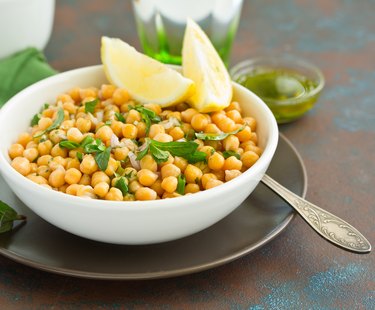
Canned pinto beans will add a significant amount of fiber to your daily diet with about 7 g in a 1/2-cup serving. Pinto beans are also a good source of protein, iron and calcium and contain about 110 calories in one serving. Author Robbins notes that many types of canned beans are packed in water with several hundred milligrams of added sodium. Read the nutrition and ingredient labels to find the brands that do not add salt. Many companies offer salt-free beans in addition to regularly packed beans, so look closely before choosing one. All varieties of salt-free canned beans, including black, white and kidney, are notable sources of fiber and protein.
References
- "Healthy at 100"; John Robbins; 2006
- "Live Healthy at Any Age"; Jerrold E Kemp ; 2010


Member Comments