



































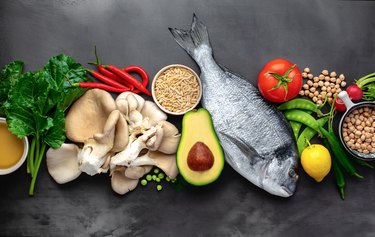







Astaxanthin is classified as a carotenoid. Carotenoids are yellow and red pigments that are commonly found in plants, algae and bacteria. Dietary intake of astaxanthin can provide your body with antioxidant benefits. You may increase your daily dietary intake of astaxanthin by increasing consumption of certain foods such as salmon, trout and shrimp. Dietary supplements containing microalgae and yeast can also increase your intake of astaxanthin. Increasing intake of astaxanthin provides many health benefits.
Cataract Protection
Increasing your daily intake of astaxanthin can offer protection against cataract formation. A study performed by the Institute of Biological Chemistry at Academia Sinica in Taiwan revealed that astaxanthin effectively protected against chemically induced cataracts in rats. The study involved using a toxic form of selenium, called selenite, to induce cataracts in rats. Astaxanthin proved to inhibit the toxicity of selenite and prevent the formation of cataracts.
Cardiac Protection
Dietary intake of astaxanthin has also been proven effective in offering protection for the heart muscle. Research performed at the School of Human Movement Studies and School of Medicine at the University of Queensland in Australia revealed that astaxanthin reduces oxidative stress, inflammation and increases blood flow -- all beneficial to the heart. In addition, studies that were performed by inducing heart attacks in animals revealed cardioprotective properties from both oral and intravenous administration of astaxanthin.
Male Infertility
Astaxanthin has been a suggested treatment for male infertility. Research performed at Ghent University Hospital in Belgium revealed that subjects treated with astaxanthin exhibited sperm rates at higher velocities than the placebo group. The subjects treated with astaxanthin also proved to have a higher pregnancy rate when compared to the placebo group.
Sports Performance
Regular consumption of astaxanthin has also been suggested to assist athletes in recovering more quickly from workouts and competitions. According to Science Links Japan, the study subjects that were treated with astaxanthin had the benefit of improved visual acuity compared to the untreated group. The finding that is more important for athletes is the fact that the group treated with astaxanthin experienced significantly lower lactic acid levels after running 1200 m than the untreated group. Lactic acid levels are indicators of muscle fatigue. The lower the level of lactic acid, the less fatigued the muscles. The combination of improved visual acuity and less muscle fatigue makes astaxanthin a desirable choice for athletes.
References
- PubMed.gov: Astaxanthin Interacts with Selenite and Attenuates Selenite-Induced Cataractogenesis
- PubMed.gov: Astaxanthin, Oxidative Stress, Inflammation and Cardiovascular Disease
- PubMed.gov: Combined Conventional/Antioxidant "Astaxanthin" Treatment for Male Infertility: a Double Blind, Randomized Trial
- Science Links Japan: Sports Performance Benefits from Taking Natural Astaxanthin Characterized by Visual Acuity and Muscle Fatigue Improvement in Humans


