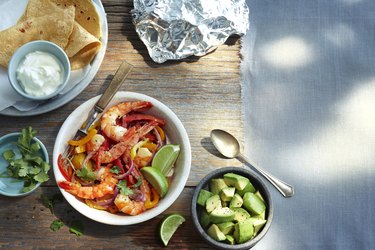
Fish is a good source of potassium, an essential mineral beneficial for a healthy heart and strong muscles. However, individuals with a kidney or heart condition may want to consume low potassium fish such as scallops, shrimp, lobster or anchovies. High potassium levels have been linked to certain health risks.
High Potassium Level Risks
Video of the Day
High potassium, known as hyperkalemia, is a potentially serious condition caused when too much potassium remains in your blood system. Symptoms of hyperkalemia include muscle weakness, numbness, tingling and nausea. Long-term hyperkalemia can lead to difficulty with urination and heart abnormalities. In more serious cases, hyperkalemia can lead to heart attack, kidney failure or paralysis.
Video of the Day
The body uses the potassium it needs and excretes the rest through urination. However, individuals with kidney disease may be unable to eliminate excess potassium through urination. Heart failure medications can also increase potassium levels in your body. It's important to discuss with your physician what precautions to take. Managing your diet by consuming foods lower in potassium is also an important step.
The National Kidney Foundation provides these guidelines for safe blood potassium levels, which you should discuss with your doctor or dietitian:
If it is 3.5 to 5.0 — You are in the SAFE zone
If it is 5.1 to 6.0 — You are in the CAUTION zone
If it is higher than 6.0 — You are in the DANGER zone
Low-Potassium Fish and Shellfish
Many foods contain lower levels of potassium, including fish, fruit and vegetables. Low-potassium fish include raw scallops (two large or five small) with 62 milligrams, five canned anchovies with 106 milligrams and pickled herring with 20 milligrams per 1-ounce serving. Other good options include raw yellowfin tuna, canned tuna, orange roughy and smoked salmon.
Shellfish lovers have several low-potassium options. Three ounces of cooked lobster contain 196 milligrams of potassium; the same amount for potassium in shrimp contains 145 milligrams for cooked, and for canned shrimp there are 103 milligrams in one cup. A 3-ounce portion of king crab has 223 milligrams of potassium and a single blue crab cake contains 194 milligrams. Three ounces of imitation crab, popular in sushi rolls, contains just 77 milligrams.
Fish to Reduce or Avoid
Some fish contain higher levels of potassium. You should discuss with your doctor or nutritionist whether to reduce consumption or avoid altogether of these selections. According to Dietary Guidelines, examples include 3 ounces of either wild Atlantic salmon with 534 milligrams, canned clams with 534 milligrams and halibut with 449 milligrams. Other fish with levels of potassium over 350 milligrams per serving include yellowfin tuna, rainbow trout, Pacific rockfish and snapper.
The best diet is a balanced one, containing plenty of vegetables, fruits, whole grains, healthy oils and lean proteins. According to the Harvard T.H. Chan School of Public Health, fish is an important part of a healthy diet, and there are many options low in potassium if you have a medical condition that requires reducing consumption. As with any health condition, discuss with your physician or nutritionist how managing your diet can help improve your overall health.
- Centers for Disease Control & Prevention (CDC): "The Role of Potassium in Your Diet."
- Mayo Clinic: "High Potassium (Hyperkalemia): When To See Your Doctor"
- National Kidney Foundation: "Potassium and Your CDD Diet"
- U.S. Dietary Guidelines 2015-2010: "Sources of Potassium"
- USDA My Food Data:: "116 Fish Highest in Potassium"
- Harvard T.H. Chan School of Public Health: "Fish: Friend or Foe?"