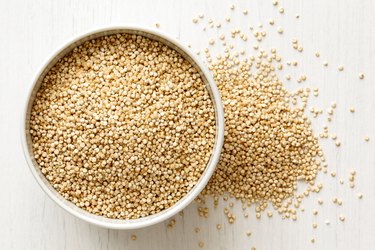
Touted as the supergrain of the future, quinoa is a popular choice for health-conscious consumers, vegans and athletes. It's gluten-free, rich in fiber and higher in protein than most grains. Plus, it is one of the few plant-based proteins containing all of the essential amino acids required for muscle development and overall health. This delicious, filling grain can make weight loss easier by keeping your appetite in check.
Tip
Quinoa is rich in fiber, protein and amino acids that facilitate weight loss. When eaten as part of a healthy diet and exercise plan, it can boost your metabolism and improve your body's ability to burn fat.
Video of the Day
What Is Quinoa?
Quinoa is a pseudo-cereal rich in vitamins, minerals and antioxidants. It also contains lunasin and other bioactive compounds that fight oxidative stress and inflammation. Thanks to its high nutritional value, it's classified as a functional food.
Video of the Day
You can choose among several varieties, including red, black and white quinoa. With its slightly nutty flavor and rich texture, it makes an excellent addition to salads, stuffed bell peppers, meatballs, homemade protein bars and even cookies. Quinoa can replace rice in most recipes, from side dishes to soups and casseroles. You can use it as an ingredient in energy bites, pancakes, granola and raw treats.
Unlike most grains, quinoa contains no gluten, which makes it perfect for those with celiac disease, a condition that affects one in 133 Americans. However, some manufacturers process it in facilities that also handle wheat and other gluten-containing products. To stay safe, make sure the label says gluten-free.
Quinoa Nutritional Value
This pseudo-cereal is marketed as a superfood — and for good reason. It's higher in vitamins and minerals than most grains and has just a few calories per serving. According to a 2017 review published in the journal Cell Research, quinoa provides more lysine than wheat, maize or rice. This amino acid plays a key role in the production of collagen, hormones and enzymes, supports immune function and improves mineral absorption.
Quinoa Nutrition Facts
Quinoa is also an excellent source of phenylalanine, isoleucine, B-complex vitamins and polyphenols, as well as potent antioxidants like quercetin and kaempferol. In clinical trials, it has been shown to protect against heart disease and improve metabolic health, according to a 2015 research paper featured in the journal Comprehensive Reviews in Food Science and Food Safety.
One serving of cooked quinoa provides:
- 120 calories
- 4.4 grams of protein
- 21.3 grams of carbs
- 1.9 grams of fat
- 2.8 grams of fiber
- 32 percent of the DV (daily value) of manganese
- 15 percent of the DV of phosphorus
- 16 percent of the DV of magnesium
- 10 percent of the DV of copper
- 7 percent of the DV of zinc
- 10 percent of the DV of folate
- 7 percent of the DV of thiamin
- 6 percent of the DV of vitamin B-6
This grain is easily digestible and boasts a 91.6 percent absorption rate. Protein digestibility increases during cooking. White rice, by contrast, has 130 calories, 2.7 grams of protein, 28.2 grams of carbs and less than 1 gram of fiber per serving. Plus, it's lower in manganese, zinc and copper.
Read more: 13 Powerful Grains and Seeds
Does Quinoa Cause Weight Loss?
Quinoa doesn't directly cause weight loss, but it can make the process easier. First of all, it's chock-full of protein and fiber. This combo suppresses hunger, which in turn, may help reduce your food intake. Additionally, high fiber intake has been linked to lower cholesterol levels.
A 2015 review featured in Plant Foods for Human Nutrition suggests that quinoa may help prevent weight gain and improve blood lipids, but more research is needed to confirm these findings. In a 2014 clinical trial, which was published in the journal Physiology & Behavior, the grain has been found to reduce dietary fat absorption and increase energy expenditure while improving glucose metabolism. What this means is that quinoa may help you burn more calories throughout the day and enhance your body's ability to process carbs.
Quinoa also provides more than one-third of the daily recommended intake of manganese. This mineral may help protect against abdominal obesity, elevated triglycerides and metabolic syndrome, according to a 2016 research paper published in the British Journal of Nutrition. Additionally, quinoa has a low glycemic index, so it doesn't cause blood sugar spikes followed by crashes.
Build Lean Mass and Strength
Along with oats and other grains, this superfood is ideal for vegan athletes thanks to its high protein content. A diet rich in protein helps build and preserve muscle, increases overall strength and supports physical performance. Lysine, one of the most abundant amino acids in quinoa, promotes muscle repair and improves your body's ability to use fats for fuel.
Diet and exercise are equally important for maintaining a healthy body weight. Quinoa provides a perfect balance of protein, carbs and micronutrients. Therefore, it can help you perform better at the gym and make the most out of your workouts. At the same time, it increases satiety and keeps you full longer, making it easier to eat clean.
Quinoa also contains iron, which benefits athletes and gym-goers. As the National Academy of Sports Medicine notes, this mineral supports energy production and red blood cell formation. It also keeps your immune system strong and protects against anemia. Daily iron supplementation has been shown to improve exercise performance in women, but you can obtain this nutrient from quinoa and other whole foods.
Keep Your Gut Healthy
Your gut is home to trillions of bacteria that influence body weight, appetite, mood, digestion and hormone production. These microorganisms have a direct impact on your ability to lose fat and keep it off, according to a 2018 study published in the journal Genes. Researchers have found that probiotics, prebiotics and symbiotics can positively alter the gut flora, facilitating weight loss.
Quinoa and other pseudo-grains are rich in prebiotics, a type of fiber that feeds the good bacteria in your gut. These compounds balance the microbiota, which in turn, may help improve digestive health and prevent obesity by suppressing appetite and reducing body weight.
Read more: 19 High-Fiber Foods — Some May Surprise You!
More than two-thirds of your immune system resides in the gut, and even the slightest imbalance can affect your ability to fight infection and diseases. Additionally, gut bacteria aid in the production of serotonin, the so-called "happiness" hormone. Low serotonin levels can lead to depression, poor sleep, mood swings, panic attacks, digestive distress and sugar cravings, among other symptoms. Adding quinoa to your diet is a safe, natural way to restore your gut flora and enjoy better overall health.
- NCBI: Innovations in Health Value and Functional Food Development of Quinoa (Chenopodium quinoa Willd.)
- Wiley Online Library: Phytochemicals in Quinoa and Amaranth Grains and Their Antioxidant, Anti‐Inflammatory, and Potential Health Beneficial Effects
- Beyond Celiac: Is Quinoa Gluten-Free?
- Beyond Celiac: Celiac Disease: Fast Facts
- Nature.com: A High-Quality Genome Assembly of Quinoa Provides Insights Into the Molecular Basis of Salt Bladder-Based Salinity Tolerance and the Exceptional Nutritional Value
- Medical News Today: What Are the Health Benefits of Lysine?
- Wiley Online Library: Innovations in Health Value and Functional Food Development of Quinoa (Chenopodium quinoa Willd.)
- SELFNutritionData: Cooked Quinoa
- SELFNutritionData: Cooked White Rice
- ScienceDirect: A Nonrestrictive, Weight Loss Diet Focused on Fiber and Lean Protein Increase
- EatRight Pro: Position of the Academy of Nutrition and Dietetics: Health Implications of Dietary Fiber
- Springer Link: Physiological Effects Associated With Quinoa Consumption and Implications for Research Involving Humans
- ScienceDirect: Quinoa Extract Enriched in 20-Hydroxyecdysone Affects Energy Homeostasis and Intestinal Fat Absorption in Mice Fed a High-Fat Diet
- Cambridge.org: Dietary Intake of Manganese and the Risk of the Metabolic Syndrome in a Chinese Population
- NCBI: Effect of Quinua (Chenopodium quinoa) Consumption as a Coadjuvant in Nutritional Intervention in Prediabetic Subjects
- The Journal of Nutrition: Higher Protein Intake Is Associated With Higher Lean Mass and Quadriceps Muscle Strength in Adult Men and Women
- PennState Hershey: Lysine
- NASM.org: Iron: An Essential Mineral for Athletic Performance
- The Journal of Nutrition: Iron Supplementation Benefits Physical Performance in Women of Reproductive Age
- MDPI: Dietary Alteration of the Gut Microbiome and Its Impact on Weight and Fat Mass
- Royal Society of Chemistry: Assessment of the Prebiotic Effect of Quinoa and Amaranth in the Human Intestinal Ecosystem
- Aaptiv: Why Is Your Gut So Important? Plus, Tips for Digestive Health
- Integrative Psychiatry: Serotonin and Serotonin Deficiency