















































What Are the Dangers of Eating Raw Vegetables?

What Are the Dangers of Eating Raw Vegetables?
Photo Credit Jupiterimages/Brand X Pictures/Getty Images

Consuming raw vegetables as part of a balanced diet can provide your body with fiber, vitamins and minerals. Your body needs nutrients from vegetables to survive, but some adverse side effects may occur from consuming raw vegetables. Add vegetables to your diet as part of a balanced eating plan. Vegetables typically contain negligible amounts of fat and protein, and therefore cannot be your only source of nutrition.

Bacteria

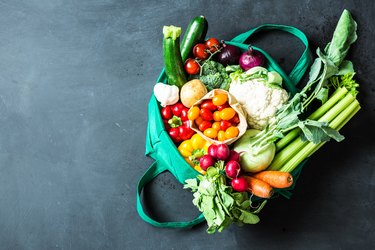
The U.S. Food and Drug Administration reports that harmful bacteria may come into contact with your vegetables while they are growing. The soil or water at the farm may be contaminated. These bacteria may cause a food-borne illness. Wash your produce thoroughly before you eat it or put it in the refrigerator, to avoid possibly contaminating other foods. Cross-contamination occurs when bacteria from one food gets onto another food. This may happen when fresh vegetables are on a surface that had a contaminated food, such as raw meat, or if they are stored under dripping raw meat. Handle your raw vegetables carefully since they do not get cooked and you will consume any bacteria that are on them.

Intestinal Distress

Consuming large amounts of raw vegetables at once may cause bloating, gas, diarrhea or constipation. Raw vegetables are loaded with insoluble fiber which pushes food through your body and creates fecal bulk. You need 25 to 38 g of fiber each day, as reported by MayoClinic.com. A 1-cup serving of raw broccoli contains 3 g of fiber. Avoid negative side effects of too much fiber consumption by limiting your raw veggie intake to 2 to 3 cups per day. Do not eat all of your raw vegetables at once. Break them up throughout the day to avoid a large amount of fiber entering your body at once.

Heartburn

Some vegetables are high in acid an may cause heartburn, or acid reflux, according to HealthAssist.net. This occurs when the lower esophageal sphincter is weakened and allows stomach acid to enter the esophagus. A long-term effect may include cancer of the esophagus. High-acid vegetables may also cause your stomach to create extra acid as well. Raw vegetables that are full of acid include tomatoes, onions and garlic. Avoid these foods if they cause heartburn.

Carotenemia

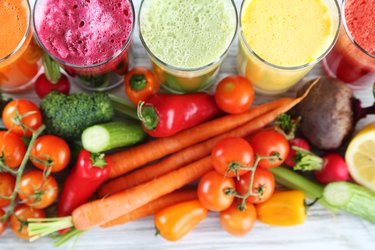
Carotenemia occurs when you consume foods with large amounts of beta-carotene, as reported by HealthAssist.net. Consuming large amounts of these orange vegetables will cause your skin to have an orange or yellow hue. Beta-carotene is the yellow-orange colored anti-oxidant that is found in sweet potatoes, carrots and yellow squash. Do not follow a food or juice diet that only allows you to eat orange vegetables to avoid this condition.

References

Article reviewed by Libby Swope Wiersema Last updated on: Dec 11, 2010

Must see: Photo Galleries

Member Comments