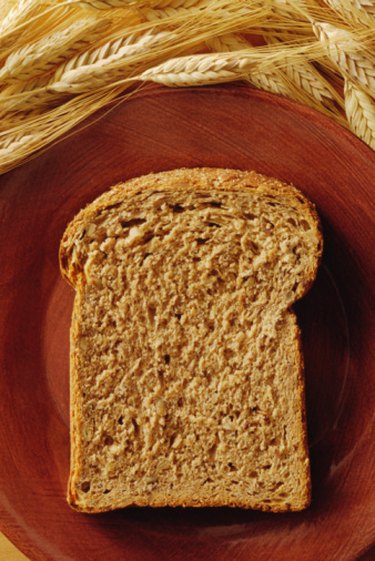
You choose whole wheat bread for its higher nutritional value, but upon reading the labels of many brands, realize they contain no more fiber and just as many added sugars and fillers as white bread. Not all wheat breads are created equal. Whole wheat bread is healthier than white bread only if it is truly made with whole wheat flour.
Significance
Video of the Day
Health experts at the Harvard School of Public Health, the American Heart Association and the U.S. Department of Agriculture recommend you eat more whole grains daily. The nutrition and fiber in whole grains, such as those found in whole wheat bread, can protect against heart disease, cancer, diabetes and digestive distress. Wheat bread can help you reach the daily recommendations for fiber intake made by the Institute of Medicine -- 26 grams per day for women younger than 50 and 38 grams per day for men younger than 50.
Video of the Day
Considerations
The type of whole-wheat bread you choose determines its ultimate health impact. Some commercially prepared brands of wheat bread contain 69 calories and 1.9 gram of fiber, making it nearly identical to white bread. These brands usually name wheat flour or enriched flour as the first ingredient and whole grains are listed much lower in the list. Wheat flour is only 25 percent whole wheat, and the other 75 percent is refined white flour.
Label Reading
Look for whole wheat bread with "whole wheat flour" as the first ingredient. The fiber content of the most nutritious whole wheat bread should be 3 grams, or more, per slice. The fewer the ingredients in the list the better, look for breads that contain just whole wheat flour, water, yeast, salt, and perhaps, an added sweetener, notes Dr. William Sears and Martha Sears, R.N. on their website.
Nutrition Information
Whole wheat bread contains more protein and fiber than white bread. It provides up to four times the amount of zinc, essential to immunity and carbohydrate digestion. Whole wheat bread also contains more folic acid and iron, two nutrients that support oxygen circulation by aiding in red blood cell growth. It also has more chromium, a mineral essential to the body's ability to digest sugar and fat.
Options
One hundred percent whole wheat bread is a healthy option, but you can also choose other whole grain breads to benefit from added fiber and nutrition. Oat bran, rye and spelt are other flours that may be listed as the first ingredient in healthy breads. "White" whole wheat bread is marketed as a more palatable alternative to regular wheat breads. It is made with an albino variety of wheat, and goes through an extra processing step to create a softer texture. While choosing the least processed options is preferable, white whole wheat bread is usually a better choice than regular white bread.
- Ask Dr. Sears: Good Grains
- Medline Plus: Zinc in the Diet
- Institute of Medicine: Dietary Reference Intakes for Energy, Carbohydrate, Fiber, Fat, Fatty Acids, Cholesterol, Protein, and Amino Acids
- Linus Pauling Institute: Whole Grains
- Harvard School of Public Health: Health Gains from Whole Grains
- American Heart Association: Nutrition Center
- MyPyramid.gov: Inside the Pyramid