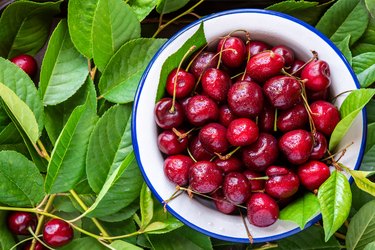
When dark red cherries are in season, it's hard to resist the sweet fruit. But are cherries good for you?
The short answer is yes. Here, get the nutrition facts on cherries and learn about their health benefits.
Video of the Day
Video of the Day
First, What Are the Main Types of Cherries?
The U.S. is one of the leading growers of cherries in the world, producing two main types: sweet cherries and tart or "sour cherries," per Washington State University. And while there are many cherry growers in the U.S., cherries also grow wild in many parts of the country.
The majority of sweet cherries are eaten fresh. Fresh cherries are good for you, but frozen and canned cherries and cherry juice have benefits, too. In fact, about 97 percent of tart cherries are processed primarily for cooking and baking, per a March 2018 study in Nutrients.
When you imagine the fresh summer fruit you might enjoy at a picnic, you're thinking of sweet cherries, which are available in many varieties and colors — ranging from dark red to yellow. The most common sweet cherry in the U.S. is the dark-red Bing cherry, per Oregon State University Extension Service.
Tip
Dark red cherries are packed with plant-based nutrients that promote good health. "The darker and deeper the color, the more phytonutrient-rich they are," says Susan Greeley, RD, dietitian and chef-instructor at the Institute of Culinary Education.
Cherry Nutrition Facts
One cup of whole red cherries with pits (about 21 cherries) is equal to a single serving. Cherries' nutrition facts are below, per the USDA:
Cherry Nutrient Content
Calories | 97 |
Total fat | 0.3 g |
Cholesterol | 0 mg |
Sodium | 0 mg |
Total carbs | 25 g |
Dietary fiber | 3 g |
Sugar | 20 g |
Added sugar | 0 g |
Protein | 1.6 g |
Cherry Macros
- Total fat: One cup of whole red cherries has 0.3 grams of total fat, which includes 0.07 milligrams of polyunsaturated fat, 0.06 grams of monounsaturated fat, 0.1 grams of saturated fat and 0 grams of trans fat.
- Carbohydrates: One cup of whole red cherries has 25 grams of carbs, which includes 2.9 grams of fiber and 17.7 grams of naturally occurring sugars.
- Protein: One cup of whole red cherries has 1.5 grams of protein.
Vitamins, Minerals and Other Micronutrients
Cherries are also full of essential vitamins, minerals and other micronutrients that can help your overall health.
Vitamins and Mineral in Cherries (DV)
Vitamin C | 11% |
Copper | 9% |
Potassium | 7% |
Vitamin B5 | 5% |
Vitamin B6 | 4% |
Riboflavin (vitamin B2) | 4% |
Magnesium | 4% |
Manganese | 4% |
How Many Cherries Should You Eat a Day?
A typical serving size of cherries is about 5 ounces, or 21 cherries, per the USDA.
For some people, eating too many cherries can cause digestive issues such as gas, bloating and diarrhea because they're high in fiber and contain sorbitol, a natural sugar alcohol that some people are sensitive to.
The Health Benefits of Cherries
Dark red cherries will instantly add a pop of flavor to summer meals, but they're good for you, too. In fact, many people consider them to be a "superfood."
Here's a breakdown of the many benefits of eating cherries:
1. Promote Healthy Digestion
One of the major benefits of cherries comes from their healthy dose of fiber, which is important for keeping your digestive system, cholesterol levels, blood sugar levels and heart healthy, per the Mayo Clinic. Cherries contain 2.9 grams of fiber per cup, which is 10 percent of your daily value.
Adults should eat about 25 to 38 grams of fiber per day, per the Academy of Nutrition and Dietetics. Fiber helps you feel fuller after meals, which may help you achieve or maintain a healthy weight, and it can also help prevent constipation and diverticulosis (a condition in which pockets form on the walls of your digestive tract).
A diet high in fiber may also reduce your risk of colon cancer, according to an October 2015 study in The American Journal of Clinical Nutrition.
2. Support Your Immune System
Cherries are an especially good source of vitamin C, which has antimicrobial and antioxidant properties. Vitamin C supports your immune system and helps to protect you from disease, per the National Institutes of Health (NIH).
In fact, when a high dose of vitamin C is taken at the onset of a cold, it can reduce the duration of the cold and lessen its symptoms, per a July 2018 meta-analysis in BioMed Research International.
The vitamin C in cherries also helps your body produce collagen, a protein needed to heal wounds, per the NIH.
Cherries offer small amounts of other antioxidants that help fight free radicals, including beta carotene and vitamin E. Together, these nutrients may offer protection against chronic diseases.
Tip
Some people may think cherries can help alleviate the symptoms of urinary tract infections, but this is more commonly associated with cranberries, due to their ability to keep bacteria from sticking to the walls of your bladder, per the National Library of Medicine.
3. May Help With Gout Pain
Although more research is needed, cherries may play a role in managing pain from gout. A complex but common form of arthritis, gout causes sudden, severe attacks of pain and swelling in one or more joints (typically the big toe), per the Mayo Clinic.
Cherries have antioxidant properties and may reduce the body's inflammatory response to the urate crystals that cause gout. They may even lower the bone resorption that is characteristic of bone erosions in gout, per a May 2019 review in Therapeutic Advances in Musculoskeletal Disease.
That said, large randomized controlled trials are needed to determine the use of cherries in the treatment of gout. "It would seem that this is long overdue and may provide additional evidence as to the role cherries could play in the future management of a burdensome disease," note the authors of the review.
Meanwhile, researchers found that eating cherries over a two-day period was associated with a 35 percent lower risk of gout flares in participants with an existing gout condition, per an older December 2012 study in Arthritis & Rheumatism.
4. Could Help You Sleep Better
If you eat dark red cherries for an after-dinner snack, you may help eliminate restlessness at bedtime.
"Cherries may help you sleep better," says Mia Syn, RDN. "Studies suggest that cherries are a natural source of melatonin, which helps control your body's internal clock and regulate your sleep patterns."
More research is needed to fully understand the potential relationship between cherry juice and sleep. So far, the existing studies are small and often funded by the manufacturers of cherry juice and supplements.
For example, a small April 2018 pilot study in the American Journal of Therapeutics found <idata-stringify-type="italic"> </idata-stringify-type="italic">cherry juice increased sleep time and efficiency in adults over 50. And a small October 2012 study in the European Journal of Nutrition found cherry juice concentrate increased participants' melatonin levels.
Your body produces melatonin naturally, and as levels of this hormone rise in the evening, it puts you in a state of quiet wakefulness that promotes sleep, per Johns Hopkins Medicine.
You probably make enough melatonin for sleep on your own, but certain things can hinder its sleep-triggering signals, including staring at a screen or sitting under bright lights.
5. Dark Red Cherries Can Reduce Oxidative Stress
Cherries are filled with antioxidants, which stave off cell damage caused by oxidative stress. This oxidative stress is created by free radicals that form when you exercise, digest food or are exposed to environmental sources like cigarette smoke, air pollution and sunlight, per the NIH.
Experts believe oxidative stress plays a role in several diseases, including cancer, cardiovascular diseases, diabetes, Alzheimer's disease, Parkinson's disease and eye diseases like age-related macular degeneration and cataracts.
6. May Benefit Cardiovascular Health
Polyphenols — a type of antioxidant in cherries — may have a blood pressure-lowering effect and protect your cardiovascular system, according to a November 2013 study in Molecules.
The researchers also found that black cherries are higher in polyphenols than other dark-hued fruits such as plums and grapes.
Cherries are particularly rich in anthocyanins, per a March 2018 study in Nutrients. Anthocyanins are a type of polyphenol that's linked to lower blood pressure, reduced cancer cell growth, diabetes prevention, improved vision and a lower risk of heart disease, per an October 2015 report in the Journal of Food Processing & Technology.
Because of these anthocyanins, cherries are also considered an anti-inflammatory food and can help reduce inflammation throughout the body, per the Nutrients study.
7. May Aid in Exercise Recovery
Tart cherry juice, in particular, has been shown to lessen pain and accelerate strength recovery after exercise by decreasing blood markers of inflammation/oxidative stress, per an August 2017 review in Current Sports Medicine Reports.
Sour Cherry Benefits
Sour cherries, also called tart cherry or Montmorency cherry, is another type of cherry that has several health benefits. As the name implies, they have a sour taste compared to dark red cherries. They're lighter in color and generally smaller than sweet red cherries, but they have similar properties.
1. Contain Antioxidants
Much like their sweeter counterparts, sour cherries also contain anthocyanins, which are antioxidants that fight oxidative stress and are linked to a lower risk of heart disease, diabetes and cancer, per the Journal of Food Processing and Technology report.
2. Contain Vitamin C and Beta Carotene
Sour cherries also have vitamin C and beta carotene, and they may even help you get some sleep, according to December 2012 research in the European Journal of Nutrition.
3. Contain Quercetin
What sets them apart from sweet cherries is that sour cherries contain quercetin, an antioxidant that's tied to significantly decreased blood pressure, according to a July 2013 study in the International Journal of Preventative Medicine.
Quercetin may also help improve immune function and lower inflammation in conditions like asthma, allergic rhinitis and atopic dermatitis, per a May 2020 review in Allergy, Asthma & Clinical Immunology.
Warning
The quercetin in sour cherries may interact with anticoagulants ("blood-thinning" medications) such as warfarin, according to April 2017 research in Biomedicine and Pharmacotherapy.
People taking blood thinners should talk to their doctor before adding sour cherries to their diet.
Health Risks of Cherries
1. GI Issues
Of course, you want to be careful not to eat too many cherries, or you may end up with a stomachache. "Overeating any fruit can lead to gastrointestinal upset, particularly due to the fiber," Syn says. "Most Americans, however, do not get enough fiber."
There are also some cons of cherry juice to consider, too. Drinking too much can cause gastrointestinal upset.
2. Allergic Reaction
Some people who are allergic to pollen may also experience pollen food allergy syndrome (PFAS) when eating cherries, per the American College of Allergy, Asthma & Immunology.
This is caused by cross-reacting allergens found in pollen and raw fruits, vegetables and some tree nuts. PFAS may cause an itchy mouth or scratchy throat after you eat cherries.
If you always experience these symptoms after eating cherries, speak to an allergist.
Warning
If you have symptoms of a severe allergic reaction after eating cherries, such as trouble breathing, feeling faint or throat or tongue swelling, call 911 or go to the nearest emergency room.
Cherry Preparation and Tips
Dark red cherries can make a delicious addition to your regular meals, savory or sweet.
"I like picking up cherries when they are in season and adding them to my weekly fruit rotation," Syn says. "I mix them into Greek yogurt bowls and oatmeal. They also add a delicious pop of sweetness to salads."
You can also bake with cherries to add a fiber boost to scones, muffins or even pies and crumbles.
When shopping for dark red cherries, look for shiny, firm fruits with green stems (which are an indicator of freshness), per the Victorian Cherry Association. Store cherries unwashed in the coldest part of the refrigerator and wash before eating.
If you want to incorporate more cherries into your diet, try out easy recipes like:
- A chocolate cherry smoothie or cherry energy balls from Eating Bird Food
- A cherry chopped salad with maple-mustard dressing from Dishing Out Health
- A sour cherry crisp with berries from A Beautiful Plate
Alternatives to Dark Red Cherries
If cherries don't agree with your stomach, there are a few other types of fruits you can try instead.
Per a September 2015 review in Advances in Nutrition, other anthocyanin-rich fruits you can eat in place of cherries include:
- Blueberries
- Blackberries
- Black currants
- Strawberries
- Elderberries
- Washington State University: "Varieties — Cherry"
- Nutrients: "A Review of the Health Benefits of Cherries"
- Oregon State University Extension Service: "Growing Quality Cherries"
- Mayo Clinic: "Dietary fiber: Essential for a healthy diet"
- Academy of Nutrition and Dietetics: "Easy Ways to Boost Fiber in Your Daily Diet"
- The American Journal of Clinical Nutrition: "Dietary fiber intake and risk of colorectal cancer and incident and recurrent adenoma in the Prostate, Lung, Colorectal, and Ovarian Cancer Screening Trial"
- National Institutes of Health: "Vitamin C"
- BioMed Research International: "Extra Dose of Vitamin C Based on a Daily Supplementation Shortens the Common Cold: A Meta-Analysis of 9 Randomized Controlled Trials"
- Mayo Clinic: "Gout"
- Therapeutic Advances in Musculoskeletal Disease: "Is there a role for cherries in the management of gout?"
- Arthritis & Rheumatism: "Cherry consumption and decreased risk of recurrent gout attacks"
- Johns Hopkins Medicine: "Melatonin for Sleep: Does It Work?"
- National Institutes of Health: "Antioxidants: In Depth"
- Molecules: "Nutraceutical Value of Black Cherry Prunus serotina Ehrh. Fruits: Antioxidant and Antihypertensive Properties"
- Journal of Food Processing & Technology: "Health benefits of anthocyanins"
- American College of Allergy, Asthma & Immunology: "Pollen Food Allergy Syndrome"
- Advances in Nutrition: "Anthocyanins"
- European Journal of Nutrition: Effect of tart cherry juice (Prunus cerasus) on melatonin levels and enhanced sleep quality
- Allergy, Asthma & Clinical Immunology: Quercetin with the potential effect on allergic diseases
- Current Sports Medicine Reports: "Tart Cherry Juice in Athletes: A Literature Review and Commentary"
- USDA: "Cherries, sweet, dark red, raw"
- National Library of Medicine: "Cranberries for treating urinary tract infections"
- USDA: "Cherries, sweet, raw"
- Dishing Out Health: "CHERRY CHOPPED SALAD WITH MAPLE-MUSTARD DRESSING"
- Eating Bird Food: "Chocolate Cherry Smoothie"
- Eating Bird Food: "Cherry Energy Balls"
- A Beautiful Plate: "Sour Cherry Crisp with Berries"
- American Journal of Therapeutics: "Pilot Study of Tart Cherry Juice for the Treatment of Insomnia and Investigation of Mechanisms"