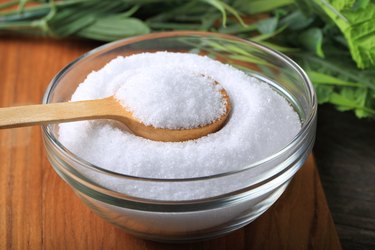
Stevia is a type of herb that has gained popularity as an artificial sweetener. That's because there are many stevia benefits and few side effects associated with it.
The U.S. Food and Drug Administration (FDA) has deemed stevia "generally recognized as safe." If you are considering using stevia or foods with stevia in them, you should review the pros and cons of the sweetener.
Video of the Day
Video of the Day
Tip
Stevia is an alternative to refined sugar. It's sweeter and has fewer calories. It's also been linked to fighting cancer, according to an October 2019 review in the Journal of Functional Foods.
What Is Stevia Leaf?
Stevia products use ground leaves from the Stevia rebaudiana Bertoni plant, according to a June 2012 paper in Food Chemistry. This perennial plant is native to Argentina, Paraguay and Brazil, per the International Stevia Council. Wild-growing shrubs remain rare, but commercial growers have made the cultivated form common. In fact, you can even grow stevia at home.
The stevia leaf has substances in it — called glycosides — which have a sugary sweet taste, according to an October 2014 review in the Innovare Journal of Food Science. There are two well-known glycosides in stevia: stevioside and rebaudioside A, and they are known to be 200 to 300 times sweeter than table sugar. While stevia is considered safe, many people say it has a bitter aftertaste — especially stevioside.
Government regulations have limited stevia's success in America. The FDA won't give clearance to stevia leaves as a food additive. Instead, you have to buy them as a nutritional supplement.
Benefits of Stevia Leaf
There are many stevia benefits for your health, and there are few risks associated with using it compared to other products. Stevia is considered one of the safest sweeteners, as it's made from a real plant and not artificially created. Some of the truly artificial sweeteners might have bad side effects, like increasing your risk of stroke, according to the American Heart Association. This evidence is still emerging, but it's enough to make you question using certain sweeteners.
As always, talk to your doctor before introducing stevia, or any other sweetener, into your diet.
1. It Has No Calories and May Aid Weight Loss
One of the main stevia benefits is that it does not have any calories. Using stevia can help you sweeten different foods without adding sugar and extra calories to them.
Artificial sweeteners like stevia may help lower body weight when used as a replacement for sugar, according to a September 2015 meta-analysis in the International Journal of Obesity. This makes sense, because the total calorie count of food goes down when you replace sugar with a low-calorie option.
2. It May Benefit Oral Health
Some experts suggest that stevia benefits oral health. Streptococcus mutans, a type of bacteria that is a major cause of tooth decay, can't thrive with stevia present, according to a July 2012 study in the International Journal of Advances in Pharmacy, Biology and Chemistry.
3. It's Linked to More Stable Blood Sugar
Stevia might also help regulate your blood sugar. The writers of a June 2015 report in the Journal of Medicinal Plant and Herbal Therapy Research tested 114 people with diabetes and found that using stevia improved their symptoms. Compared to a control group, patients given stevia had lower blood pressure and blood sugar scores.
4. It Has Antioxidants That Are Associated With Disease Prevention
Stevia has shown to have antioxidant effects, per a November 2012 article in Experimental and Toxicologic Pathology. The phenolic compounds in stevia seem to explain these effects.
Taking in phenolic compounds has been linked to lowering the risk for heart disease, according to a May 2014 study in BMC Medicine. This team studied 7,172 people with a high risk for heart disease. Patients who took in more phenolic compounds had a 37 percent reduced chance of dying.
5. It's Linked to Cancer Prevention
A compound in stevia called stevioside has been shown to cause breast cancer cell death, according to April 2012 research in Nutrition and Cancer.
Just as well, derivatives of these compounds in stevia were found to be toxic to lung, leukemia, and stomach cancer cells in another February 2013 study in Chemistry and Biodiversity.
The Potential Downside of Stevia
Many people wonder if stevia is bad for you, but stevia by itself is not known to cause any harmful side effects as long as it's used moderately, per August 2010 research in Appetite.
That being said, many stevia products are made with other ingredients, namely sugar alcohols, that can cause side effects. Below are some of the possible cons of stevia.
1. It Might Interfere With Your Gut
The most common reported side effects of stevia are bloating and nausea after eating the sweetener. While stevia on its own has not been shown to cause stomach issues, the sugar alcohols added to many stevia products have, per October 2016 research in the International Journal of Dentistry. Be sure to check food labels for added ingredients in your stevia.
Some research suggests that stevia could interfere with the beneficial bacteria in your gut, according to a January 2019 review in Advances in Nutrition. But, the scientists say that more research is needed in this area.
2. It May Interact With Certain Medications
People on medications for their diabetes or to control their blood pressure should talk to their doctors before using stevia. It's possible that using stevia with these drugs could cause hypotension or hypoglycemia as stevia may lower blood pressure and blood sugar significantly, per May 2020 research in the International Journal of Clinical Research Trials.
3. It Has A Bitter Aftertaste
Although stevia is very sweet, it does have a bitter aftertaste, which some may not enjoy. Some people liken this taste to that of licorice.
- MedlinePlus: Sugar Substitutes
- NY Daily News: Should You Switch to Stevia?
- International Stevia Council: History of Stevia
- U.S. Food and Drug Administration: Additional Information about High-Intensity Sweeteners Permitted for Use in Food in the United States
- International Food Information Council.: Everything You Need to Know About Stevia Sweeteners
- Nutrients: Low-Dose Stevia (Rebaudioside A) Consumption Perturbs Gut Microbiota and the Mesolimbic Dopamine Reward System
- Advances in Nutrition: Effects of Sweeteners on the Gut Microbiota: A Review of Experimental Studies and Clinical Trials
- Nutrition and Cancer: Stevioside Induced ROS-Mediated Apoptosis Through Mitochondrial Pathway in Human Breast Cancer Cell Line MCF-7
- Chemistry and Biodiversity: Cytotoxic and Apoptosis-Inducing Activities of Steviol and Isosteviol Derivatives against Human Cancer Cell Lines
- Appetite: Effects of stevia, aspartame, and sucrose on food intake, satiety, and postprandial glucose and insulin levels
- International Journal of Dentistry: Gastrointestinal Disturbances Associated with the Consumption of Sugar Alcohols with Special Consideration of Xylitol: Scientific Review and Instructions for Dentists and Other Health-Care Professionals
- Plant Medicine: Mechanism of the hypoglycemic effect of stevioside, a glycoside of Stevia rebaudiana