



































What Are the Benefits of Quinoa Pasta?

What Are the Benefits of Quinoa Pasta?
Photo Credit Ryan McVay/Photodisc/Getty Images

Quinoa -- pronounced "keen wah" -- is a plant native to the Andes mountain range in Peru, Chile and Bolivia. This crop, sometimes called "Inca rice," has been a food staple for 5,000 years, beginning with people of the mountain plateaus and the valleys of Peru, Chile, Bolivia and Ecuador. The Inca word "quinua" means "mother grain." Quinoa is a very nutritious food, high in minerals, vitamins and other nutrients.

Botanical Family and Crop Growth

Although many people erroneously assume it is a grain, quinoa is in the same botanical family as sugar beet, table beet and spinach. Quinoa is a sustainable crop, somewhat easy to cultivate in the right locations and able to grow in poor soil conditions and at high altitudes. However, quinoa may not be a very adaptable crop in some climates because of its temperature sensitivity.

Food Preparation and Meal Ideas

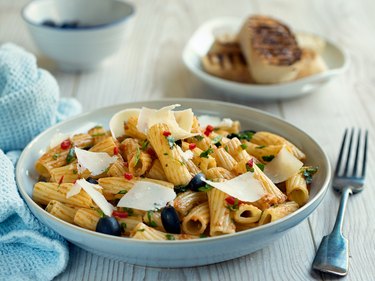
Quinoa is a delicious and easily digested food that is rich in protein and fiber. One cup provides 5 g of fiber and contains around 200 calories. Because quinoa has more protein than most grains, it is a good choice for vegetarians. The seeds of the quinoa plant can be ground into flour to make several types of pasta, and you can also use it as a substitute in rice dishes. It can be eaten in all seasons because it's versatile and light. You can use it in warm soups during winter, or in cool summer salads.
(reference 2)

Quinoa is quick and easy to prepare and can be cooked and eaten for all different meals. You can make nutritious hot breakfast cereals using wholegrain quinoa or quinoa flakes. Some people enjoy eating quinoa as an evening snack, because it is an easy-to-digest food that contains high amounts of magnesium, a mineral that can help you get a good night's sleep.

When cooked, quinoa is crunchy, light and fluffy. It cooks and tastes like grains and is a healthy replacement for people who have difficultly digesting wheat and other grains used in cooking and baking. Quinoa is sold in the U.S. as whole grain to be cooked separately as a side dish, as a replacement for pasta or in dishes such as rice pilaf.
(reference 3)

Minerals and Vitamins

Quinoa has a lower sodium content and higher amounts of calcium, magnesium, potassium, phosphorus, copper, manganese and zinc than wheat, corn or barley, according to the "Alternative Field Crops Manual" of the University of Wisconsin.

The magnesium in quinoa helps relax blood vessels and lower blood pressure. The fiber is good for your colon, and the manganese and copper are antioxidants that can help prevent disease.

Quinoa has a healthy quantity of iron, which helps transport oxygen to your brain, heart and lungs. An iron deficiency may slow the distribution of oxygen in the body and lead to headaches, sluggishness and irritability. Eating quinoa pasta instead of wheat pasta can help maintain your body's iron.

Nutrients

Quinoa begins as a gluten-free grain-like seed that can be ground up and made into a flour to be used for a nutrient-rich pasta. Quinoa works as a probiotic by nourishing healthy intestinal microflora.

It is a very nutritious food that is a good source of amino acids, enzymes, vitamins, minerals, fiber, antioxidants and phytonutrients. Quinoa is a complete protein and contains all nine essential amino acids the body requires to build muscles. Quinoa is also a good source folate and phytochemicals.

References

Article reviewed by MER Last updated on: Jan 2, 2011

Must see: Photo Galleries

Member Comments