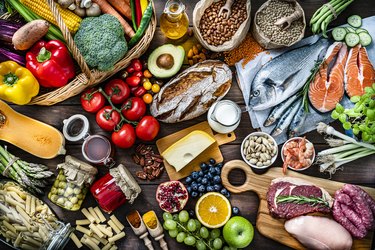
Since its establishment in the 1950s, the U.S. Department of Agriculture (USDA)'s food group recommendations have greatly evolved.
The latest version of the guidelines includes five major food groups: vegetables, fruits, grains, dairy and protein. (Oils used to be a food group in older versions, but it has since been removed.)
Video of the Day
Video of the Day
For a quick and helpful guide to balanced eating, you can turn to the food pyramid, an icon used by the USDA's MyPlate program. Referencing this pyramid can serve as a loose guideline for getting all the nutrients you need.
Here, learn what the USDA's latest recommendations are for each food group, proper portion sizes and examples of foods from each group.
Tip
Every body is different and has different nutrient needs. While following MyPlate's guide may work for some people, it may not work for everyone. If you're unsure about the amount of food from each major group you need, speak with a registered dietitian or your doctor, who can offer more specific advice.
What Are the Different Food Groups?
The former six foods groups (now five) include vegetables, fruit, protein, grains, dairy and (at one point) oils.
There is a recommended amount of food you should eat from each group based on the MyPlate. Portions are typically based on how much it should fill your plate.
1. Grains
Grains are an essential part of a balanced diet. According to MyPlate, one-quarter of your plate at each meal should contain grains.
And per the USDA, half of your grain servings should come from whole grains (such as wheat). A whole grain contains all three parts of the grain kernel: bran, germ and endosperm, per the Harvard T.H. Chan School of Public Health.
Whole grains offer an excellent amount of magnesium, B vitamins and fiber that can help reduce the risk of heart disease and diabetes while supporting a healthy metabolism, per a June 2016 study in the BMJ.
Some examples of healthy whole grains include the following, per the Harvard T.H. Chan School of Public Health:
- Brown rice and wild rice
- Bulgur
- Corn
- Oats
- Quinoa
- Barley
- Buckwheat
- Rye
- Millet
- Spelt
2. Protein
According to MyPlate, one-quarter of your plate should be protein-rich foods. This can equate to a 3- to 4-ounce piece of fish, meat or poultry.
Protein supports muscle growth and maintenance, and it is an important component of body tissues, blood and hormones, per Piedmont Healthcare.
Additionally, some protein sources like salmon and shellfish contain healthy fats (omega-3 fatty acids) that help support brain and heart health, per the Cleveland Clinic.
Some examples of healthy, lean protein sources include the following, per MyPlate:
- Lean ground beef
- Pork loin
- Lean ground turkey
- Chicken breasts
- Salmon
- Anchovies
- Trout
- Beans
- Peas
- Lentils
- Nuts and seeds
- Soy products like tofu
Additionally, the USDA recommends choosing leaner cuts of beef and poultry when eating these protein sources. This will help cut down on saturated and trans fats, which can be unhealthy in excess.
3. Vegetables
Vegetables play a starring role when it comes to balanced nutrition. They offer many essential vitamins and minerals and are a good source of dietary fiber. Plus, they are naturally low-fat and cholesterol-free.
Notably, vegetables are often high in potassium, folic acid, vitamin A and vitamin C, among other nutrients. And a diet rich in vegetables reduces the risk of many diseases like heart disease, stroke, type 2 diabetes and certain types of cancer (due to their antioxidant levels), per MyPlate.
MyPlate recommends filling half your plate with vegetables (and/or fruits — more on those below) at each meal. This can include raw, cooked or steamed vegetables.
Some examples of foods in the vegetable group include the following, per the USDA:
- Dark green vegetables like broccoli, collards, spinach and kale
- Red and orange vegetables like bell peppers, carrots, sweet potato, tomato and winter squash
- Beans, peas and lentils
- Starchy vegetables like potatoes, corn and plaintains
- Other vegetables, including avocado, cauliflower, celery, cucumbers, mushrooms and summer squash
4. Fruits
Fruits, like vegetables, are nutritional powerhouses. Fruits and veggies together should make up about half your plate at mealtime, per MyPlate.
Fruits are a great source of fiber, potassium, vitamin C, folic acid and vitamins A, K and E, among others. They also contain antioxidants that protect cells against damaging free radicals, decreasing disease risk, per the Harvard T.H. Chan School of Public Health.
Despite their sugar content, most fruits are also naturally low in calories and can contribute to healthy weight-loss efforts.
To meet your recommended daily serving of fruit, you can choose frozen, fresh or dried fruit or opt for 100 percent fruit juice, per the USDA.
Some examples of fruits include:
5. Dairy
If you've ever wondered, "what food group is cheese in?," the answer is dairy.
Dairy foods have all the essential nutrients needed for bone health, like calcium, vitamin D and potassium. Vitamin D can promote bone strength and brain health, per the American Academy of Orthopedic Surgeons, and potassium can help lower blood pressure, per the American Heart Association.
MyPlate recommends dairy products like yogurt, milk and cheese (made from cow's milk or fortified soy milk) to maintain a balanced diet. Some dairy foods, however, are not included in this group, such as cream, cream cheese and butter. This is because the USDA recommends choosing low-fat or non-fat dairy foods instead.
Examples of healthy foods in the dairy group include:
- Cow's milk
- Calcium-fortified soy milk
- Hard cheeses like cheddar, mozzarella, Swiss and Parmesan
- Ricotta cheese
- Cottage cheese
- Queso fresco
- Queso blanco
- Yogurt (made from cow's milk or fortified soy milk)
Lactose-free products are still considered dairy and a good option for people who are lactose intolerant.
What About Oils?
While oils are no longer considered a major food group by the USDA (it removed the group with the creation of MyPlate), they're still used often in cooking. Oils are also added to other foods in the form of salad dressing and sauces.
Choosing a healthier type of oil to cook with can help improve your overall health.
Reach for olive, canola or avocado oil, which offer healthy mono- and poly-unsaturated fats, essential fatty acids and the antioxidant vitamin E, which are great for reducing inflammation, lowering blood pressure and improving skin health, per Harvard T.H. Chan School of Public Health.
Keep in mind, though, that MyPlate recommends limiting coconut, palm and palm kernel oil, as they can be higher in saturated fats than other oils.
The Bottom Line
The classification of food, (i.e., list of food groups) is often more of an art than an exact science. Food guidelines are always evolving as the field of medicine evolves, too.
That means you should aim for a balanced diet that works best for you and your body's needs. Eat everything you enjoy in moderation and you'll be on the right track.
If, of course, you are unsure about your dietary needs, set up a consultation with a registered dietitian or your doctor to get specific advice.



- Harvard T.H. Chan School of Public Health: "Whole Grains"
- BMJ: "Whole grain consumption and risk of cardiovascular disease, cancer, and all cause and cause specific mortality: systematic review and dose-response meta-analysis of prospective studies"
- MyPlate: "Protein Foods"
- MyPlate: "Grains"
- Piedmont Healthcare: "Why Is Protein Important in Your Diet?"
- Cleveland Clinic: "Omega-3 Fatty Acids"
- MyPlate: "Vegetables"
- USDA: "What Foods Are in the Vegetable Group?"
- MyPlate: "Fruits"
- Harvard T.H. Chan School of Public Health: "Antioxidants"
- MyPlate: "Dairy"
- American Academy of Orthopedic Surgeons: "Vitamin D for Good Bone Health"
- American Heart Association: "How Potassium Can Help Control High Blood Pressure"
- USDA: "Move to Low-Fat or Fat-Free Dairy"
- Harvard T.H. Chan School of Public Health: "Omega-3 Fatty Acids: An Essential Contribution"