



























Food poisoning during pregnancy can be a scary thing. Fortunately, most bouts of food-borne illness are mild and have no lasting effect on mother or baby. If you suspect that you might have eaten contaminated food and that you might have food poisoning, contact your doctor as soon as possible so that you can begin treatment and prevent unnecessary complications from developing.
Types of Food Poisoning
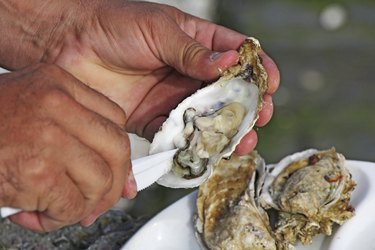
Food poisoning can come from a variety of sources, but most cases are the result of bacteria contaminating foods that have been improperly handled or left at room temperature too long. Salmonella, Staphylococcus, Campylobacter and E. coli can all be found in raw sprouts, unpasteurized juices, and raw or undercooked meat or eggs. Listeria grows in unpasteurized milk, soft cheeses and some luncheon or deli meats and can thrive at refrigerator temperatures. Listeria is more likely to affect pregnant women than other healthy adults.
Mild to Moderate Food Poisoning
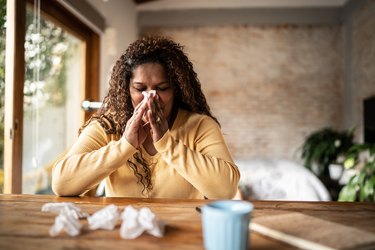
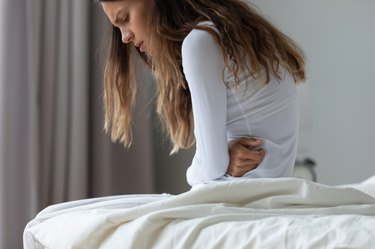
In pregnant women, like other healthy adults, the main symptoms of mild to moderate food poisoning are nausea, cramping, vomiting and diarrhea. For some women, symptoms are extremely mild or nonexistent. However, in most cases of mild food poisoning, the biggest concern is dehydration due to vomiting and diarrhea. Severe dehydration may lead to preterm labor and premature birth.
Serious Complications
While most forms of food poisoning don't cause severe complications, listeria is an exception. Women infected with listeria may lose the baby through miscarriage or stillbirth or may pass a dangerous blood or brain infection to the baby. For this reason, doctors routinely advise avoiding all products that may be contaminated with listeria. A pregnant woman infected with listeria may also develop meningitis, an infection of the brain membranes, or sepsis, an infection of the blood. These infections are potentially deadly for the mother as well as the baby.
Prevention and Treatment
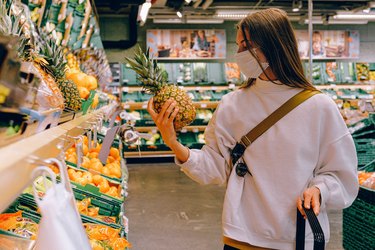
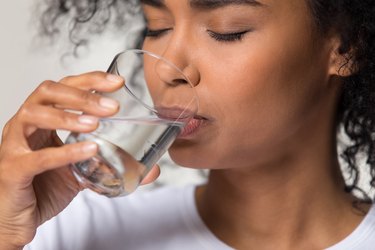
Because the consequences of food poisoning can potentially be quite severe for both mother and baby, practicing good food safety is essential during pregnancy. To prevent food-borne illness, wash hands and food preparation surfaces frequently, avoid cross contaminating cooked food with raw food, heat all foods thoroughly and refrigerate leftovers promptly. Treatment for pregnant women who do get food poisoning typically involves drinking plenty of fluids to rehydrate or being placed on an IV of fluids. Depending on the type and severity of the food poisoning, some women are given an antibiotic as well.


