




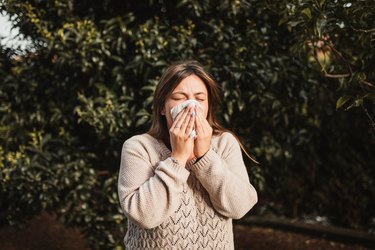




























































Allergic asthma, also called extrinsic asthma, is asthma triggered by an allergy, usually to an inhaled substance, but also to foods in some cases. Allergic asthma is the most common form of asthma; over 50 percent of the 20 million asthmatics in the United States have this type of asthma, according to the Asthma and Allergy Foundation of America. Both foods and food additives can trigger an asthma reaction, although this is not common, the Cleveland Clinic reports. Inflammation in the bronchial tubes, or bronchitis, can occur from allergic reactions, worsening asthma.
Food Triggers
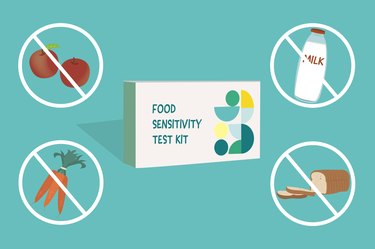
Although any food can trigger an allergic reaction that leads to an asthma attack, some cause more allergic reactions than others. The most common food allergens include eggs, fish, milk, peanuts, shellfish, soy, tree nuts and wheat. Tree nuts include almonds, cashews, walnuts and pecans, among others. Shellfish most likely to cause a reaction include crab, shrimp and lobster. Proteins cause most allergic reactions. Food allergies can be triggered by inhaling steam from foods like shellfish. Inhaled peanut butter has not been proven to cause an allergic reaction, according to the American Academy of Allergy, Asthma and Immunology. Food additives such as sulfites can also trigger asthmatic reactions. Food dyes and artificial sweeteners have been implicated in causing asthma, but this has not been proven, the Cleveland Clinic reports.
Effects
The asthmatic response starts when you breathe in or consume an allergen. Your body produces IgE, an immunoglobulin that initiates a chain reaction of inflammatory processes in response. The bronchial tubes constrict, making it harder to breathe and become inflamed in response to the irritants released. Chronic inflammation can lead to chronic bronchitis. Bronchitis narrows the airways further, because they swell and produce mucus that narrows the passageways.
Risks
In severe cases, asthma can close off the bronchial tubes completely, making breathing impossible. Severe difficulty breathing evidences by turning blue or collapse requires immediate emergency medical attention. Food allergies can also trigger anaphylaxis. The respiratory symptoms of anaphylaxis are similar to those of a severe asthma attack, but hives, rash, dizziness, facial edema and throat swelling may also occur.
Outgrowing Allergies
Children often outgrow certain food allergies as they get older. Most children eventually outgrow allergies to soy, milk, wheat and eggs, the AAAAI reports. Around 20 percent of children eventually outgrow peanut allergies and around 9 percent outgrow tree nut allergies. However, since food allergies are only part of asthma, outgrowing food allergies doesn't mean that asthma will also disappear.


