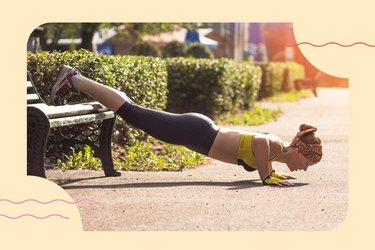
The 30-Day Push-Up Challenge helps you perfect your form, discover new variations and build up to doing 60 push-ups in one day. Click here for all the details on the challenge.
Push-ups are more versatile than most people think. The best push-up variations — like incline push-ups, wide-arm push-ups and diamond push-ups — can strengthen your abs, back and legs, in addition to your arms, chest and shoulders.
Plus, there's a push-up variation or modification for everyone. Beginners and experienced athletes alike can find a new type of push-up to try in the list below. Add these push-ups to your workout (or try them as part of our 30-Day Push-Up Challenge), and you'll see — and feel — powerful results.
Video of the Day
Video of the Day
Push-Up Variations for Beginners
1. Wall Push-Up
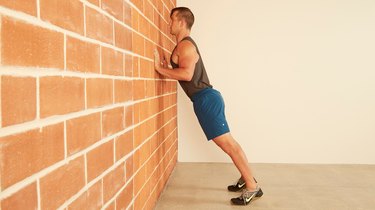
- Stand a few feet away from a wall.
- Lean forward and brace yourself with your arms, keeping your hands under your shoulders.
- Bend your elbows to bring your chest toward the wall.
- Lower as far as you can, then push back up to the start.
2. Incline Push-Up
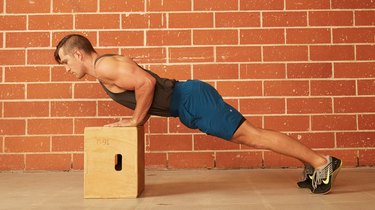
- Place your hands on a bench, chair, table or other sturdy object directly under your shoulders.
- Bend your elbows and lower your chest to the bench.
- Push back up.
Tip
Wall and incline push-ups are the best push-up modifications to start with, as they teach you to recruit your entire core (unlike knee push-ups).
3. Modified (Knee) Push-Up
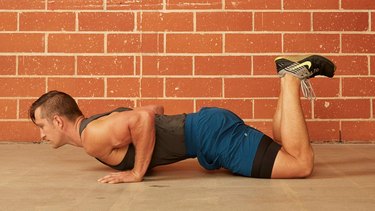
- Start in a plank position on your knees.
- Bend your elbows and lower your chest all the way to the floor (or as far as you can go).
- Push back up, keeping your back straight and your hips level the entire time.
Intermediate Push-Up Variations
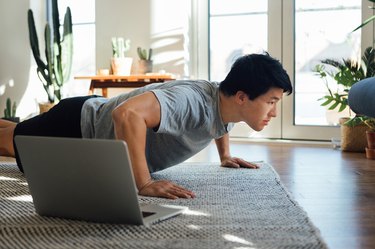
4. Standard Push-Up
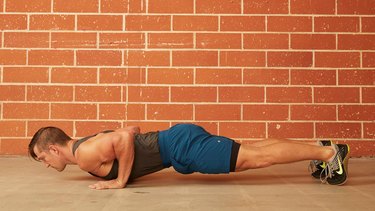
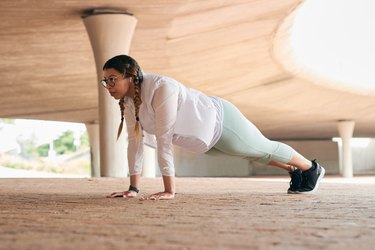
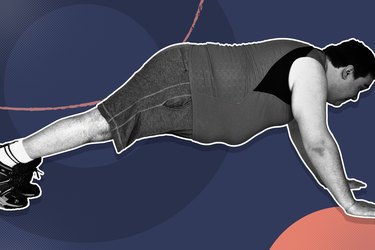
- Start in a high plank on your hands and toes, with your hands under your shoulders and your body in a straight line from head to hips to heels.
- Contract your abs so that your hips don't sag and your back doesn't arch.
- Bend your elbows as you lower your chest to the ground, keeping your hips level. Your elbows should be at about 45-degree angles from your body.
- Once you lower as far as you can, push yourself back up to a plank.

5. Wide-Arm Push-Up
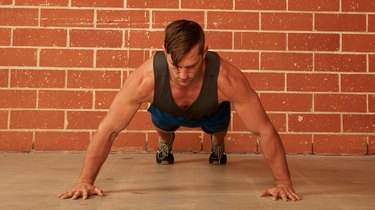
- Start in a standard high plank but walk your hands out wider than usual.
- Bend your elbows to lower your chest down to the ground. Your elbows will flare out a little more than usual, but try to keep them as close to your body as possible.
- Press back up.
6. Single-Leg Push-Up
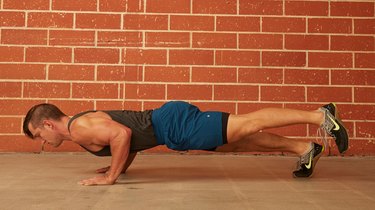
- Start in a high plank.
- Lift one foot several inches off the ground.
- Bend your elbows to lower your chest to the ground, keeping your leg lifted and straight.
- Press back up. Keep your leg up for your desired number of reps.
- Do the same number of reps with the other leg raised.
7. Spiderman Push-Up
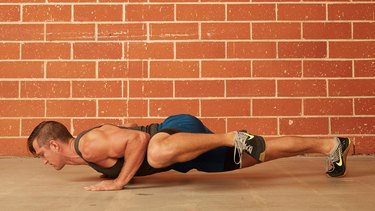
- Start in a high plank.
- As you bend your elbows and lower to the floor, bend your left knee and bring it toward your left elbow.
- Push back up and return your foot to the ground.
- Repeat with your right knee.
- Continue alternating sides on each rep.
8. Knee-to-Chest Push-Up
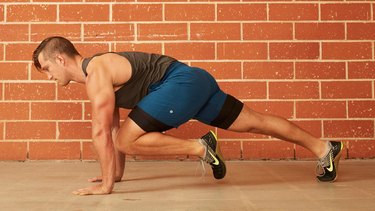
- Start in a high plank.
- Bend your elbows as you lower your chest to the ground, keeping your hips level.
- Press back up.
- At the top of the push-up, bring one knee up under your chest. Make sure your foot doesn’t touch the ground.
- Return your leg to its original position.
- Lower yourself back down and repeat, lifting the opposite leg.
- Continue alternating throughout the set.
9. T Push-Up
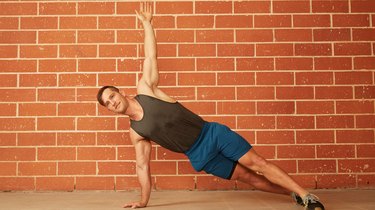
- Start in a high plank.
- Bend your elbows to lower your chest to the ground.
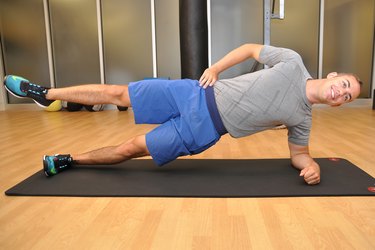
- Push back up and transfer your weight into one hand as you rotate into a side plank.
- Raise your top hand toward the ceiling and hold for 1 second.
- Bring your hand back down to the ground. That's 1 rep.
- Repeat on the other side.
10. Divebomber
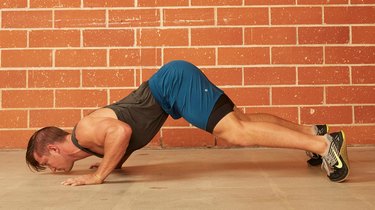
- Start on all fours, then push your hips up toward the ceiling and straighten your arms and legs so that your body forms an inverted V shape. This is downward-facing dog pose and the starting position.
- Bend your elbows and lower your head toward the floor. As you do, swoop your chest close to the floor.
- Continue to press your upper body forward through your hands, into upward-facing dog pose. You'll be balancing on your hands and feet, shoulders over wrists with arms straight and chest forward.
- Bend your elbows and lower your chest back toward the floor, reversing the movement to swoop back to downward-facing dog. The last thing to come up should be your hips.
11. Diamond (Triceps) Push-Up
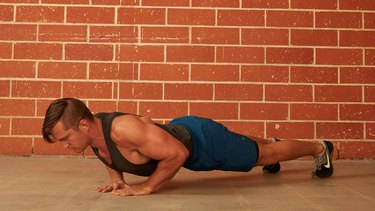
- Start in a high plank with your hands together, thumbs and forefingers touching to form a diamond.
- Bend your elbows and lower your chest to the floor.
- Push back up.
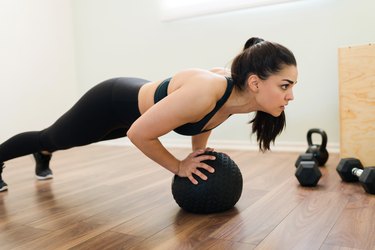
12. Stability Ball Push-Up
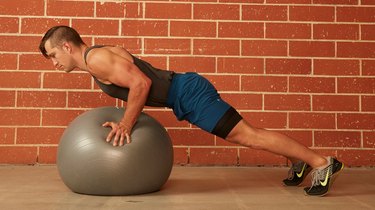
- Place your hands on a stability ball directly under your shoulders, legs extended behind you.
- Squeeze the ball with your hands and arms as you bend your elbows and lower your chest to the ball.
- Push back up.
13. Single-Arm Raise Push-Up
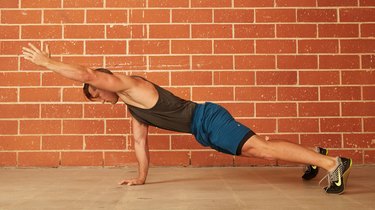
- Start in a high plank.
- Bend your elbows as you lower your chest, then extend at the elbows quickly to push yourself back up rapidly.
- At the top of the motion, raise one straight arm overhead.
- Lower that hand back to the floor, then lower your body back down for the next rep.
- Alternate which arm you lift on each rep.
14. Staggered-Hand Push-Up
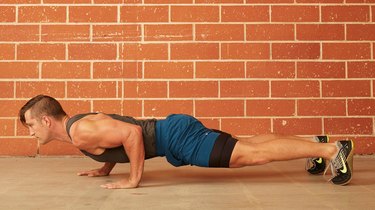
- Start in a high plank but walk one hand forward a few inches.
- Bend your elbows as you lower your chest to the ground, keeping your hips level.
- Press back up.
- Switch which hand is in front with each rep.
15. Staggered-Hand and Single-Leg Push-Up
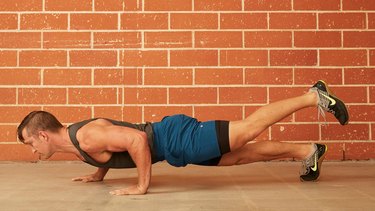
- Start in a high plank, then walk one hand forward a few inches.
- Lift the opposite leg a few inches, keeping that knee straight and your core tight.
- Bend your elbows as you lower your chest to the ground, keeping your hips level.
- Press back up to the starting position.
- Perform all your reps on one side, then repeat with your other hand forward and opposite leg raised.
16. Medicine Ball Push-Up
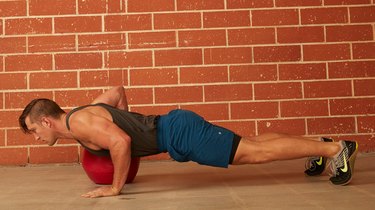
- Place your hands on a medicine ball directly under your shoulders, legs extended behind you.
- Bend your elbows and lower your chest toward the ball.
- Lift your left hand and place it on the floor, leaving your right hand on the ball, and press back up.
- Return your left hand to the ball.
- Repeat with your right hand on the floor when you press back up.
- Continue alternating sides with each rep.
17. Inside-Leg Kick Push-Up
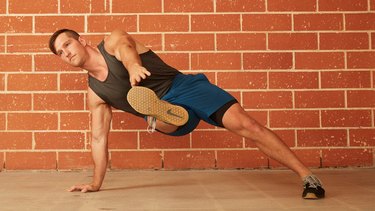
- Start in a high plank.
- Bend your elbows as you lower your chest to the ground.
- Press back up and transfer your weight to your right hand as you turn to the left and kick your right foot under your body. Extend your right leg as high as possible and touch your toes with your left hand.
- Return to a high plank and repeat on the other side.

Advanced Push-Up Variations
18. Decline Push-Up
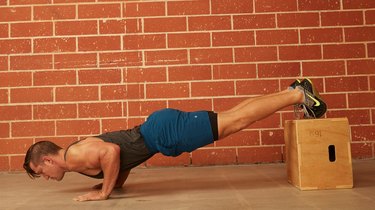
- Start in a high plank with your feet raised on a table, chair or stability ball.
- Bend your elbows and lower your chest to the ground.
- Push back up.
19. Feet-on-Wall Push-Up
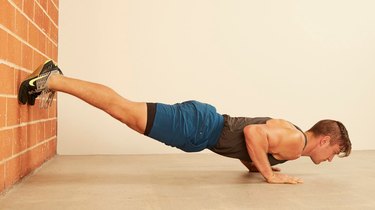
- Start in a high plank several feet in front of a wall. Press your feet to the wall about 8 to 12 inches off the ground, toes facing down.
- Bend your elbows as you lower your chest to the ground.
- Push through your hands to return to start.
20. Outside-Leg Kick Push-Up
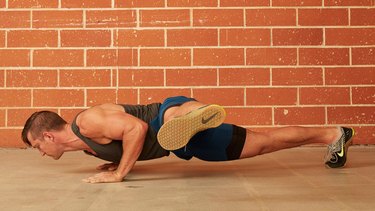
- Start in a high plank.
- Bend your elbows to lower your chest to the ground.
- At the bottom of the push-up, kick your left foot out to the side, keeping your knee straight.
- Return your leg to the ground.
- Press back up and repeat on the other side.
21. Stability Ball Push-Up With Pull-In
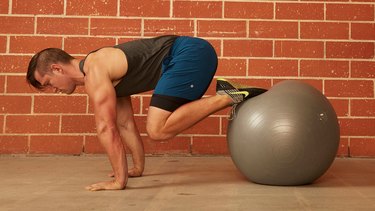
- Place your hands on the floor and your shins on top of a stability ball.
- Bend your elbows and lower your chest to the ground.
- Press back up, then use your abs to pull your knees to your chest, rolling your lower legs along the stability ball.
- Roll the ball back out and repeat.
22. Hip Twist Push-Up
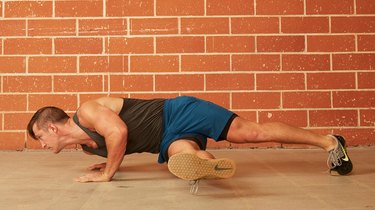
- Start in a high plank.
- Kick your left leg under and across your body.
- Bend your elbows to lower your chest to the floor without letting your hips touch the ground.
- Press back up and repeat on the opposite side.
23. One-Arm Push-Up
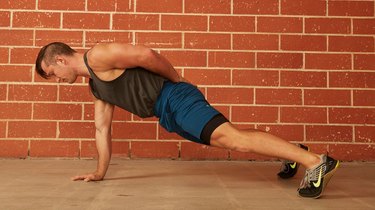
- Begin in a high plank. Tuck one hand behind your back and center the other directly below the middle of your chest.
- Bend your elbow and lower your chest to the floor.
- Press back up with only one hand.
24. Plyo Push-Up
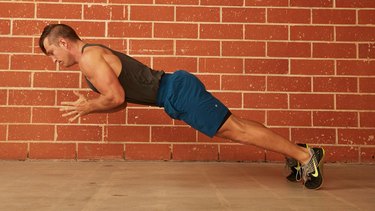
- Start in a high plank.
- Bend your elbows to lower your chest to the ground.
- Instead of pushing directly back up, explode upward and lift your hands off the ground.
- Land with your elbows slightly bent to absorb the impact.