































You probably already know that eating healthy and exercising regularly are recommended to improve or maintain your health. However, having this knowledge alone is often not enough to adopt these healthy habits. If you are obese, you may need a holistic approach to lose weight and be healthier. Taking a close look at your emotional factors, readiness for change and your body image is helpful.
Be Ready
To find success in changing health habits, you should feel invested. If you don't feel completely ready for change, it will be more challenging. Discuss your concerns with your doctor, friends and family to gain their support and guidance. Become more informed about the benefits of changing your habits.
Chances are, if you are already aware of the benefits of exercise and a healthy diet, you are thinking about initiating steps toward these lifestyle changes. As you get ready to change, decide what strategies you will use by setting realistic, measurable, short- and long-term goals.
Strategize
Consider the potential barriers you may confront with your new exercise routine or meal plan. Creating strategies will give you a greater chance of preventing relapses. For each potential problem, construct a list of possible solutions. For each solution, write out pros and cons. Decide which solution to try first for each potential problem. As you face these barriers, try your top solution for that issue, and if it does not work well, go on to the next on your list.
Be Realistic
In addition to being realistic about your health goals, think about how you perceive yourself and your body. Many people create weight-loss goals that may not be realistic for themselves or expect changes immediately. People who lose weight and keep it off often take longer to accomplish their goals. Messages we hear and see from the media may not be realistic. Models in magazines are often airbrushed or enhanced. Remind yourself that there is no such thing as a perfect body.
Build Self-Esteem
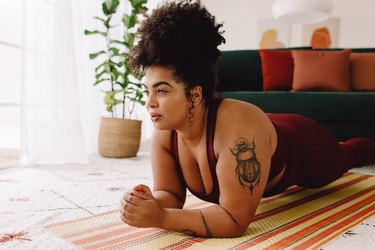
Obese people often struggle with poor body image, which can lead to low self-esteem. Rather than thinking of your body in a negative light, think about all of the great things that it does for you and its strength. As you start to see changes in your fitness and eating habits, take pride in what you have accomplished. Give yourself credit for making the effort to improve your health. Don't let your body weight define you as a person. Think about who you are as a person, your relationships and other positive aspects of your life. Learning to develop acceptance of yourself is invaluable.
References
- "ACSM's Health and Fitness Journal"; Motivation Change: Modifying Eating and Exercise Behaviors for Weight Management; John Jackicic, Ph.D. and Amy Otto, Ph.D.; January/February 2005
- "ACSM's Health and Fitness Journal"; Body Image: Are You Imagining the Wrong Body?; Nancy Clark, R.D.; May/June 2010
- "IDEA Fitness Journal"; Exercise and Psychological Health; Len Kravitz, Ph.D.; October 2000
- "IDEA Fitness Journal"; Boosting Your Body Image; Sue Hitzmann; May 2004


