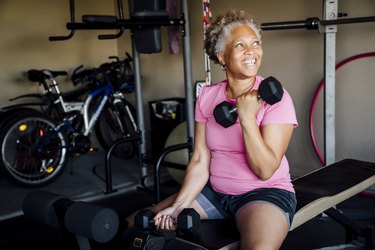
If you feel like all you have to do is think about your favorite snack food or dessert to gain weight, you might be a person over 50. Around this age, you might notice that your body doesn't quite behave the way it did in your 20s or 30s.
It's a frustrating fact, but people who are on the brink of menopause or past the milestone often find it hard to lose weight or maintain their weight for a number of reasons. One main factor, though, is that your body stops producing as much estrogen, according to the Mayo Clinic, which is a key hormone in weight management.
Video of the Day
Video of the Day
Because of this major hormonal shift, losing weight when you're a woman over 50 requires changes in your approach to fitness, nutrition, sleep and recovery.
It's normal to be feeling a little lost. To help you get started, here's your straightforward, no-nonsense guide to making it happen.
A Note on Language
Here at LIVESTRONG.com, we try to use inclusive language when it comes to sex and gender. Some weight loss guidelines distinguish between women and men, but weight loss/nutrient requirements are usually more accurate when tailored to a person's individual calorie needs, activity level and overall health.
Still, we understand many people look up this information in relation to their own sex and gender, so we have used the word "women" throughout this article.
The Best Exercises to Help Women Over 50 Lose Weight
Exercise is essential for women at all stages of life and is especially important during menopause, Heather Jeffcoat, DPT, a physical therapist who specializes in pelvic function and women's physiology, tells LIVESTRONG.com.
"As women mature into menopause, bone and muscle mass tend to naturally decrease, and exercise is the antidote that allows older women to maintain that bone and muscle mass," Jeffcoat explains.
Here, Jeffcoat and Holly Roser, CPT, a certified personal trainer and sports nutritionist with expertise in women's health, offer fitness guidelines for women over 50, as well as fun exercise tips and precautions.
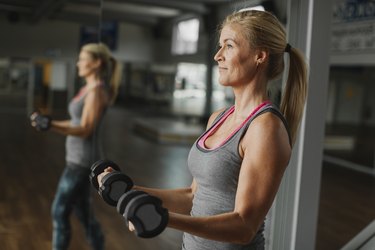
What Kind of Exercise Is Best for Women Over 50?
Fitness at all ages should be at least somewhat individualized, but for women over 50, the need for individualized fitness programming becomes increasingly important, Jeffcoat says. Why? Well, people going through menopause have a higher risk of certain medical conditions, including osteoporosis and heart disease.
If you're a woman over 50, your fitness program should account for those risks, Jeffcoat says, noting that, "Women should always check with their doctors before starting a new exercise routine, especially if they have had any recent heart or lung conditions."
Low-impact cardio: In general, high-impact aerobics, high-intensity interval training (HIIT) and activities with a high fall risk should be avoided whenever possible if osteoporosis is confirmed or suspected, Jeffcoat says.
"Instead, focus on low-impact exercises that still increase muscle mass and bone density, like an elliptical machine, stepmill, walking or low-impact aerobics," she says.
If your bone density is healthy, however, Jeffcoat encourages adding high-impact exercises, such as running and burpees, to your routine. Sports such as tennis and racquetball are also fun, higher-impact activities that can torch calories.
Roser says she also loves spinning or cycling in place of running: It's a low-impact exercise option with similar calorie burn, and cycling in a group fitness class can also help with motivation and consistency.
Strength training: For the most part, all women over 50 can benefit from resistance training with free weights, weight machines, cables and resistance bands. Strength training is proven to slow down degenerative bone loss and has been linked to a lower risk of developing osteoporosis, according to a July 2017 review in Rambam Maimonides Medical Journal.
Strength training can also accelerate weight loss, Roser tells LIVESTRONG.com. "The best resource in battling potential weight gain from menopause is to gain muscle mass through resistance training," she says. "When we add muscle to our bodies, we increase our daily calorie burn and our metabolism which, over time, equals weight loss."
Sample Workout Plans for Women Over 50
The overall goal, Jeffcoat says, is 2.5 hours of physical activity each week, which is in line with the Physical Activity Guidelines for Americans. That comes down to 30 minutes a day, five days a week.
The ideal fitness program for women over 50, according to Jeffcoat, will incorporate aerobic exercise, strength training and balance training.
Here's the weekly plan Jeffcoat recommends:
- Aerobic exercise such as walking, running or dancing four times per week, resting a day in between.
- Resistance and weight-bearing exercises three times per week, resting at least one day in between.
- A 10 to 15-minute stretching routine at least six days each week
Jeffcoat recommends alternating your strength and cardio workouts in order to build a routine that spans six to seven days.
Roser also recommends a balanced workout routine that includes cardio and strength training, as well as rest days and outdoor activity.
- Monday: 45-minute spin class or other cardio
- Tuesday: 30-minute HIIT workout (with resistance training)
- Wednesday: Rest day or active recovery
- Thursday: 30-minute HIIT workout (with resistance training)
- Friday: 60-minute hike or walk outside
- Saturday: 45-minute spin class or other cardio
- Sunday: Rest day or active recovery
Remember, HIIT workouts don't have to be high-impact. You can get an effective interval workout with low-impact activities that don't exacerbate any bone or joint conditions or pain you may have.

Add Small Bursts of Movement to Your Day
In addition to a structured workout or large chunk of physical activity such as a 3-mile walk, you can add small amounts of movement throughout your day to boost your overall calorie expenditure, which will help with weight loss over time.
Even fidgeting, or making small movements, can help you burn more calories every day, according to an April 2015 research review in Mayo Clinic Proceedings.
Take these fun ideas from Jeffcoat:
- Do 15 to 20 squats in front of your couch before you sit down as an easy way to incorporate daily strengthening. It will only take a few seconds!
- Try doing forward and side lunges down the length of your hallway, holding on gently to the wall for balance. Hallway lunges work on strength goals and balance at the same time.
Roser offers some creative fitness ideas, too:
- If you normally hire a cleaner, consider cleaning your own home: It'll help you burn more calories throughout the week and can even bring you a sense of fulfillment.
- When you take a work break, challenge yourself to walk somewhere new or fun: Go to your favorite store, wander around your office complex, or find a new park. (All steps count, even if you're wandering the mall!)
Here are some other ideas to add small bursts of exercise into your day:
- Lunge up your stairs instead of walking — it's a great way to build single-leg strength.
- Do bicep curls with your grocery bags as you bring them inside.
- Perform spinal rotations or shoulder stretches in your desk chair.
The Right Nutrition to Help Women Over 50 Lose Weight
As with fitness, it's important to remember that nutrition for women over 50 is highly individual. You may (and probably do) have different nutrient needs than your sister, best friend or colleague, even if those people are around the same age as you.
It's always best to work with a healthcare professional or dietitian who can help you plan a nutrition regimen that meets all of your goals. But for now, Keeley Mezzancello, RD, registered dietitian and adult weight-management specialist, gives LIVESTRONG.com tips on how to lose weight as a woman over 50.

Why Nutrition Needs Are Different After 50
A number of nutrient needs change as women get older, especially once they go through menopause, Mezzancello says.
For example, "Women who have reached menopause don't need as much iron as they used to, because they no longer lose blood through menstruation," she says, adding that the recommended daily allowance (RDA) drops from 18 milligrams to 8 milligrams per day.
Other new nutrient needs after menopause include:
- Folic acid consumption needn't be as high, because the prevention of fetal neural tube defects (during pregnancy) is no longer a concern.
- Bone health becomes of heightened concern, so the RDA for calcium increased to 1,200 milligrams per day (up from 1,000 milligrams per day)
Because the risk of cardiovascular disease, diabetes and weight gain rises after menopause, choosing a nutrient-rich — but less-caloric — diet is helpful, Mezzancello says, and women over 50 should focus on incorporating healthy fats, lean protein, low-fat dairy or dairy alternatives and plenty of fruits and vegetables.
Hitting these nutrient targets (through food and vitamins) every day helps your body run its various systems optimally and can contribute to weight loss by keeping your bones and joints healthy, boosting your energy levels, maintaining a good mood and ensuring that you generally feel healthy and energetic.
Diet for Weight Loss After Menopause
Menopausal and post-menopausal people can make a few easy changes to their diets that may help with weight loss, Mezzancello says. Two of the easiest ways to lose weight? Eat protein with every meal and minimize processed foods.
Adding protein: "Incorporating protein at each meal to promote muscle-protein synthesis — in conjunction with weight-bearing exercise — is essential to the body's ongoing growth, repair and maintenance of skeletal muscle," Mezzancello says. "Some research has found that as much as 25 to 30 grams of protein is needed at each meal to optimally stimulate muscle-protein synthesis."
To visualize 25 to 30 grams of protein, consider these examples:
- 4 ounces of animal protein (think: chicken)
- 1 cup of cottage cheese
- 1 scoop of whey protein
Nix ultra-processed foods: Minimizing or avoiding highly processed foods (think: soda, sweets, snack foods like chips) can also help combat weight gain, Mezzancello says, especially those with added sugars, to address changes in glucose metabolism, or the way your body processes sugar. (Added sugars are sugars and syrups that are added to foods or beverages when they are processed or prepared.)
"These foods contribute empty calories with no nutritional merit, as opposed to naturally occurring sugars such as those in fruit or milk," Mezzancello explains.
Less than 10 percent of your daily calories should come from added sugar, per the 2020-2025 Dietary Guidelines for Americans.
Did you know that keeping a food diary is one of the most effective ways to manage your weight?
What About Supplements?
People who are approaching menopause or are post-menopausal should talk to their doctor about supplements. Supplementation should be highly specific, as there's risk of nutrient toxicity (consuming too much of a certain nutrient), Mezzancello says.
For instance, excess calcium can raise the risk of heart attack in some people, and in others, excess vitamin D may harm the kidneys, she says.
"As with all populations, a first line of defense should be striving to consume nutrients through food and beverages in the diet," she says, "and supplements fill the gaps where needed, as recommended by your health care provider."
There's also the risk of poor product selection because the supplement industry isn't tightly controlled or regulated — manufacturers themselves are responsible for labeling their products, which can result in low-quality or mislabeled supplement products.
These may be more harmful than helpful, or they may not do anything at all and thus are a waste of money. Your doctor or registered dietitian can help you choose high-quality products for your specific needs.
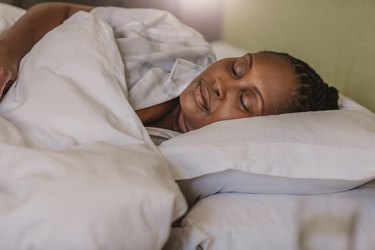
Why Recovery and Sleep Are Important for Weight Loss, Too
Remember that your workouts and menopause diet aren't the only two tickets to weight-loss success after age 50: You must be kind to your body, too. Give yourself time to recover in between workouts, and accelerate recovery with tactics like stretching and foam-rolling after every session.
And let's not forget about sleep: Without it, the chance that you'll actually want to work out and ignore cravings for chocolate muffins is slim.
Sleep facilitates muscle repair and allows your brain to rest and recuperate, effectively increasing your chance of weight loss in the following ways:
- Balancing hunger and hormones: Lack of good sleep can increase levels of the stress hormone cortisol in your body, increasing your hunger and negatively affecting your metabolism, according to a November 2015 study published in Sleep Science.
- Keeping you energized for workouts: A healthy sleep cycle helps you maintain high energy and productivity levels, per a huge 2018 review in the American Journal of Health Promotion. It can also significantly boost your mood, per a March 2019 review in JMIR Mental Health. And adequate sleep can reduce your risk of injury while exercising, according to a February 2013 study in the journal Sleep Health.
- Making your diet and exercise more effective: When you restrict calories in a sleep-deprived state, your body loses more lean muscle mass than fat, according to a small October 2010 study in the Annals of Internal Medicine. This renders your diet less effective, as muscle burns more calories than fat, even at rest, according to the Mayo Clinic.
Words of Encouragement
If you're a person over 50 looking to lose weight, you may feel frustrated, flustered and frankly flabbergasted. That's all normal — losing weight during and after menopause can be tough!
With a little diligence and an understanding of health beyond aesthetics, however, losing weight after age 50 is 100-percent doable. Mezzancello, Roser and Jeffcoat offer some words of encouragement:
1. Accept Your Changing Body
"While you should do what you can to protect your health and feel your best, instead of completely resisting the change, accept that these changes are a natural part of aging," Mezzancello says, nodding to puberty and noting that we all went through changes then, too.
In the meantime, she says, "Count your blessings and include aging as one of them, avoid fad diets, eat a little less and move a little more and include some resistance training in your workouts to slow the loss of lean body mass."
2. It's Not Too Late
It's never too late to find or create the healthiest version of yourself, Roser says, emphasizing that it's so important to avoid becoming sedentary as you get older.
"Don't stop moving as you get older; there's still time to become your healthiest self," Roser says. "Never give up on your health — do it for you and your family. You deserve it!"
3. Forget the Scale
As a physical therapist, Jeffcoat says she typically isn't working with women specifically on weight-loss goals, and instead educates women that as they build muscle they may actually gain a little bit of weight while reducing a dress or pant size.
"Don't focus on the number on the scale," she urges. Instead, "Focus on how your energy levels are improving and how much better you look in that dress as you increase your muscle tone. With increased energy levels will come a natural drive towards more activity, and the weight loss will follow naturally."
- Rambam Maimonides Medical Journal: "The Role of Exercises in Osteoporotic Fracture Prevention and Current Care Gaps. Where Are We Now? Recent Updates"
- Mayo Clinic Proceedings: "Nonexercise Activity Thermogenesis in Obesity Management"
- Sleep Health: "Sleep duration and musculoskeletal injury incidence in physically active men and women: A study of U.S. Army Special Operation Forces soldiers"
- American Journal of Health Promotion: "Association Between Sleep and Productivity Loss Among 598 676 Employees From Multiple Industries"
- JMIR Mental Health: "Relationship Between Sleep Quality and Mood: Ecological Momentary Assessment Study"
- Mayo Clinic: "Menopause"
- U.S. Department of Health & Human Services: "Physical Activity Guidelines for Americans"
- Sleep Science: "Interactions between sleep, stress, and metabolism: From physiological to pathological conditions"
- Annals of Internal Medicine: "Insufficient Sleep Undermines Dietary Efforts to Reduce Adiposity"
- Mayo Clinic: "Metabolism and Weight Loss: How You Burn Calories"
- Dietary Guidelines: "2020-2025 Dietary Guidelines for Americans"
- Mayo Clinic: "Menopause."
- U.S. Department of Health & Human Services: "Physical Activity Guidelines for Americans"
- U.S. Department of Health & Human Services: "2015-2020 Dietary Guidelines"
- Food and Drug Administration: "Dietary Supplements"