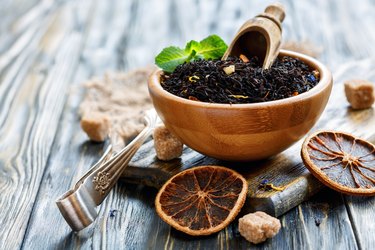
Earl Gray tea is a well-known and popular British tea comprised of a black tea base flavored with bergamot oil, giving it a distinctive aroma and flavor. Bergamot, a citrus fruit defined as a hybrid between bitter orange and lemon, contains several bioactive molecules with potential health benefits.
Earl Gray Tea Benefits
Video of the Day
Earl Gray tea, like all tea, contains biologically active chemicals including flavonoids, caffeine, fluoride and theanine. According to Harvard Men's Health Watch, black teas contain more complex chemicals — theaflavins and thearubigins — derived from catechins.
Video of the Day
The fermentation process used to make tea boosts levels of polyphenols, including flavonoids that are also found in dark chocolate and other foods. Flavonoids in both black and green tea prevent oxidation of LDL, or "bad" cholesterol, have been shown to reduce blood clotting and improve widening of blood vessels in the heart.
A December 2016 article in the Journal of Nutritional Science detailed flavonoids' anti-oxidative, anti-inflammatory, anti-mutagenic and anti-carcinogenic properties coupled with their capacity to modulate key cellular enzyme function.
Earl Gray, like other black and green teas, is being studied for potential positive effects on weight loss and cancer prevention, although there is as of yet no hard scientific evidence to support these claims. Tea may also contain cholesterol-lowering, anti-inflammatory and anti-hypertensive properties and could contribute to a reduced risk of cardiovascular disease, although this has not yet been scientifically proven.
Bergamot Health Benefits
In addition, the bergamot oil in Earl Gray tea has been used for centuries in Italian traditional medicine, typically for fever and parasitic diseases, according to an article published in March 2015 in the journal Frontiers in Pharmacology. Other health complaints for which bergamot oil has been used include mouth, skin, respiratory and urinary tract infections and more.
It is also believed to have antiseptic and antibacterial proprieties and has been used to facilitate wound healing and in preparations used to treat upper respiratory tract disorders. Bergamot essential oil is used in perfumes and aromatherapy, where a 2017 study published in the journal Phytotherapy Research suggested that exposure to bergamot essential oil improved patients' moods while in a doctor's waiting room.
The use of concentrated bergamot extract in tablet or capsule form may lower cholesterol because it too contains antioxidant flavonoids. However, the Cleveland Clinic notes that further studies are needed to definitively prove these claims, and simply drinking Earl Gray tea will not affect cholesterol.
Disadvantages of Earl Gray Tea
Like other black teas, Earl Gray tea contains caffeine, ranging from about 20 to 45 milligrams per 8-ounce cup. Consumed in modest amounts, Earl Gray tea — and black tea in general — is considered generally safe for most people.
But drinking too much black tea, such as more than five cups per day, is possibly unsafe. High amounts of black tea can cause side effects because of its caffeine content, and these can include headache, nervousness, sleep problems, vomiting, diarrhea, irritability, irregular heartbeat, tremor, heartburn, dizziness, ringing in the ears, convulsions and confusion.
Flavonoids in tea can bind nonheme iron, inhibiting its intestinal absorption. It is advised that in order to maximize iron absorption from a meal or iron supplements, individuals with low iron levels should not consume tea at the same time.
If you are pregnant or are being treated for any sort of medical condition, it's best to speak with your doctor before consuming Earl Gray tea.
- The Cleveland Clinic: "Bergamot Extract May Lower Your Cholesterol"
- Frontiers in Pharmacology: "Citrus Bergamia Essential Oil: From Basic Research to Clinical Application"
- Phytotherapy Research: "Bergamot (Citrus bergamia) Essential Oil Inhalation Improves Positive Feelings in the Waiting Room of a Mental Health Treatment Center: A Pilot Study."
- National Cancer Institute: "Bergamot"
- Harvard Men's Health Watch: "Tea, a Cup of Good Health?"
- Journal of Nutritional Science: "Flavonoids, an Overview"
- U.S. National Library of Medicine: "Black Tea"
Was this article helpful?
150 Characters Max
0/150
Thank you for sharing!
Thank you for your feedback!