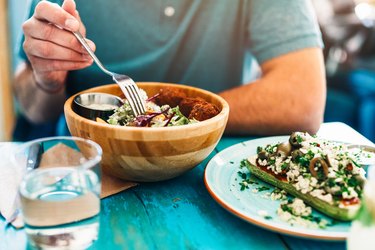
About 6.5 million Americans now identify as vegan, according to Nielsen, and this lifestyle choice seems to only be growing in popularity.
Whatever your reasons for doing it, making a drastic diet change like going vegan — which requires, at minimum, shunning all animal-based foods — can be daunting. But with a little forward planning, you can set yourself up for success.
Video of the Day
Video of the Day
We spoke to some experts to find out the most common mistakes that can derail a new vegan, and how to stay on track.
1. The Mistake: Not Learning About Vegan Nutrition First
Julie Stefanski, RD, a registered dietitian nutritionist and spokesperson for the Academy of Nutrition & Dietetics (AND) explains that the AND endorses vegan diets, but only if they're well planned.
"Too many individuals focus only on what is excluded from their choices without considering what needs to be included for health," she says.
Vegan diets can vary in their nutrition content and just because a food is considered vegan does not automatically mean it's healthy.
"Plant-based diets based on lots of vegetables, beans and whole grains have been connected to health benefits and longevity, but a vegan diet based on highly processed foods may not be a winner," she says.
Case in point: A July 2017 study published in the American Journal of the College of Cardiology found that plant-based diets that included healthy foods, like legumes and whole grains, reduced the risk of coronary heart disease. But plant-based diets high in foods like refined grains and sweets actually led to increased risk.
The fix: Spend time learning about what constitutes a healthy vegan diet, before you make the switch.
"It's not hard to get the right nutrients if you're a vegan, but you can't just cut out meat and eat pasta and red sauce all day," says Taylor Wolfram, RDN, LDN, a vegan registered dietitian.
2. The Mistake: Relying on the Wrong Sources of Information
When choosing nutrition information, the quality of your sources matters a great deal.
"There are so many areas of misinformation out there," says Wolfram.
The fix: She recommends the following, all of which were created by registered dietitians who are also vegan:
- Veganhealth.org
- The Vegetarian Resource Group
- Vegan for Life: Everything You Need to Know to Be Healthy and Fit on a Plant-Based Diet by Jack Norris, RD, and Virginia Messina, MPH, RD
3. The Mistake: Not Taking the Right Supplements
Many of the vitamins and minerals meat-eaters consume can be obtained from a vegan diet. The exception to this is vitamin B12, which is most commonly found in meat, fish, milk and egg products.
The fix: "Although it takes time for a deficiency to occur, it's best to head things off from the beginning by making sure to use a fortified food source or supplement that meets this body requirement," says Stefanski.
Depending on your diet, you may also need to supplement with other nutrients or take a multivitamin. Important ones to be aware of are iron, calcium, zinc, vitamin D, omega-3 fatty acids, iodine and vitamin A.
You don't want to overdo it on a nutrient either, though. So it's a good idea to talk a registered dietitian, who can help make sure you're meeting your nutritional needs.
4. The Mistake: Eating Too Much Fiber Too Soon
Adding a lot of extra fiber suddenly — by consuming increased amounts of beans, legumes and vegetables — can lead to digestive discomfort (in meat-eaters, too!).
The fix: If you're having a lot of bloating, gas or constipation on a vegan diet, try adding a lot more water to your diet and reducing the fiber while you adjust.
"The rule of thumb is to increase fiber gradually and also increase your fluid intake," Wolfram says.
She recommends starting out with small portions of beans and paying attention to how foods make you feel. Just because you feel bad after one meal doesn't mean you automatically have a problem with that food. Look for patterns over time.
5. The Mistake: Trying to Be a "Perfect Vegan"
Because veganism is a philosophy as well as a diet, there can be pressure and shame around doing it "right" all the time. But this kind of all-or-nothing thinking causes stress and can even lead to disordered eating.
The fix: "Restrictive thought patterns around food can lead to orthorexic behaviors," says Stefanski. "Allowing yourself to gradually ease into a plant-based diet, without applying too many rules to your choices at first, may be a less-stressful transition."
Remember that you do't have to be a perfect vegan to make a difference. If you are unable to eat a purely vegan diet due to underlying health problems or dietary restrictions, there are also many other ways you can help animals, reduce emissions and eat well.
"Veganism is about so much more than food choices," says Wolfram.
6. The Mistake: Not Planning Ahead When Eating Out
Don't be caught out if the restaurant you're eating in doesn't have vegan options or your dinner host forgets you are vegan.
The fix: Plan ahead, check menus and ask your host if vegan options will be available. If in doubt, bring your own food.
"Whatever you can do to prevent yourself from being unnecessarily hungry in a situation when there aren't vegan options is really helpful," Wolfram says.
Related Reading
7. The Mistake: Going It Alone
It's easier to maintain a behavior change if we have support. Indeed, an April 2018 study in Health Education and Behavior found that participants who had social support were 61 percent more likely to make improvements in health behaviors like eating more fruit and vegetables and exercising than those who didn't.
The fix: Wolfram recommends linking up with other vegans online or in person for support, recipes and camaraderie. Avoid the "vegan police" who chastise people for not being the perfect vegan.
"There are plenty of positive vegan spaces that are uplifting and helpful," she says.
- Journal of Critical Reviews in Food Science and Nutrition: "Vegetarian, vegan diets and multiple health outcomes: A systematic review with meta-analysis of observational studies"
- The Vegetarian Resource Group: Veganism in a nutshell
- Journal of the American College of Cardiology: Healthful and Unhealthful Plant-Based Diets and the Risk of Coronary Heart Disease in U.S. Adults
- Health Education and Behavior:"Social Support for Changing Multiple Behaviors: Factors Associated With Seeking Support and the Impact of Offered Support."
- Nielsen: "Plant-Based Food Options Are Sprouting Growth for Retailers"