
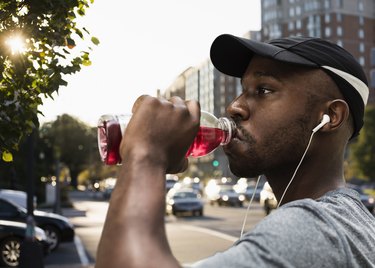












































Every day, you need to drink enough water to replace the amount you lose through simple body functions like sweating and urination. Dehydration occurs when your body lacks the water it needs to function normally. Dehydration and heat stroke can cause serious complications and may even be deadly, according to the University of Maryland Medical Center.
What Happens
When you don't get enough water, your body dries out, explains MayoClinic.com. Water is a vital part of your body, accounting for around 60 percent of your total weight. Water flushes undesirable toxins from your body through urination and is essential for organ function. When you don't get enough water you need, this creates an imbalance in your body's electrolytes, minerals like potassium, calcium and magnesium. Dehydration has a number of causes. Vomiting and diarrhea can prevent you from maintaining the right balance of body fluids. So can not drinking enough water during hot weather and during exercise. Even slight dehydration can result in noticeable symptoms.
How You Feel
Signs and symptoms of dehydration include thirst, sleepiness, fatigue, a tacky mouth, dry cough, headache, parched skin, constipation, decreased frequency of urination and dark urine. According to MayoClinic.com, young children, the elderly and people with chronic medical conditions are more likely to experience dehydration. Indications of more severe dehydration include sunken eyes, severe thirst, absence of perspiration, low blood pressure and a rapid heart rate.
Dehydration Complications
Untreated dehydration has life-threatening complications, including heat stroke, cerebral edema, seizures, kidney failure and coma. Mild dehydration can often be treated simply by rehydrating with water and other liquids; however, people with moderate dehydration may require intravenous fluids. Key to preventing dehydration is to drink enough water to keep your body functioning and to drink it before you're even thirsty.
Fluid Intake
Your body gets the water it needs through both beverages and foods. According to the Centers for Disease Control and Prevention, broth-based soups can contain up to 95 percent water. Other sources of water include fruit juices and soft drinks; however, these are loaded with sugar and extra calories. Plain water is still the best drink to keep you hydrated. Most people need around 8 to 9 cups of water a day. However, you need even more water if you plan to go out in the heat or engage in exercise or sports.
References
- University of Maryland Medical Center; Dehydration and Heat Stroke; January 2008
- Cleveland Clinic; Avoiding Dehydration, Proper Hydration; July 2008
- Harvard Medical School; The Hazards of Too Much Water; July 2008
- MayoClinic.com; Dehydration; January 2011
- Harvard School of Public Health: The Nutrition Source
- MedlinePlus: Fluid and Electrolyte Balance


Member Comments