




































Cumin Vs. Cumin Seed

Cumin Vs. Cumin Seed
Photo Credit graines de cumin image by rachid amrous-spleen from Fotolia.com

Indian, Middle Eastern and Mexican cuisines rely heavily on cumin seed. Cumin seed comes from the cumin plant, an annual herb related to parsley and indigenous to India, the Mediterranean and northern Africa. Cumin seed is usually referred to simply as cumin. It gives taco filling its distinctive pungency and is the foundation for Indian curries and the spice blend known as garam masala. In Ayurvedic theory, cumin has properties conducive to health. You can use cumin either whole or ground into a fine powder.

Types

Most cumin available on supermarket shelves, whether whole or ground, is "white" cumin, which may vary in color from tan to dark brown. The rarer "black" cumin, known as "shah jeera" or "kala jeera" in Indian cooking, has a more delicate flavor and is considerably more expensive. You may find black cumin specified in recipes for some northern Indian meat dishes.

Culinary Techniques

Indian and Mexican recipes often call for cooks to flash-fry whole cumin in ghee or oil before adding the main ingredients, a procedure that causes the seeds to pop open and release their aromatic oils. Recipes for foods such as chili, on the other hand, may specify cumin seeds that have been toasted whole in a skillet and then ground. Ground cumin is also better suited to baking applications.
As handy as it is, powdered cumin will lose flavor quickly once you open the bottle, particularly if you expose it to heat and sunlight. The shelf life of ground cumin and similar aromatic spices is four weeks or less because the essential oils quickly evaporate, advises Meena Pathak, author of "Complete Indian Cooking." The finer the grind, the more quickly your cumin will discolor and lose flavor.

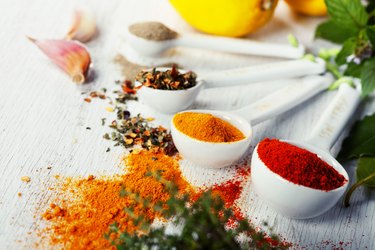
For best results, store cumin seeds whole, preferably in a cool, dark place. To grind the seeds for use in recipes, you can use a spice or coffee grinder; mortar and pestle; traditional Mexican molcajete; or a rolling pin over cumin seed placed in a plastic bag.

Ayurveda

Ayurvedic theory considers cumin powder to be a digestive aid suitable for all three doshas, or constitutional types. A "cooling" spice, cumin makes a soothing summer drink when decocted with water; alleviates insomnia; and acts as a diuretic, according to Karta Purkh Singh Khalsa and Michael Tierra, authors of "The Way of Ayurvedic Herbs." Furthermore, the authors report, "smoked in a pipe with ghee, it relieves hiccups." They recommend a dosage of 3 to 9 g of powdered cumin for therapeutic use.

Nutrition

A teaspoon of cumin seed, about 2.1 g, provides 8 calories, .2 g dietary fiber and less than 1 g carbohydrate. Its micronutrients include about 1.4 mg iron, 38 mg potassium and 8 mg magnesium. Ground cumin contains roughly the same nutrition, but has greater flavoring power when used in recipes because grinding exposes more of cumin's volatile oils. A teaspoon of ground cumin has about the same potency as a tablespoon of cumin seed.

Shelf Life

Whole cumin seed can keep its flavor for years stored in a dark, dry pantry in an airtight jar or other container. Powdered cumin, however, will lose flavor quickly once you open the bottle, particularly if you expose it to heat and sunlight. The shelf life of ground cumin and similar aromatic spices is four weeks or less because the essential oils quickly evaporate, advises Meena Pathak, author of "Complete Indian Cooking." The finer the grind, the more quickly your cumin will discolor and lose flavor.

References

Article reviewed by Vesna Vuynovich Kovach Last updated on: May 27, 2011

Must see: Photo Galleries

Member Comments