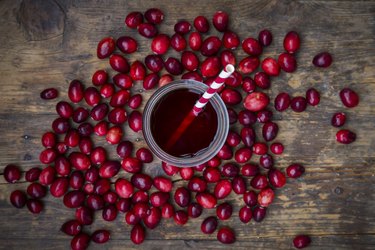
You may have heard of at-home antidotes to yeast infections: apple cider for yeast infection, coconut oil for yeast infection, and the most common, cranberry juice for yeast infection. But are these claims of cranberry juice preventing yeast infections substantiated?
Cranberry Juice for Yeast Infection
Video of the Day
First: what exactly is a yeast infection? According to Michigan Medicine, a yeast infection indicates that an overabundance of yeast cells are growing in the vagina. Generally, your vagina contains a small amount of yeast cells, along with healthy bacteria. An imbalance can promote yeast growth.
Video of the Day
Potential causes of yeast infections include taking antibiotics, pregnancy and health conditions, such as diabetes. Symptoms can range from pain and soreness to severe itching. Be sure to consult your doctor if you're experiencing these symptoms.
There are claims that cranberry juice can help prevent yeast infections. Yet, according to University of Rochester Medical Center, these claims are unsubstantiated.
So how do you treat yeast infections? Michigan Medicine asserts that a vaginal yeast infection is normally treated with an antifungal cream or suppository inserted into the vagina, or with a prescription antifungal pill that you only take once. Boric capsules may also be used to treat yeast infections. Consult a health professional about options for treatment.
Cranberry Juice and UTIs
Cranberry juice consumption is often associated with urinary tract infections (UTIs) rather than yeast infections. You may have heard that regularly drinking cranberry juice will prevent UTIs. Whether or not this application of cranberry juice is valid, is still up in the air.
One May 2016 review from Advances in Nutrition, found that evidence of cranberry juice and UTI prevention led to conflicting conclusions. Results often depended on the population being tested, and while some studies confirmed the efficacy of cranberry juice in UTI prevention, others indicated that cranberry juice could not be recommended for the prevention of UTIs.
In an article for Cleveland Clinic, Dr. Courtenay Moore, MD., states that "cranberry juice can't hurt, and it may help," when it comes to UTIs, adding that trying cranberry juice as a preventative measure is low risk. To prevent UTIs, Dr. Moore recommends taking precautions after sexual activity, developing good bowel habits and balancing "good" and bad bacteria.
While cranberries (in cranberry juice) have a substance that can prevent E.coli bacteria from sticking to the bladder wall, they aren't particularly beneficial for those with UTIs, says Better Health Channel, taking a less ambiguous stance on the effectiveness of cranberry juice. In fact, cranberry juice can alter the functioning of some antibiotics, so it's best to consult your doctor if you're drinking it regularly.
Read more: List of Good Bacteria in Yogurt
Other Benefits of Cranberry Juice
Cranberry juice for yeast infection may not hold up, but that doesn't mean we should scrap cranberry juice altogether. University of Rochester Medical Center, lists the juice's medically valid uses. As mentioned, they block chemicals needed for E.Coli to attach to the wall of the bladder.
Moreover, it may help prevent stomach ulcers caused by the bacteria H. pylori; it can increase the acidity of urine by decreasing the pH and some studies even suggest that cranberry juice can help decrease dental plaque. Cranberry juice is also purported to contain vitamin C, which may help with upper respiratory infections, although these claims are unsubstantiated.
Even though cranberry juice will not cure or prevent your yeast infection, it may be worth ingesting for its other benefits. Just be sure to drink it in moderation and consult a doctor if you're having it on a regular basis, especially while taking antibiotics.
- University of Rochester Medical Center: "Cranberry"
- Michigan Medicine: "Vaginal Yeast Infection: Should I Treat It Myself?"
- Cleveland Clinic: "Can Cranberry Juice Stop Your UTI?"
- Better Health Channel: "Urinary Tract Infections"
- Advances in Nutrition: "Cranberries and Urinary Tract Infections: How Canthe Same Evidence Lead to Conflicting Advice?"