




























































A tibial stress fracture is a crack that forms in the larger of the two bones that make up your lower leg. This type of fracture develops as a result of repetitive stress along the tibia. A number of factors are known to contribute to this condition, but poor foot mechanics is one of the more common.
Foot Mechanics
When your foot hits the ground, your heel makes contact first. Normally, your foot then rolls forward from the heel to the base of your toes, allowing the sole of your foot to flatten squarely on the ground and distributing your weight evenly across your foot. From there, the heel lifts off the ground and your weight shifts to your toes as you push off the ground.
Overpronation
If you have poor foot mechanics, such as a fallen arch or flat feet, your foot may roll inward, or overpronate, as your sole flattens on the ground. Your weight is no longer distributed evenly along the bottom of your foot and therefore not absorbing the shock of your stride. Instead, the impact travels up into the tibia, which can lead to a stress fracture.
Symptoms
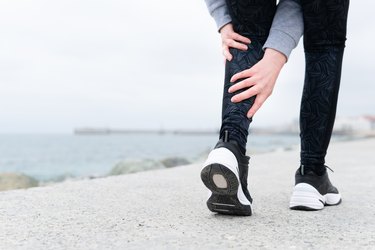
The most common symptom of a tibial stress fracture is pain along the shin. This pain typically worsens with physical activity, especially from prolonged training. For this reason, people often confuse a stress fracture with so-called shin splints, where the muscle pulls away from the tibia. Along with this pain, you may also notice some swelling over the fracture site as well as tenderness to the touch.
Treatment
According to the American Academy of Family Physicians, most stress fractures respond favorably to conservative treatment. This entails rest or at least avoiding high-impact activities for six to eight weeks. The time off, however, is shortened if you're pain-free for two to three weeks. Rest is often accompanied by periodic icing for 15 minutes at a time as well as nonsteroidal anti-inflammatory drugs, such as ibuprofen, naproxen or aspirin. If conservative measures fail to improve your condition, your doctor may suggest splinting the affect leg or even casting the lower leg. If the bone doesn't heal, you may then need surgery to correct the fracture. During the surgery, your doctor may choose to graft the fractured bone or place a rod within the affected bone.
Prevention and Correction
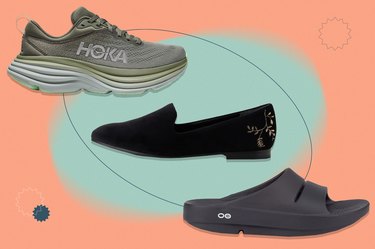
Overpronation can be corrected with orthotics, advises the Family Foot Care Center. Arch supports, shoe inserts and other devices can be worn while running to prevent to foot from rolling inward. You may also be able to find a pair of running shoes that have good arch support and deeper heels to help correct the overpronation.


