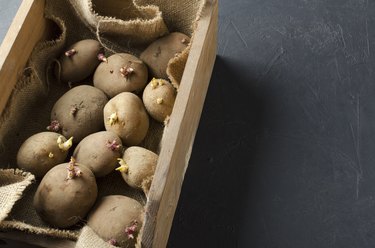
Every time you open the fridge, you see that potato you keep forgetting to eat. It's starting to look a little sad, and it has what look like white potato roots starting to sprout — can you eat it? Maybe, but it's probably best to follow the "when in doubt, throw it out" rule.
Tip
Sprouted potatoes can be toxic. In certain cases, they may be OK to eat, but tossing them is probably a safer plan of action.
Video of the Day
Potatoes Past Their Prime
Potatoes are root vegetables and therefore quite hardy. They can last a long time when stored properly, which, according to the University of Idaho Extension, should be in an area that is cool, dark, ventilated and humid.
Video of the Day
But most people store their potatoes in the fridge or on the counter, both of which lead to quicker spoilage. An environment that's too cold or dry will cause the potatoes to wither and become flaccid, while tubers exposed to light can develop a greenish hue, and those exposed to warm temperatures may sprout roots.
The temperature of the average home is between 65 and 75 degrees Fahrenheit, reports the University of Idaho Extension. However, the ideal storage temperature for potatoes is 42 to 50 F. That presents an issue for storing potatoes at home, as the refrigerator — with an ideal temperature between 34 and 40 F, according to the University of Nebraska–Lincoln — is too cold, but room temperature is too warm.
Therefore, unless you eat your potatoes soon after buying them, you are likely to experience some sort of spoilage, whether it's a change in color or texture or sprouting. The time range in which that happens depends on many factors, including how the tuber was stored before you purchased it and the environment of your home. The University of Idaho Extension reports that potatoes will begin to form sprouts in 30 to 140 days.
Should You Eat Potato Roots?
Potatoes contain substances called glycoalkaloids, which are natural toxins. The two types found in tubers are solanine and chaconine. Long storage times and exposure to light can cause glycoalkaloid levels to increase dramatically. A change in color and the development of sprouts is a sign that levels have risen enough to become toxic when consumed. According to the U.S. National Library of Medicine, solanine can be very toxic even in small amounts.
The most common effects of solanine include gastrointestinal problems, such as stomach pain, diarrhea and vomiting. More serious side effects may occur when large amounts are consumed. These include hallucinations, delirium, fever and shock. Symptoms tend to be delayed for eight to 10 hours after eating. The National Capital Poison Control Center reports that, although rare, there have been cases of death from consuming high levels of these toxins.
Pregnant women should be especially cautious. According to a study published in Nutrition Journal in November 2018, consuming sprouted potatoes during pregnancy increases the risk of neural tube defects and orofacial clefts in newborns.
In some cases, you may be able to consume potatoes that have already sprouted. The U.S. National Library of Medicine advises that, as long as the potato isn't green and you remove all the sprouts, it is safe to eat. According to the Poison Control Center, peeling the potato before eating it can also reduce the amount of toxins, since they are found in greater amounts in the skin. Cooking the potato will not reduce the glycoalkaloid content.
The safest bet is probably just to throw out any potato you have doubts about. It's better to go without your mashed potatoes with dinner than to risk toxicity. Next time you buy potatoes, only buy what you know you're going to use within a few weeks. Store the spuds in a cool, dark area in your home if you are going to keep them longer than that.
- University of Idaho: "University of Idaho"
- University of Nebraska–Lincoln: "Refrigerator and Freezer Storage"
- U.S. National Library of Medicine: "Potato Plant Poisoning - Green Tubers and Sprouts"
- National Capital Poison Control Center: "Are Sprouted Potatoes Safe to Eat?"
- Nutrition Journal: "Maternal Periconceptional Consumption of Sprouted Potato and Risks of Neural Tube Defects and Orofacial Clefts"