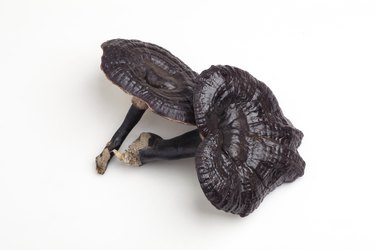
The reishi mushroom is a staple of Chinese traditional medicine, but it is used mainly as a dietary supplement in the United States. You will find it marketed as Ganoderma lucidum under some brands. Natural health proponents even add it to coffee to make consuming it effortless. The scientific evidence for the medicinal uses of reishi mushrooms is scant. The anecdotal evidence suggests different doses, depending on the condition you are addressing. Consult your physician before you add this mushroom to your diet.
Constituents
Video of the Day
Reishi mushroom powder suppliers generally obtain them from China, where they grow on rotted wood. The polysaccharides beta-glucan and triterpenes are the primary active constituents of reishi mushrooms. Promoters market this mushroom as a treatment for a variety of conditions, including diabetes, HIV, cancer, inflammation, colds and viruses, according to Memorial Sloan-Kettering Cancer Center.
Video of the Day
Immune System Doses
The polysaccharides in mushrooms appear to act as antioxidants that protect your immune system, according to the Breast Cancer website. The lack of rigorous scientific research means that the exact process is unsubstantiated. Breast Cancer suggests consuming doses of 1 g up to 1.5 g of reishi mushroom powder daily to boost your immunity. The website notes the lack of supporting clinical evidence for reishi powder use for the immune functions or for its effectiveness against breast cancer
Health Conditions Dosing
Asian researchers have conducted studies that resulted in dosing guidelines for reishi mushroom powder, according to the Alabama Cooperative Extension. The dosing depends on the illness that the researchers were treating. For migraine headaches, the MARA Institute of Technology in Malaysia found that 1,500 mg doses three times daily were effective in a small 2004 clinical trial. The researchers also used three doses totaling 4,500 mg daily for gout, osteoarthritis and rheumatism. For hypertension, the MATA researchers started with one capsule containing a 500 mg dose, taken three times a day for the first five days. They then increased the dosage to two 500 mg capsules taken three times daily for a week. They finally increased dosing to three 500 mg capsules three times a day until the blood pressure normalized or for a maximum of 30 days. The researchers then reduced the doses in stages, recommending 2,500 mg capsules twice a day for maintaining normal blood pressure.
Warnings
Reishi mushrooms may have side effects with prolonged use, according to Breast Cancer. The organization notes that after using the mushrooms for six months, you might experience itchy skin, blood in your stools and stomach distress. The U.S. Food and Drug Administration does not require that dietary supplement manufacturers submit their products for testing before selling them. Nor does the FDA verify the purity or safety of dietary supplements. Consumers may have difficulty verifying how much mushroom powder, if any, each product brand contains. Memorial Sloan-Kettering Cancer Center warns of possible reishi mushroom drug interactions, along with increased risk of bleeding. The site also repors one confirmed death in the United States from long-term use.