































How to Cook & Eat Pumpkin

How to Cook & Eat Pumpkin
Photo Credit Jupiterimages/Comstock/Getty Images

All culinary varieties of winter squash, including pumpkins and acorn, butternut and spaghetti squash, have hard shells, mild, sweet-tasting flesh and hollow seed-containing cavities. They are very good sources of dietary fiber, vitamins C and B1, folic acid and potassium. Pumpkins and other dark-fleshed varieties of squash are rich in carotenes, which have a protective effect against many kinds of cancer, according to "The Encyclopedia of Healing Foods." For cooking, select sugar pumpkins, also known as pie or sweet pumpkins. Averaging 3 to 5 lbs., sugar pumpkins are smaller, more flavorful and easier to prepare than the larger jack-o-lantern varieties.

Step 1

Preheat the oven to 350 degrees Fahrenheit. Position one of the racks in the center of the oven.

Step 2

Cut the sugar pumpkin in half horizontally with a sharp knife. Scoop out the seeds and pulp with a large spoon, and discard the pulp. Rinse, dry and save the seeds for roasting, if desired.

Step 3

Place each half, cut-side down, on a baking sheet with a lip. Pour about 1/4 cup of water over each one.

Step 4

Bake the pumpkin for 50 to 60 minutes, or until it collapses and both its skin and flesh are tender.

Step 5

Remove the baking sheet from the oven, and set it on a heat-proof surface. Turn the pumpkin halves flesh-side up, and allow them to cool for at least 10 minutes on the sheet.

Step 6

Scrape the flesh from the skin with a large spoon.

Step 7

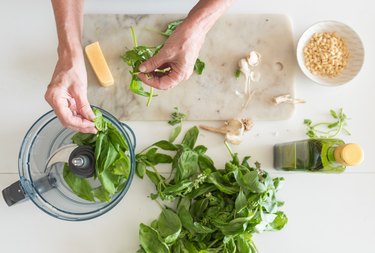
Put the flesh in a food processor, and puree it until it's uniformly smooth.

Step 8

Serve the pureed pumpkin as a warm savory side dish. Season it with a bit of sea salt, freshly ground black pepper and a drizzle of extra-virgin olive oil, if desired.

Tips and Warnings

  • Use the unseasoned pumpkin puree as a base for pie filling or soup. Add some finely chopped fresh sage and gorgonzola cheese crumbles and use the mixture to fill homemade ravioli pasta. Honey with cinnamon, maple syrup with brown sugar and crème fraîche with nutmeg are seasoning combinations that complement the flavor of sweet pumpkins. Use sweetened pumpkin purees as toppings for pancakes, waffles, plain muffins or oatmeal. Instead of pureeing the pumpkin after it's been cooked, mash the flesh with a potato masher and serve it with a pat of butter or a dollop of Greek yogurt or cottage cheese. Cube the cooked pumpkin and use it as a pizza topping or add it to a hearty vegetable stew. One 3-lb. sugar pumpkin yields about 12 cups of cubed pumpkin, 9 cups of diced pumpkin or just over 5 cups of pureed pumpkin. Use sugar pumpkins as a substitute in recipes that call for butternut squash or sweet potatoes, in some cases.

Things You'll Need

  • 3-lb. sugar pumpkin
  • Food processor
  • Sea salt, freshly ground black pepper and extra-virgin olive oil, optional

References

  • "The Encyclopedia of Healing Foods"; Michael Murray, N.D., et al.; 2005
  • "Recipes From the Root Cellar"; Andrea Chesman; 2010
  • "Chez Panisse Vegetables"; Alice Waters; 1996

Article reviewed by Adela McKay Last updated on: Apr 29, 2012

Must see: Photo Galleries

Member Comments