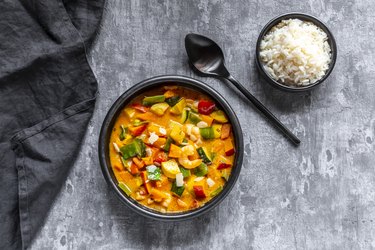
Indian cuisine uses sour, sweet, spicy and hot flavors to create rich, luscious dishes that are often sopped up with flavorful rice or toasty naan. If you're looking for variety in your diet, there are lots of option for carbs in Indian food.
High-carbohydrate foods in Indian cuisine include many of the vegetarian options based on beans and served over rice. Flatbreads, samosas and pakora are other types of Indian food with carbohydrates.
Video of the Day
Video of the Day
The nutrition in Indian food also often includes high fat and sodium content. The American Heart Association offers tips for making healthier choices when eating out at an Indian food restaurant. If you're looking for low carb Indian dishes when eating out, choose from the foods that are not on this list of higher carb foods.
Read more: Indian Vegetarian Diet for Weight Loss
Plentiful Carbs in Indian Food
Rice is a staple in Indian cuisine. A plain variation flavored with whole coriander pods, onion and cumin seeds accompanies meat-based vindaloos, curries and tandoori — spiced, grilled meats. Pilafs flavored with lime or tomato are served with roast meat and vegetable or meat curries.
Regardless of how the rice is prepared, white basmati rice — the type commonly used in Indian cooking — contains 23 grams of carbohydrates per 1/2 cup, according to the USDA, making it a high-carb food.
Note that vindaloo dishes usually contain potatoes, even if a meat is the primary ingredient in its menu description.
Indian chefs bake flatbreads, leavened and unleavened, in clay tandoor ovens or over wood fires; some flatbreads are fried or seared on a hot pan. They might appear on menus as chapati, phulka, roti, puri, naan or paratha.
They're made with a variety of flours, including all-purpose flour or atta, a durum wheat flour — making them high in carbohydrates. For example, one piece of naan has 52 grams of carbohydrates, according to the USDA.
Vegetarian Indian Food with Carbohydrates
Indian cuisine is especially friendly to vegetarians, but many of the curries are based on lentils, black-eyed peas or chickpeas, which are relatively high in carbohydrates.
For example, 1/2 cup of plain, cooked chickpeas contains 22 grams of carbohydrates, and 1/2 cup of plain, cooked green lentils contains 19 grams of carbohydrates. Add typical recipe ingredients, such as onion, garlic, chiles and tomatoes and the carb count rises per serving.
Dal is a classic stewed lentil dish containing onion, garlic, turmeric, chili and curry powder. Chana masala is a specific type of curry flavored with black pepper, cloves, cinnamon, cardamom and cumin. "Chana" are small chickpeas, making this a high-carb entree.
Many other vegetable side dishes and curries often feature potatoes, carrots and peas — some of the most carb-heavy vegetables around. Saag, which is a sauce of steamed spinach, is often thickened with flour, which increases its carb content.
Consider Carbs in Appetizers
One of the most commonly found starters on Indian menus is the samosa — a stuffed triangle of fried or baked pastry. The pastry itself is high in carbs and is often filled with high-carb peas and potatoes.
Battered and fried vegetables, called pakora or bhaji, also serve as a starter for many Indian meals. The batter is made from chickpea flour, which is high in carbs, and many of the vegetables that best stand up to the cooking treatment are high in carbs too. Carrots, potatoes and onions are commonly served as pakora.
Papadums, which are large lentil crackers, often start a meal — much like chips at a Mexican restaurant. They are relatively low in carbohydrates, but are often used to dip high-carb chutneys, made with brown sugar, tamarind, dates and mango. Stick to green or yogurt-based sauces to avoid the extra carbs from sugar and fruit.
Count Carbs in the Extras
Desserts in any cuisine are rarely low in carbs, and Indian food is no exception. Gulab jamun consists of a flour and sugar dough fried and glazed with sugar syrup — making it an unquestionably high-carb food. Rice is turned into a cardamom-scented pudding, known as kheer, for another high-carb dessert.
Mango lassis are a combination of milk, yogurt and high-carb mangos. The drink is thick like a smoothie or milkshake and often sweetened with extra sugar. Many other classic Indian drinks use high-carb ingredients, such as almond milk, fruit juice and sugar.
- American Heart Association: "Tips for Eating Indian Food"
- USDA FoodData Central: "Basmati Rice"
- USDA FoodData Central: "Naan"
- USDA FoodData Central: "Chickpeas, Dry, Cooked, Fat Not Added in Cooking"
- USDA FoodData Central: "Lentils, Dry, Cooked, Fat Not Added in Cooking"
- USDA FoodData Central: "Pastry, Filled With Potatoes and Peas, Fried"
Was this article helpful?
150 Characters Max
0/150
Thank you for sharing!
Thank you for your feedback!