










































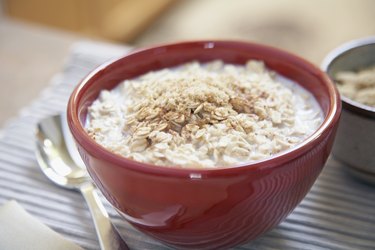












Kefir is a slightly sour, fermented dairy product that resembles the texture and consistency of a drinkable yogurt. Kefir can be made using any type of milk -- cow, goat or sheep. Kefir is easily digested and is naturally high in protein, B vitamins, minerals and probiotic or good bacteria. Kefir can be a healthy alternative to yogurt due to it lower sugar content.
.
Homemade Kefir
Kefir, a fermented or cultured milk product, is made by soaking the kefir grains, also called "starter cultures," in any type of milk for a minimum of 24 hours. The friendly bacteria in the kefir grains consume the lactose during the lactic-acid fermentation process, leaving behind galactose, a monosaccharide sugar. You can re-use the kefir grain cultures again to make additional batches of kefir.
Probiotic Benefits
According to registered dietitian Kerri Napoleon, in an article for Cenegenics Jacksonville Medical Institute, kefir is a natural probiotic that contains 7 to 10 billion colony forming units of good bacteria. The strains of bacteria present in kefir are more potent than probiotics in yogurt or supplements and actually recolonize the good bacteria in your gastrointestinal system, improving digestion.
Improved Blood Sugar Levels
Kefir, like milk, is low on the glycemic index. Low-glycemic foods may regulate the amount of insulin produced by the pancreas, proving helpful to those with diabetes mellitus. According to a study in the "British Journal of Nutrition," the benefits of low gylcemic foods include controlling food intake and promoting feelings of satiety.
Uses of Kefir
Due to its high protein content, kefir is suitable as a meal replacement beverage. You can drink kefir by itself in its natural state. However, if you find the taste too sour to drink by itself, combine kefir with fruit to make smoothies, homemade bread or other baked goods.
References
- "Journal of the American Dietetic Association"; Kefir Improves Lactose Digestion and Tolerance in Adults with Lactose Maldigestion; SR Hertzler; May 2003
- "Critical Reviews in Food Science and Nutrition"; Review: functional properties of kefir; ZB Guzel-Seydim; March 2011
- "BMC Complemetary and Alternative Medicine"; Kefir Consumption; Marie-Pierre St-Onge; January 2002
- Cenegenics Jacksonville Medical Institute; Cow's Milk, Soy Milk, Almond Milk, or Kefir: what to choose; Kerri Napoleon; June 2011
- "British Journal of Nutrition"; Health Benefits of Low Glycaemic Index Foods n Diabetic Patients; SW Rizkalla, et al.; December 2002
- Linus Pauling Institute; Glycemic Index and Glycemic Load; Jane Higdon, Ph.D.; December 2005


Member Comments