






































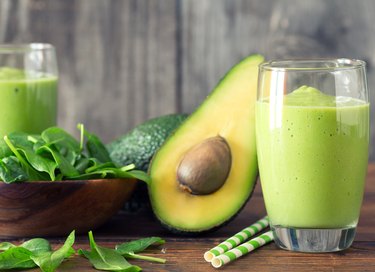


































As an addition to your diet, grapefruit juice has a great deal going for it. A one-cup serving provides more than 100 percent of the recommended daily allowance for vitamin C. It is also a good dietary source of thiamine and folate. Thiamine, for example, is essential for glucose metabolism in the body. Grapefruit has been the focus of some fad diets such as the Hollywood diet and the unofficial "Mayo Clinic Diet." While some scientific evidence supports grapefruit consumption for weight loss, it is not a replacement for healthy eating and regular physical activity.
Grapefruit and Weight Loss
One mechanism for losing weight is to speed your metabolism. Your metabolism will slow with age. However, physical exercise can build muscle for increased metabolism. Grapefruit juice may offer a similar effect regarding weight and body composition. A 2011 study by Vanderbilt University in Tennessee found that participants lost about 7.1 percent body weight after 12 weeks following a diet that included grapefruit juice. In addition, researchers noted a reduction in body fat and waist circumference and said it was due to consuming grapefruit before meals.
Health Benefits
Increasing your metabolism may provide other health benefits. A 2006 study by Scripps Clinic in California had similar results, with participants losing 3.3 lbs. after 12 weeks following a diet that contained grapefruit juice. These findings were significant in that clear results were achieved in obese participants. Obesity is one of a collection of chronic health conditions called metabolic syndrome. Individuals with these risk factors have a heightened risk of developing diabetes and heart disease. While not identifying the specific mechanism for grapefruit juice, researchers concluded that grapefruit juice may offer health benefits for a weight reduction diet.
Grapefruit Juice versus Grapefruit
The 2006 study by Scripps Clinic did not find significantly different findings between consumption of fresh grapefruit versus grapefruit juice. The effects that grapefruit may have on metabolism however, might be better achieved with the fruit versus the juice. A one-cup serving of grapefruit juice contains 96 calories versus the 41 calories contained a half of grapefruit. The fruit also has 1.4 g of fiber to keep you feeling sated. Grapefruit juice has no fiber.
Cautions
Consuming grapefruit juice is not appropriate for all individuals, despite any potential health benefits. The reason lies within your body's specific chemistry. Some individuals with a high amount of an enzyme called CYP 3A4 may be more likely to experience harmful drug interactions when taking grapefruit juice. More than 30 drug interactions have been identified, including some with cholesterol-lowering drugs, certain calcium channel blockers for blood pressure control and some birth control pills. If you are on prescription medication, consult your doctor before increasing your grapefruit juice consumption.
References
- U.S. Department of Agriculture Nutrient Data Laboratory
- Every Diet; Mayo Clinic Diet; August 10, 2010
- "Nutrition and Metabolism"; Effects of Grapefruit, Grapefruit Juice and Water Preloads on Energy Balance, Weight Loss, Body Composition, and Cardiometabolic Risk in Free-Living Obese Adults; H. Silver, et al.; February 2011
- "Journal of Medicinal Food"; The Effects of Grapefruit on Weight and Insulin Resistance: Relationship to the Metabolic Syndrome; K. Fujioka, et al.; Spring 2006
- Mayo Clinic; Metabolic Syndrome; November 5, 2009
- The People's Pharmacy: Grapefruit Interactions


Member Comments