




































































Healthy Fats
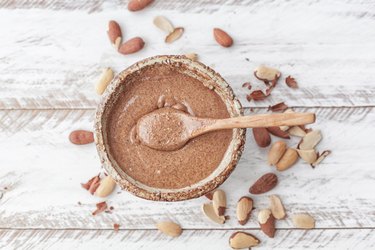
Fats are a good source of fuel . All varieties of nuts are rich in unsaturated fats, according to the Department of Agriculture. According to the American Heart Association, unsaturated fats are heart-healthy foods that can be classified as either monounsaturated and/or polyunsaturated. Nuts contain the essential fatty acid known as omega-3, a form of monounsaturated fats. As an example, a 1-oz. serving (or 14 halves) of raw walnuts will supply you with an impressive 2,542 mg of omega-3 fatty acids, says Nutritiondata.com. Heart-healthy nuts include pistachios, pecans, hazelnuts, almonds, walnuts, pine nuts and cashews. Omega-3 fatty acids contain a wealth of antioxidants that may help protect your cardiovascular health functioning by keeping your arterial walls clean. This, in turn, keeps your blood circulating efficiently while providing you with more energy.
Protein Source
According to bodybuilder Tom Venuto, protein is the hardest of the nutrients to digest, "so your body has to work harder to digest the food, this in turn increases your metabolism." Nuts are rich sources of protein, claims the USDA. According to nutritiondata.com, a 1-oz. serving of raw walnuts contains a respectable 4 g of protein, which will supply you with 9 percent of your daily recommended allotment of the nutrient, cites Nutritiondata.com.
Nutrient-Rich Snacks
Instead of snacking on foods that are known for slowing down your metabolism due to their empty calories and/or heavy sugar content (such as doughnuts or baked goods), nuts will provide you with needed nutrients that can speed up your metabolism. Even though they contain fat and can be high in calories, nuts are a healthy substitution for other convenient snack foods, cites the Mayo Clinic. According to the clinic, nuts are recommended snacks since "they're inexpensive, easy to store and easy to take with you to work or school."
As a nutritional comparison, compare a 1-oz. pastry with a 1-oz. serving size of pecans. According to nutritiondata.com, this pastry will contain 2 g of protein (3 percent of your daily recommended allotment of the nutrient), 112 calories and a low 72 mg of omega-3 fatty acids. A 1-oz. serving of dry-roasted pecans contains 3 g of protein (which is 5 percent of your daily recommended allotment), 199 calories and an impressive 278 mg of beneficial omega-3 fatty acids.
References
- USDA National Nutrient Database for Standard Reference; Release 20, USDA; 2008
- Nutritiondata.com
- American Heart Association


Member Comments