

























































Juices Low in Potassium

Juices Low in Potassium
Photo Credit BananaStock/BananaStock/Getty Images

Potassium is a mineral naturally present in many fruits and vegetables that your body uses to support the functions of your heart, kidneys, muscles, nerves and more. While potassium can have many protective benefits, if you have kidney disease, your body may not be able to filter it properly. As a result, you may have to make some changes in food choices, including the juices you drink to reduce your overall potassium intake.

Significance

Because many fruits and vegetables contain potassium, you may need to avoid or limit certain fruit juices if you are restricting potassium intake. High-potassium food sources are considered to be those higher than 200 mg of potassium per serving, according to Drugs.com. A cup of prune juice has about 707 mg, making it a very high-potassium fruit juice. A half-cup of orange juice also is high in potassium -- about 236 mg per serving while a half-cup serving of grapefruit juice contains between 200 and 300 mg.

Low-Potassium Juices

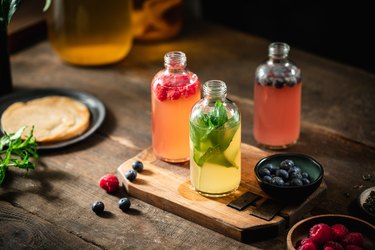
If you enjoy a glass of fruit juice with breakfast or a meal, there are low-potassium options. Apple juice is considered a medium-potassium juice, containing about 147 mg of potassium per one-half cup serving, according to Drugs.com. Cranberry and grape juices also are lower-potassium juice servings when compared with prune and orange juice.

Serving Sizes

Serving sizes are important to consider when drinking low-potassium juices, because a low-potassium juice can quickly become a high-potassium option if eaten in excess. For example, the serving size for apple juice is one half-cup or 4 oz. However, if you were to drink a full cup of apple juice, you would be getting almost 300 mg of potassium -- making apple juice a high-potassium choice. Practicing moderation is important when drinking fruit juices. If you have questions concerning a particular serving size or potassium content of a fruit juice, talk to your physician or dietitian about safe intake levels or alternatives to fruit juice.

Fluid Considerations

If you are restricting potassium content because you have kidney disease, you also may need to restrict your overall fluid intake. This is because the kidneys also are responsible for filtering fluids as well as potassium and minerals like phosphorus and calcium. If this is the case, you may need to limit the amount of fruit juice in your diet as well as other beverages.

References

Article reviewed by Ellen Parson Last updated on: Aug 5, 2011

Must see: Photo Galleries

Member Comments