












































How Many Liters of Water Should a Person Drink Daily?

How Many Liters of Water Should a Person Drink Daily?
Photo Credit Comstock/Comstock/Getty Images

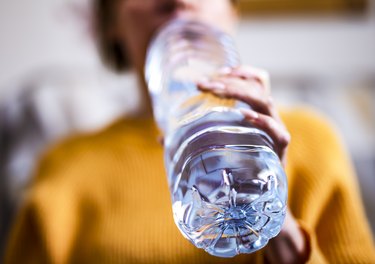
The belief that you need eight glasses of water every day probably originated with a report by the National Academy of Sciences during the 1940s, suggests an article in the September 2005 Harvard Medical School "HealthBeat." The report recommended 1 mL of water for every calorie burned. If you burn 2,000 calories daily, you need 2 L of water every day or eight 8-oz. glasses. Your water could come from food, other beverages and your own metabolism.

Adequate Intake

How much water you need to drink every day depends on many factors including your age, sex and weight. Your water requirements vary with the weather, the altitude and the amount of physical activity you perform daily. The water in the food you eat counts towards your daily total. Some fruits and vegetables contain 90 percent water by weight, according to MayoClinic.com. An average diet including only six glasses of water daily, or 1.5 L per day, could actually contain as much as 17.6 glasses of water, or 4.16 L.

Real Needs

The Institute of Medicine of the National Academies bases the adequate intake of water on the hydration needs of healthy active individuals living in temperate climates. Males and females between 9 and 50 years old need about 2.1 to 3.7 L of total water intake daily. Water in food provides about 20 percent of your daily total. Coffee, tea and alcoholic beverages contribute some water to the diet but water makes the healthiest choice.

Extreme Conditions

Living in harsh climates increases your water needs even if your exertion levels remain average. Normal water losses from respiration add up to about 200 mL per day, according to "Fluid Replacement and Heat Stress." Cold, dry air increases respiratory water losses. If you work in cold climates at high altitudes, you could lose 1.5 L per day simply by breathing. As you burn more energy, your body creates more water as a byproduct of your own metabolism. High metabolic rates could produce about 1 L per day of water, reports a 2005 article in "Alpinist" magazine.

Extreme Exercise

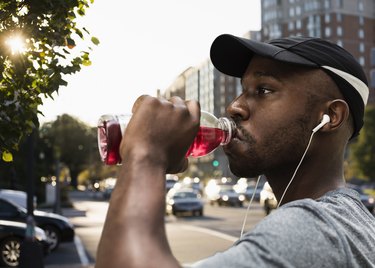
The amount of water you lose as sweat depends on weather and the difficulty of the workout. For most people, rehydrating with plain water after a workout restores fluids safely. For every pound of sweat lost, rehydrate with .75 L of water, recommends Dr. Len Kravitz of the University of New Mexico. If you work out intensely, you could lose a liter of water every hour in perspiration. That liter of sweat could contain over 3g of salt. Replacing severe water losses without replacing sodium causes hyponatremia, which could lead to coma and death.

References

Article reviewed by Lisa Michael Last updated on: Aug 18, 2011

Must see: Photo Galleries

Member Comments