
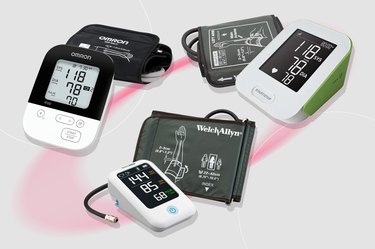






















































Blood pressure is the force that the flowing blood exerts on the walls of the blood vessels. An increase in blood pressure can increase the risk of coronary heart disease, heart failure, stroke and kidney failure. About 1 in 3 adults in the United States have high blood pressure, according to the National Heart, Lung and Blood Institute. Along with a healthy diet and exercise, your doctor may also prescribe medications to regulate your blood pressure. Certain herbs and supplements may also help manage blood pressure.
About Turmeric
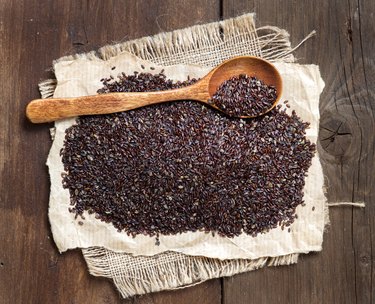
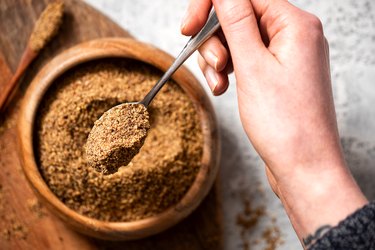
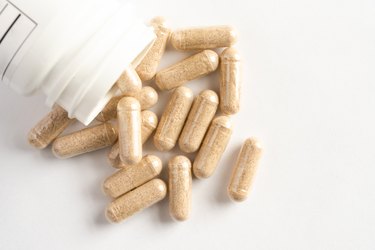
Turmeric is a yellow powder that is used as a coloring and flavoring agent in Indian cuisine. It is obtained by boiling, drying and grinding the roots and underground stems of the Curcumin longa plant, native to South Asia. The powder contains a biologically active compound called curcumin, and vitamins C and E. Turmeric supplements are available as tablets, capsules, fluid extracts and tinctures, and have been used traditionally to treat a variety of conditions, including indigestion, ulcers, arthritis, infections and certain cancers. Your doctor may help determine a dose that is appropriate for you based on your age, overall health and condition being treated.
Effects of Turmeric on Blood Pressure
Short-term, oral supplementation of turmeric can decrease the blood pressure in individuals with kidney diseases, according to a study published in the July 2011 issue of the "Journal of Renal Nutrition." Some animal studies, such as the one published in the November 2009 issue of the journal "Circulation," state that curcumin inhibits the action of the protein p300 histone acetyltransferase and prevents the high blood pressure-induced damage of the heart cells. The University of Maryland Medical Center also suggests that turmeric may lower cholesterol and prevent plaque formation in the arteries. This may, in turn, help maintain blood pressure. Methanolic extracts of curcumin also dilate and relax the blood vessels in animal models, says a study in the July 2009 issue of the "Journal of Ethnopharmacology."
Side Effects
Turmeric supplements are generally safe to use, although high doses may lead to upset stomach and ulcers. Curcumin may also lower your blood sugar level when used with diabetes medications. It may also interfere with certain anti-coagulant and antacid medications.
Precautions
Turmeric is available at most natural food stores, but do not use it without consulting a doctor. Some benefits of turmeric have been demonstrated in animal models only, and more research is needed before it replaces your existing medications. Also remember that the Food and Drug Administration does not regulate the production of turmeric products in the United States. Talk to a pharmacist to find a quality product.
References
- "Journal of Renal Nutrition"; Oral Supplementation of Turmeric Decreases Proteinuria, Hematuria, and Systolic Blood Pressure in Patients Suffering from Relapsing or Refractory Lupus Nephritis: A Randomized and Placebo-Controlled Study; P. Khajehdehi, et al.; July 2011
- "Circulation"; Abstract 3817: A Natural p300-specific Histone Acetyltransferase Inhibitor, Curcumin, Exerts Synergistic Effects With Ace Inhibitor During Systolic Function Restoration After Myocardial Infarction in Rats; Yoichi Sunagawa, et al.; November 2009
- University of Maryland Medical Center; Turmeric; David Zieve, M.D., MHA, and David R. Eltz
- "Journal of Ethnopharmacology"; Hypotensive and Endothelium-Independent Vasorelaxant Effects of Methanolic Extract from Curcuma Longa L. in Rats; Oluwatosin A. Adaramoye, et al.; July 2009


