




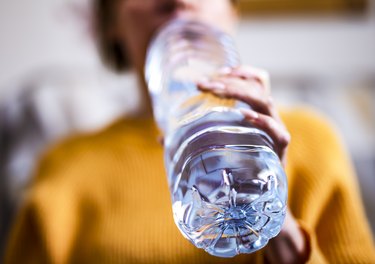







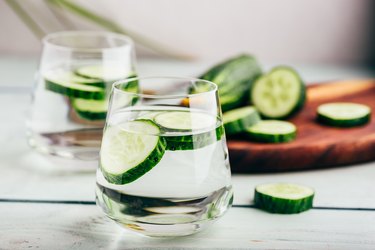




















A speedier metabolism could translate to a thinner you. To get one, some people use risky and outrageous methods, which may leave you wondering if something as simple as sipping water could do the trick. In truth, drinking cold water could help you lose weight, although employing additional methods will ensure even greater results.
Recommended Intake
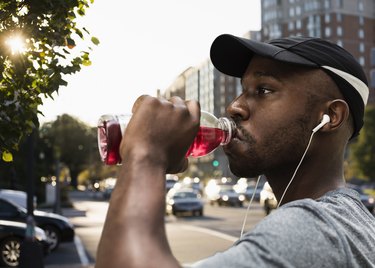
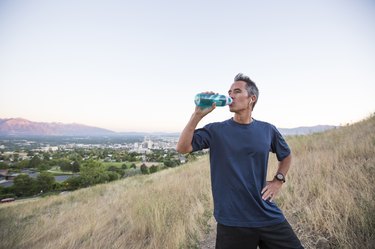
Water makes up 60 percent of your body weight and is essential to a host of bodily functions, including carrying nutrients to your cells and creating a moist environment for nose, ear and throat tissues. Since your body neither makes nor stores water, drinking fluids everyday is necessary to restore what you lose through sweat and urination. Cool water is the best fluid for hydration during and after workouts. Everyone should drink at least 8 cups daily, although athletes need more, according to the American Academy of Orthopaedic Surgeons, or AAOS.
Facts
Drinking cold water may increase your metabolic rate as the body works to heat the fluid to your core temperature, according to Madelyn Fernstrom, Ph.D., in an article for "Women's Health." Researchers at the University of Utah discovered that subjects who drank eight to 12 full glasses of water daily had higher metabolic rates than those who drank only four glasses.
Consumption
In addition to its effect on your metabolic rate, sipping cold water throughout the day may cause you to eat less because your body cannot distinguish hunger from thirst. Rather than reaching for a snack, you may feel satisfied with a glass of cold water. You might also eat less at mealtimes because you feel fuller with a glass of cold water in your belly.
Additionally, to stay hydrated the AAOS recommends you consume water even if you don't feel thirsty because thirst is not a reliable indicator of your hydration needs. In fact, by the time you feel thirsty, you've already lost around 2 percent of your body weight and will likely feel fatigued as a result. This is especially important before a workout or athletic competition, as a lack of water can lead to poor performance.
Considerations
According to Mayo Clinic nutritionist Katherine Zeratsky, how much you weigh generally depends on your caloric intake and physical activity level. Although cold water is a valuable tool to have in your weight-loss arsenal, it will not likely have a huge impact on your weight if you ignore the weight-loss basics: diet and exercise. To make the biggest difference, work with a dietitian to develop your ideal diet menu and make a habit of exercising most days of the week. Aerobic exercise helps burn calories and increase cardiovascular health. Strength training helps build muscle mass, which also increases your metabolic rate because muscle burns calories at a faster rate than does fat.


Member Comments