


























































Can Seasonal Allergies Make You Cough?

Can Seasonal Allergies Make You Cough?
Photo Credit Thinkstock/Comstock/Getty Images

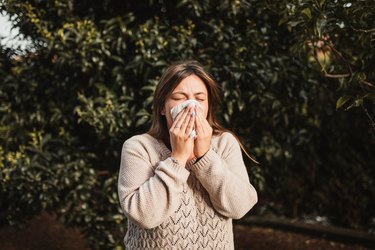
Seasonal allergies that are caused by pollen is known as hay fever. Coughing is a common symptom of both seasonal and year-long allergic rhinitis. The cough might be worse if you also suffer from asthma. Consult with an allergist to properly treat your seasonal allergies.

Identification

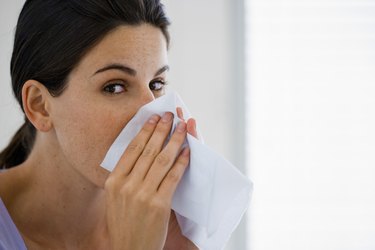
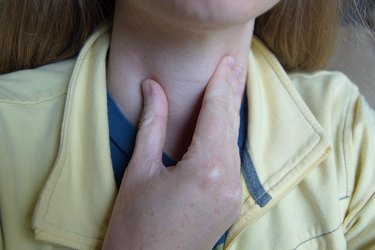
A cough is not present during your initial contact with an allergen. Upon contact with an allergen, your nose, mouth and throat become itchy and irritated. Your eyes also itch and water. Your nose discharges thin and clear mucus. The cough develops later, as well as nasal congestion, a sore throat, fatigue, sinus pressure and the skin under your eyes has a bluish colored tone. You notice excess mucus that triggers your cough during seasonal allergies. Smell and taste is often altered by seasonal allergies.

Cause

If your parents have allergies, you have a good chance of having allergies. You might not develop an allergic reaction to pollen until early adulthood. The allergy develops when your immune system recognizes pollen as an invader and starts producing antibodies to attack pollen. Once the antibodies are created, your immune system releases chemicals in the body that cause an allergic reaction when your inhale pollen. As pollen becomes trapped in the mucus lining of your airways, excess mucus is produced in response to the allergen, stimulating cough receptors in order to clear the airway.

Treatment

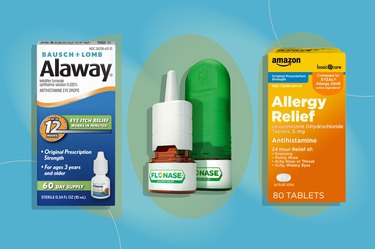
Repetitive dry coughing can irritate the airways and result in excessive coughing. Cough suppressants should only be used when inflammation occurs from coughing. Common cough medications are codeine and dextromethorphan. Antihistamines treat itching, sneezing and a runny nose from seasonal allergies. Other treatment options are leukotriene modifiers and nasal corticosteroids. If pollen is difficult for you to avoid, for instance if you work outdoors, immunotherapy injections can be given regularly to help your body adjust to pollen. A nasal wash can remove pollen from your nasal passage.

Prevention

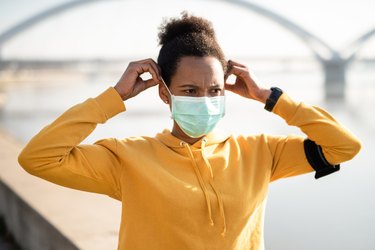
Avoiding exposure to pollen is your best means of preventing symptoms. Pollen is found in trees during the spring, in the grass during late spring and summer, and in ragweed during the late summer and early fall. Keep your windows closed at your home and in your car. Do not participate in outdoor activities when pollen counts are high. Avoid activities that stir pollen from the ground, such as mowing, raking and gardening. If you must be outdoors, wear a dust mask. Drink water to keep your throat lubricated and use a humidifier to reduce coughing spells.

References

Article reviewed by Kirk Ericson Last updated on: Aug 25, 2011

Must see: Photo Galleries