



































































It's crucial to know what your cholesterol levels are. Cholesterol is a waxy lipid, or fat, manufactured by your liver and found in foods containing animal fat. You need cholesterol to maintain your cell membranes, manufacture vitamin D and synthesize hormones. However, consistently elevated cholesterol levels lead to a greater risk of developing atherosclerosis and heart problems. Atherosclerosis, or plaque formation in your arteries, is a complicated process involving elevated cholesterol levels, platelets, white blood cells, calcium and smooth muscle cells. Evening primrose oil and fish oil supplements may help you to improve your cholesterol levels and reduce plaque formation, but consult your physician before taking them.
Cholesterol And Your Arteries
Cholesterol is a fatty substance, so it must be encased in a lipoprotein shell to be transported through your bloodstream. There are two types of lipoproteins, low-density lipoprotein, or LDL, and high-density lipoprotein, or HDL. According to the University of Maryland Medical Center, 75 percent of your lipoprotein is LDL, which is harmless unless it undergoes oxidation. Once oxidized, LDL can damage the inside of your artery walls, making it easier for cholesterol to attach and plaques to form. HDL cholesterol helps to prevent oxidation of LDL and returns it to your liver for removal. Evening primrose oil and fish oil supplements may help to prevent formation of plaques in your arteries.
Evening Primrose Oil For Cholesterol
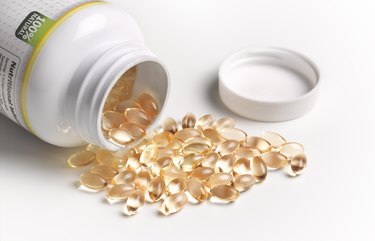
Evening primrose oil, which is pressed from the plant's seeds, contains a high concentration of the omega-6 fatty acids linoleic acid and gamma linoleic acid. Evening primrose oil is an herbal supplement used for a variety of conditions, including breast pain, eczema, allergies and diabetes, but there is also some evidence it may help to reduce high cholesterol levels. Although study results are mixed, Campbell University School of Pharmacy states evening primrose oil appears to lower total cholesterol levels up to 30 percent. Talk to your doctor before taking evening primrose oil for high cholesterol.
Fish Oil And Cholesterol
Fish oil is rich in the omega-3 fatty acids EPA, or eicosapentaenoic acid, and DHA, or docosahexaenoic acid. The general perception is that fish oil primarily helps to improve cholesterol levels. According to the University of Minnesota, the primary action of fish oil isn't to lower your cholesterol level and there is some indication high doses may actually increase your cholesterol level. Fish oil reduces platelet activity, which helps to decrease blood clotting and plaque formation. Include some oily fish, such as salmon, mackerel, tuna and rainbow trout, in your diet at least twice weekly, but if you can't, ask your physician about taking fish oil supplements to reduce plaque formation in your arteries.
Precautions
Consult your doctor to assess your need for taking evening primrose oil or fish oil supplements, especially if you are pregnant or have diabetes. Discuss the development of any side effects with your physician. Evening primrose oil can cause headache, nausea and upset stomach; it can also increase your risk of seizures. Fish oil can cause diarrhea, bloating, burping and heartburn. Don't take evening primrose oil or fish oil if you have a bleeding disorder.
References
- University of Maryland Medical Center: Cholesterol; Harvey Simon; May 5, 2009
- Campbell University School of Pharmacy: Evening Primrose; George Nemecz
- University of Maryland Medical Center: Evening Primrose Oil; Steven D. Ehrlich; October 27, 2008
- MayoClinic.com; Omega-3 Fatty Acids; August 1, 2011
- University of Minnesota: Fish Oil and Your Health; Paul Addis; March 6, 2009


Member Comments