












































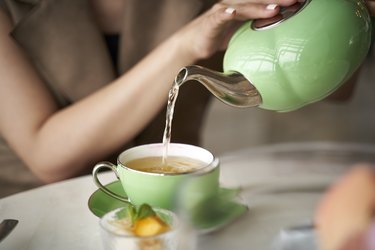














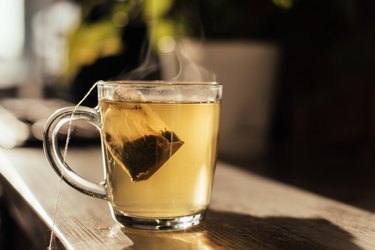
A cup of tea in the afternoon may sound like a nice way to take a break with a refreshing beverage. Tea is more than just a pleasant drink, however. When you drink tea, you are drinking water plus the chemicals in the tea. Adding something like milk, sugar or artificial sweetener may change the chemical composition.
Tea and Antioxidants
The major types of tea are black, green and oolong. Tea contains a number of compounds called flavonoids that act as antioxidants in the human body. Antioxidants help neutralize free radicals, molecules that are created during the process of metabolism or when the body is exposed to toxins and pollutants. Catechins are one type of tea antioxidant from the polyphenol group; other tea antioxidants include theaflavins. All teas from the Camellia sinensis plant are good sources of antioxidants.
Research on Black, Green and Oolong Teas
According to research published in the October 2003 “Journal of Nutrition,” black and green teas contain high levels of flavonoids that have antioxidant effects in the body. Another study in the September 2001 “Journal of Nutrition” noted that a variety of different compounds in green and black tea had antioxidant properties and that drinking either tea was equally beneficial in terms of antioxidant benefits. An article in the 2007 “International Journal of Molecular Sciences” reported that oolong tea is also a source of antioxidants.
Adding Milk to Tea
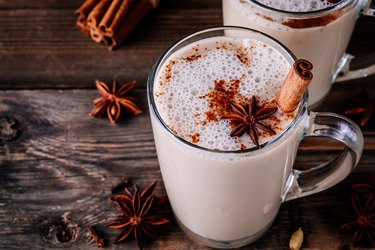
Some people add milk to tea, especially the stronger-flavored black and oolong teas; green tea is more commonly drunk without milk. Because the addition of something like milk has the potential to change the chemical composition of the beverage, researchers began to look at what happened to the antioxidants in the tea when milk was added. The research showed, however, that milk had no effect on the antioxidant qualities of the various teas.
More Research
An article in the May 1998 “European Journal of Clinical Nutrition” compared green tea, black tea and black tea with skimmed milk. Catechins, a type of antioxidant compound in the tea, rose in all three cases; the addition of milk did not significantly affect the catechin levels. Research in the January 2001 "European Journal of Clinical Nutrition” found that green tea promoted a larger increase of antioxidant activity in the blood when compared with black tea. When milk was added, the patterns of antioxidant increase remained unchanged for both teas.
Drink Your Tea
The research indicates that whether or not you are seeking maximum antioxidant effects from your tea, you may drink it with or without milk. Green tea may have slightly more antioxidant effects than black tea has, but all three major teas are good sources of antioxidants.
References
- “Journal of Nutrition”; Antioxidant Effects of Tea: Evidence from Human Clinical Trials; Anton Rietveld, et al.; October 2003
- “Annals of Nutrition and Metabolism”; Addition of Milk Does Not Alter the Antioxidant Activity of Black Tea; C. Vijayakumar, et al.; 2005
- “European Journal of Clinical Nutrition”; A Single Dose of Tea With or Without Milk Increases Plasma Antioxidant Activity in Humans; R. Leenen, et al.; January 2004
- “European Journal of Clinical Nutrition”; Bioavailability of Catechins From Tea: The Effect of Milk; K.H. van het Hof, et al.; May 1998
- “Journal of Nutrition”; Theaflavins in Black Tea and Catechins in Green Tea Are Equally Effective Antioxidants; Lai Kwok Leung, et al.; 2001
- “International Journal of Molecular Sciences”; Polyphenolic Profile and Antioxidant Activities of Oolong Tea Infusion under Various Steeping Conditions; Su Xinguo, et al.; 2007


Member Comments