
























































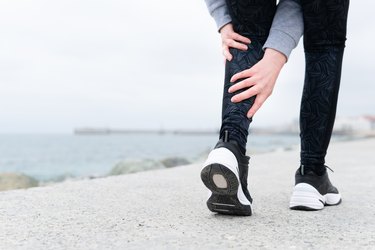
Your calves do a significant amount of the work involved in running, as they are almost entirely responsible for the "push-off" phase of the stride. They are called into action for some 1,500 steps per mile and are recruited to an especially great extent when you sprint or run uphill. If you stick with running for long enough, pain in the lateral aspect of your calf muscles is almost inevitable.
Intermittent Claudication
Intermittent claudication, which is calf pain and numbness during exercise such as walking or running, is a symptom of peripheral artery disease or PAD. It is typically caused by the narrowing of arteries as a result of atherosclerosis -- deposits of fat along the walls of the arteries. Most people with claudication do not have pain at rest, and when they stop running, the pain quickly subsides. If you have this kind of pain, your doctor may prescribe medication both to relieve your symptoms and treat the underlying cause.
Compartment Syndrome
Compartment syndrome results from hypertrophy, or overgrowth, of the calf muscles. When your calves expand to the point at which the sheath surrounding them cannot stretch to accommodate them, pain -- often excruciating -- results. According to "Running Times" magazine, pressure on the local blood vessels and nerves is what causes the pain. While compartment syndrome rare compared to other types of out lower leg pain, surgery to incise and loosen the muscle fascia is almost always required for lasting relief.
Calf Cramp
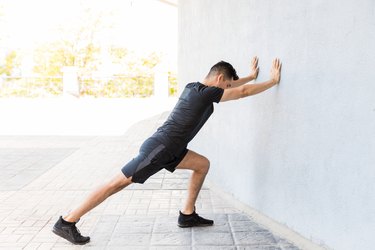
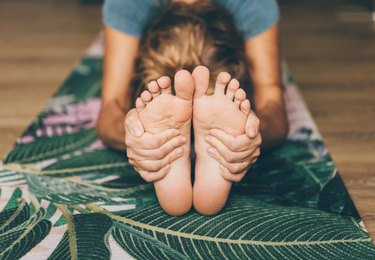
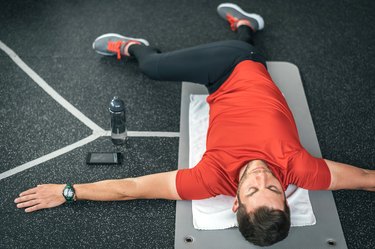
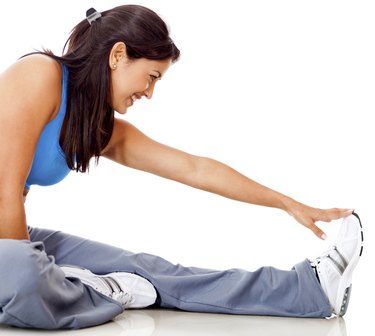
Cramps are believed to be the most common source of calf pain in runners. These appear suddenly and with no warning, and can be incapacitating. They may be caused by any combination of electrolyte disturbances, fatigue and dehydration. Stretch your calves both before and after running to help guard against this problem. Drills and exercises for the calves, such as heel raises, can strengthen the calf muscles and reduce the chances of a recurrence.
Calf Strain
A calf muscle strain usually causes pain that is duller and more gradual in onset than other calf problems runners incur, but in some cases the pain may be sharp and strike suddenly. Not stretching or warming up properly, electrolyte imbalances and an overly ambitious increase in weekly mileage all increase the likelihood of a calf strain. Treatment includes ice, rest and anti-inflammatory drugs such as ibuprofen or naproxen sodium. If these don't work, orthotics may promote healing. A strain may be severe enough to result in a tear or a complete rupture; if this happens, plan on a convalescent period of up to 12 weeks.


Member Comments