







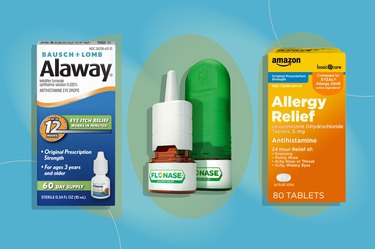































































Respiratory allergies can develop as a result of a variety of environmental stimuli, including dust mites, pollen, pet dander or air pollutants. These respiratory allergens are typically airborne, allowing them to enter your nasal passages, lungs and eyes, where they can cause irritation and inflammation. According to the American Academy of Allergy Asthma and Immunology, the signs of respiratory allergies are diverse and may be indicative of respiratory disease such as asthma, bronchitis or pneumonia.
Nasal Symptoms
If you have respiratory allergies, you may find that you develop nasal symptoms when you are exposed to certain allergens, such as mold or pollen. According to the University Health Services at the University of Texas at Austin, common nasal symptoms indicative of respiratory allergies include stuffy, runny or itchy nose, sneezing or postnasal drainage. Respiratory allergies can also lead to sinus pressure or pain around your nose or eyes. You may be able to control or alleviate nasal symptoms by taking an over-the-counter medication containing antihistamines.
Lung Symptoms
If you have respiratory allergies and are exposed to certain allergy triggers, you may develop symptoms of the lungs. According to the University of Arizona Health Sciences Center, inhalation of allergens such as pet dander or air pollutants can cause inflammation or irritation of the lungs or bronchial tissue. If this occurs, individuals with respiratory allergies may exhibit symptoms such as a dry cough, wheezing or difficulty breathing. Depending upon the severity of the allergy, certain individuals may develop respiratory diseases such as bronchitis, pneumonia or asthma. The Alliance for Healthy Homes notes that using an air purifier or closing the windows of your home may help reduce your exposure to allergens, thereby limiting or preventing the development of these symptoms.
Eye and Ear Symptoms
You may find that certain allergens cause eye- or ear-related symptoms to develop. Dust mites, paint fumes or tobacco smoke can all irritate your eyes, according to the Alliance for Healthy Homes. These allergens may cause your eyes to water or itch, which may make your eyes appear inflamed, red or bloodshot. The University Health Services at the University of Texas at Austin recommends the use of over-the-counter eye drops to help alleviate eye symptoms associated with respiratory allergies. Nasal symptoms associated with respiratory allergies can also cause ear-related symptoms, such as ear congestion or popping. If significant, ear congestion can also lead to hearing difficulties.


