
















































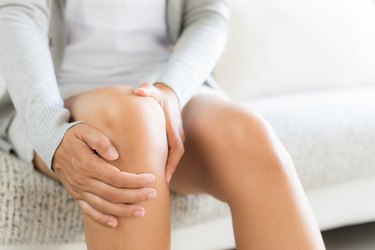









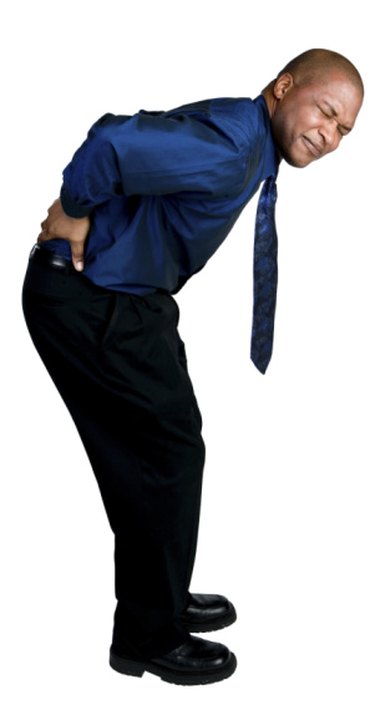


Muscle cramps that occur in the legs are commonly referred to as charley horses, although the term may be applied to a cramp or spasm anywhere in the body, according to the National Institutes of Health. A charley horse is most likely to occur when a muscle is overused, injured or dehydrated, but they also develop during sleep. Treatment focuses on relaxing the muscle, reducing discomfort and determining the underlying cause of the cramp.
Step 1
Stop using the affected muscle immediately. Continuing to work the muscle will increase blood flow and may make the spasm worse.
Step 2
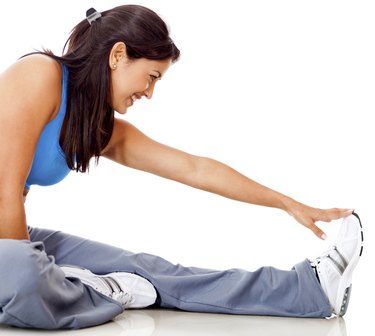
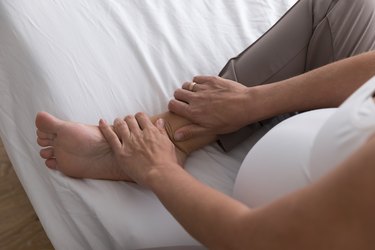
Stretch the muscle out, then gently massage in the direction of the muscle. Avoid rubbing across the muscle. For example, if the cramp occurs in your calf muscle, rub from the back of your knee to your heel. Do not rub across the muscle from one side of your leg to the other. Doing so may increase irritation and worsen the cramp.
Step 3
Apply heat to help relax the muscle and relieve pain. You can do this by using a heating pad or applying a hot, damp towel to the affected muscle.
Step 4
Soak the affected muscle in a tub of warm water and Epsom salt. This will encourage the muscle to relax and will ease your discomfort, according to the University of Iowa Hospitals and Clinics.
Step 5
Drink water or a sports drink if dehydration may be to blame for your charley horse. Dehydration is a common cause of muscle cramps, according to the National Institutes of Health.
Step 6
Use ice once the muscle relaxes. Ice applications can help prevent a second spasm from occurring. Do not apply ice directly to your skin. Use a commercial ice pack or wrap a bag of ice cubes in a thick towel.
Step 7
Take a nonsteroidal anti-inflammatory medication, such as ibuprofen, to ease any remaining discomfort and to help with muscle inflammation caused by severe spasms.
Step 8
Visit your doctor for an evaluation if you experience frequent or severe muscle cramps. Certain medical conditions and mineral deficiencies increase your risk of experiencing a charley horse. An irritated nerve may also be contributing to your cramping. Treating these underlying causes may prevent additional episodes.
Things You'll Need
- Heating pad
- Epsom salt
- Ice pack
- Over-the-counter nonsteroidal anti-inflammatory medication


